Wednesday, April 05, 2006

Fingers! (and more!)


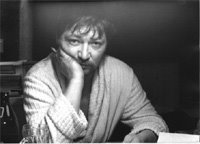
James Toback always seemed like an odd fellow to me. An early film based on a screenplay of his, The Gambler (1974), is as dark and Dostoevskian a film portrait of a self-destructive, hubristic gambler (James Caan) as one can find; it actually is a bit creepy when you discover that Toback is a gambler himself, since the film doesn't leave one particularly comfortable with its title character. Exposed (1983), starring Nastassja Kinski, Rudolf Nureyev and Harvey Keitel, is a quirky film that locates itself at the nexus of fashion and terror, which is a streetcorner filmmakers seldom visit; I remember thinking that the film was subtle and intelligent enough, when I first watched it, that many people would fail to perceive its true theme -- but now I forget what I thought that was; I recall that Keitel's performance is interesting enough to make the film worth seeing, tho'. I've only seen one other of Toback's films, his first as writer/director, Fingers (1978), a bizarre, troubling, and fiercely, strangely intelligent character study of a concert pianist who is also a gang enforcer -- another unusual nexus to locate a film at -- that stars Harvey Keitel; I like that film a lot, but since I've seen nothing else by Toback, my ability to comment knowledgeably about him ends there, save to say that there's a reason I've seen none of his later output. Since I associate him with the gritty, challenging, character-driven cinema that occupied a certain corner of American moviemaking in the 1970s, I don't know what to make of, an am a bit put off by, the fact that he made a movie with Robert Downey Jr. and Molly Ringwald (The Pick Up Artist, 1987), wrote the screenplay for Bugsy (1991) and has gone on to make movies about race and hip hop (Black and White, 1999). His recent venture with Neve Campbell, When Will I be Loved (2004), got good reviews from some quarters, and he seems to have retained a certain degree of independence, but I've found the recent careers of many American filmmakers active in the '70s to be somewhat depressing -- compare David Holzman's Diary with The Big Easy (Jim McBride) or -- well, actually, I won't even watch any of the later output of Jerry Schatzberg, but I have a strong feeling it doesn't measure up to Scarecrow or The Panic in Needle Park. I want to retain my sense of Toback as an outsider, an obsessive, an eccentric making curious little films on the fringes, in a quietly uncompromising and oddly confident way; I don't want exposure to his later films to threaten that image, because it's important to me to believe that people like Toback are out there on the margins, doing what they do (even if they really aren't, anymore).

And the thing is: I didn't think anyone cared but me, so there was no pressure to explore his later films. Who would I discuss them with? Who do I know that cares? ...Well, apparently the world is catchin' up with me, or else I'm nowhere near as far ahead of it as I think, because a documentary has just been made about Toback, The Outsider, and there's a French remake of Fingers that sounds like a must-see, The Beat that My Heart Skipped. (Note: those two links were to official film sites, not just to the IMDB listings). And both these films, along with a projection of the DVD of Fingers, will be coming to the Vancity Theatre in April! There'll be a special event on the 15th where both Fingers and The Beat that My Heart Skipped screen, with a critical introduction to the films, so that sounds like the night to catch them. Mark Peranson of the Vancity is continuing to surprise and intrigue me with his programming choices -- I hope their attendance is improving! (New programs are out now, btw).

Anyhow, I gotta get to work...

Tuesday, April 04, 2006

Cane Toads for Beer


Thought this was a charming story on innovative solutions to Australia's cane toad problem. Once again, thanks to the Fortean Times for making such delightful news available for easy access...

Sunday, April 02, 2006

Triple Book Launch Poetry Event featuring Elizabeth Bachinsky, Michael V. Smith, and Jennica Harper


Photo by Dave Aharonian

Odd to see someone you grew up with succeeding at what they do. It's almost as strange as starting to feel like you're making some headway yourself... I've known Elizabeth Bachinsky for longer than anyone else in my circle, growing up with her in the suburban-white-trash backwater of Maple Ridge, where the absence of cultural artefacts (aside from the odd neon sign or the Coke cans in the ditch) played a role in our development into creatures hungry for art, literature, film, music, knowledge, and so forth -- though it's really only since that Damo Suzuki show where we ran into each other that we've been socializing regularly (Damo leapt down from the stage, hugged me and kissed her... it was the sweetest thing I've seen a performer do and not at all a bad memory to share in common with someone). It's starting to seem like the day may come where those early chapbooks I have of hers (Skylab and A Grease Fire in the Diner of Your Heart) are actually going to be worth money -- too bad it probably won't be in my lifetime, but this IS Canadian poetry we're talking about. Liz has had two books published this last year, one through Bookthug (given a glowing review here -- I pitched in on a few lines of her anagram of -- all of -- TS Eliot's "The Wasteland," by the way, tho', as fond of anagrams as I am, I couldn't possibly make it through the whole of that poem, so hats off to her) and one through Nightwood Editions, Home of Sudden Service, which is the more personal of the two and speaks to our shared background in a way I find jarring, recognizable, and oddly comforting -- to know that someone else with aspirations could not only survive the 'burbs, spiritually speaking, but live to write about it, and well... Elizabeth will be shortly embarking on a cross-Canada tour, reading at some fairly significant venues, beginning on April 20th in Vancouver, in conjunction with her cohorts Michael V. Smith (aka Cookie LaWhore) and Jennica Harper, both of whom are also launching books. (Matt Rader of Mosquito Press will also be on the bill for the Vancouver gig and is also a fine writer indeed). The event will occur at the downtown UBC bookstore at 7 PM. I've never yet seen Liz fail to win the audience when she reads; Michael I know better for saucy jokes, his novel Cumberland, and his gender politicking more than I do for his poetry, but he's always engaging and thought-provoking. Jennica I don't really know, tho' she has a fine title indeed for her newest book, The Octopus and Other Poems (how deeply pleasing to imagine an octopus as a poem). April IS National Poetry Month, after all -- or so Liz tells me, and I assume she'd know. Read more about the tour and the reading here, on Michael's site -- and come to the event! April 20th, 7pm. Mark the calendar NOW...

Cool Ray Carney article

I continue with my ambition of going to study under Cassavetes' scholar Ray Carney. For those curious as to why, read this.

Cinema Aspirant is Underway: Fassbinder


My new column, Cinema Aspirant, is underway at Discorder, with the first article being on Rainer Werner Fassbinder. Next month it's going to be on Peter Watkins, with a screening of Punishment Park on May 30th at Blim.

Saturday, April 01, 2006

Timothy Carey on Farting and more

Just read this great article on Timothy Carey, pictured below.


It includes anecdotes about Carey and Kubrick and Carey and Cassavetes ("theanthropist" is misspelled -- it means the union of God and man, usually figured in the person of Christ, but here applied to Cassavetes) -- Carey worked with both men; apparently they were two of the very few directors who could deal with him. The article also includes a brilliant passage on Carey's feelings about farting; one line of Carey's is so good that I hereby declare it to be my quote of the week: "I always thought if you really want to be a good actor, you've got to be able to fart in public." Amen to that -- I'd place it on the fart-shelf next to Robert Stone's description of the attitude of a hippie guru towards flatulence, in his novel, Dog Soldiers (my favourite book): "Dieter farted loudly and without embarrassment. For every Cassavetes out there, who manages to beat the odds and make a few great films -- I wonder how many Careys there are?

An interesting profile/interview with Carey is here; plus you can apparently buy copies of some of Carey's work from his son's appreciative website, here. I feel so fond of this man tonight, I think I'll go pick myself up a copy of Kubrick's The Killing, or maybe Paths of Glory, just to see him in them again.

Tuesday, March 28, 2006

The Sounds of Sex

It's really annoying listening to the grunts and moans of this female neighbour of mine. She's getting laid a few times a week, at least as far as I can tell. Happy for her, really, but I don't really want to share in the experience. Maybe if I started screaming "Oh, baby" out my window, she'd take a hint...

Sunday, March 26, 2006

Brian DePalma adapts James Ellroy's BLACK DAHLIA

Read a discussion about it here... I was an Ellroy fan for awhile, and I've always liked some things about dePalma...

Bob Ostertag's New Website


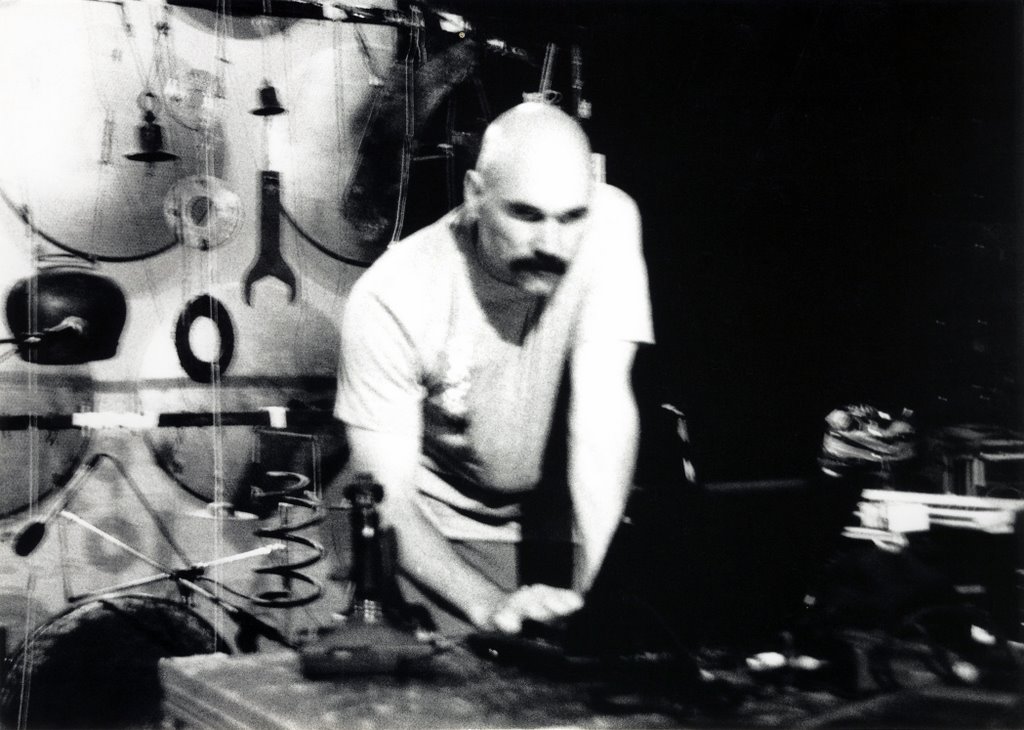
Bob Ostertag has done something very exciting with his new website: he has taken all the works for which he has the rights and made them available for free download. He notes: "I am doing this both to make my music more widely available, and also as a political move in opposition to the interests which have turned 'intellectual property rights' into a battering ram for corporate power;" his homepage goes into greater depth. There's some very exciting music to be found on his site, too -- most of it noisy, weird, postmodern (poststructuralist? postmusical?), and stitched-together from distorted samples and wind-up toys. (Devoted readers might recall that I once mailed a Japanese wind-up toy, a Skull Ball, to Mr. Ostertag as an expression of appreciation for his wonderful concert here a couple of years ago, with animator Pierre Hebert, at the Western Front...) The site also features a lot of Mr. Ostertag's writing, which I've perused before and found interesting... Hours of pleasure to be found on one website alone. Perhaps he'll return to our humble city someday...

Friday, March 24, 2006

Are the Sun City Girls Anti-Semites?

Hey, is anyone else out there disturbed by the shadows of anti-Semitism in the lyrics of the Sun City Girls? These guys are inventive, funny, and sometimes produce brilliant music, and I really respect their Sublime Frequencies side-project, which, in its video manifestation, offers a sort of camcorder verite attempt to document the sounds of indigenous cultures at the crossroads of westernization/erasure (they also have radio collage stuff, field recordings and other valuable archival releases in the audio arm of the project). I met Alan Bishop up here when he was touring their Niger video, and I thought he seemed like an interesting guy, and I liked what he had to say, about how there is some fantastic music being made out there in the world that no one in the west is documenting or listening to, much of which stands at risk of being lost. It deeply disturbs me, though, that they have songs like “I knew a Jew Named Frankenstein” (the words of which are suspiciously absent from the lyric archive linked above, and are sufficiently garbled as to frustrate transcription, though they don't seem very Jew-friendly). They have other anti-Zionist and what start to seem like anti-Semitic barbs in their lyrics, and after awhile, they start to add up. I know that taking any of what they say too seriously or literally is kind of a doubtful enterprise, since their songs often have the quality of ridiculous, self-mocking put-ons and put-downs, but… here are a few examples of why I begin to get disturbed.

Their take on the Fugs’ “CIA Man” has a couplet to the effect of, “Who can hand feed a Zionist with a spoon/ While kicking Palestinians to the moon,” and refer to the “Mossad Institute of Terror."

In X+Y= Death, on KALIFLOWER they have a put-on line about how “26 billion non-Jews died” in an "Eat My Holocaust" -- a pretty questionable target of mockery.

“I Deal a Stick” on BOX OF CHAMELEONS has the verse,


Don't ask me who they are, because they taught you to ask me that question, so
they could hide among the ambiguous slime that shrouds their diabolical empire,
yeah, well it's been too late for centuries: Cum on them before they cum on
you!

They uncritically repeat one of the sillier rumours about 9/11 – one which is debunked in the film PROTOCOLS OF ZION – in the "song," "WFMU Station ID: Palmer" on Carnival Folklore Resurrection 11, presenting the following as a radio broadcast:
This is Palmer from Asia and Emerson, Lake and Myself, and when I'm in the New
York area watching Israelis celebrate on rooftops as the remote-controlled
aircraft fly into two towers, and the American public are duped, as they
usually are, I always listen to WFMU Radio.

This resonates against their rhetorical, “So, do you still think Bin Laden did it?” on “Where is What it Was?” -- though I'm not sure what the band's pet theory is.

On 98.6 IS DEATH, they refer to Israel as the “angel of death” in a long surreal rant called "Without Supervision/Radio ID #3."

On NAPOLEON AND JOSEPHINE, we get:


"Well when you -- I don't recognize no boundaries. Try drinking a
beer. You know they say when you're Roman do -- in Rome, do as the Romans do
-- or when in Israel you do as the Palestinians do, well when on the planet
of Earth, you do as you wish."

They also have a preponderance of Sublime Frequencies projects from Middle Eastern, Arab, and Muslim countries, and on one – I Remember Syria – have photographed a sign in memory of Golan Hospital, "destructed by Zionists." I also read a concert review somewhere online (I think -- or was it in an issue of Bananafish?), describing a concert where one of the band members, at some point, shouted from stage, "Fuck Zionists." (I can't find a link, sorry).

I mean, I know, I know: you could probably compile an equal number of lines from Sun City Girls songs that advocate drinking blood, cooking with Satan, and "going fishing with a hammer and sickle and a bone crusher attached to a pickle," and none of them would add up to anything you’d want to take very seriously... but given their fondness for conspiracy theories, and the seriousness, evil history, and sheer stupidity of antiSemitism... I get kinda worried by quotes like the above. Anyone have anything else to add to the list, or a rebuttal they'd care to offer?

Thursday, March 23, 2006

Ab Baars is coming!

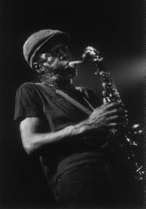
In April, Dutch saxophonist and avant garde/ free player Ab Baars will be bringing his quartet to the Ironworks, a cozy little venue in the back o' Gastown. Read about it here!

Palast on Bush, Oil, and Iraq -- an interesting article

Thought this was thought-provoking.

Wednesday, March 22, 2006

Thinkin' About Charles Gayle


Dunno why I'm thinking of Charles Gayle lately. He's a free jazz saxophonist and sometimes pianist from New York who performed here a few times in the 1980s. He is best known for having been homeless for a long period, playing on the streets; he can afford a small apartment in New York, now -- I imagine in one of the less expensive areas. Gayle has a powerful style -- like someone who is trying to blow his guts out through his horn, trying to force more experience, more raw emotion, more of his soul out of the instrument than it can actually channel; more interestingly, the two times I saw him, when the mood overcame him, he stopped playing and began preaching onstage -- what seemed at the time a particularly hostile form of evangelical Christianity. At the Glass Slipper -- anyone remember that delightful little venue? See here for an undated article on an attempt to reinvent it -- I recall him leaving aside his sax, taking up the microphone and saying a few things about Christ; it was at a peak point of intensity, musically, and came as quite a shock. There was an occasion -- I don't remember if it was the night in question or not, since for some reason (drugs?) the memories of that evening are vague for me -- where it is said he actually cleared the venue, testifying and haranguing the unbelieving audence until they walked out. I don't think that happened that night, if it ever did; but I do recall quite clearly that at a subsequent Vancouver International Jazz Festival, at one of the free shows, he started to preach in a similarly inappropriate manner -- while playing the piano, as I recall. He told the audience that he wasn't there to ENTERTAIN them -- as I recall it, he said something like, "white middle class folks think they're gonna come to a jazz festival and be entertained, but I'm here to tell you that YOUR SOUL CANNOT BE SAVED except through Christ. Maybe you think you're saved but I'm telling you if you don't accept Christ you are going to burn in hell..." It didn't seem like jazz to me, and it definitely didn't feel like entertainment, but it caught my notice and stayed in my memory (and in fact is about the only thing I recall from that year's festival, other than thinking Paul Dolden had a silly hairstyle). I don't believe that Mr. Gayle has played here since. He's a bit sheepish about the testifying thing -- and downplays the hostility of it -- in this interview, which makes for an interesting read; but actually, testifyin' or not, I think I'd like to see Mr. Gayle play again. I'm listening to Kingdom Come, my favourite of his discs, as I write this... This is a man with something to say, something to offer, something he BELIEVES; and it's pretty interesting to see free jazz as a form of evangelism (which it seemed to be with Coltrane and Ayler as well, tho' perhaps not as overt). Cheers to Charles Gayle.

Friday, March 17, 2006

Twisted Little Japanese Horror Film: Marebito


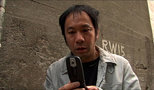
Just saw a very disturbing bit of horror cinema -- something that could probably only be made in Japan; Marebito, directed by Shimizu Takashi -- who made Ju-On and it's westernized remake, The Grudge -- and starring cult director Tsukamoto Shinya, of Tetsuo fame (he also plays the scheming cop in Miike Takashi's Ichi the Killer -- and is the guy in the little picture on the left). This is one of those rare films that one really profits from knowing very little about, on entering it; the odd twists and turns that it takes you on can only be diminished by my offering even the slightest description, so I'm left in the difficult position of trying to recommend a film I really can say nothing about. Trust me, if you're a horror buff and want to see something creative, don't seek any other sites out for more information, just find the film and watch it. It deals with voyeurism, obsession, and the twisted ugly things that lurk in the human subconscious (or perhaps just the Japanese subconscious -- but find me a people more comfortable dragging their insanities out into the open in art. It's my thesis that it's only because of the extreme degree of social order, security, and conformism that one finds in Japanese public life that they can afford to delve quite so deeply into the darker closets of their minds, in films like these... In a society where social order is far more fragile, like ours, a work like Marebito would be regarded as so threatening that only the most aggressive and pissed-off surrealist would even contemplate making it -- and he'd have a hell of a time getting it financed...). If you MUST read more on Marebito, here's a link to the IMDB listing, but I highly advise just trusting me on this one and finding the film... It's a very creepy experience.

Oh: serious Tsukamoto fans in our damp city are advised to scour their nearest Book Warehouse for the Tom Mes book, Iron Man, about his life and films; it's been marked down to $14.99 and there are a few copies still out there...

Furry Lobster Plush Toy

Yet more fun from our intrepid overseas correspondent. (He also offers us this optimistic prediction of the future of America, from Salon).

Not much impressed with the Shane MacGowan documentary

I remember, as a young man, being pissed off with Bruce Weber’s Let’s Get Lost, a documentary about jazz trumpeter and vocalist Chet Baker. Baker was still alive when the film was made – he fell, was pushed, or jumped from a hotel balcony in Paris near the end of the shoot, depending on which rumour you abide by; I vote for suicide, since it seems to me it’s very unlikely someone could live as dissolute a life as Baker and not be, on some level, deeply ashamed of himself. Weber, at one point – clearly judging his subject – confronts him about the issue of the children he’s fathered, asking him if he remembers all their names. Baker takes offence, and so did I – it seemed to me a lousy thing to do to someone on camera. Weber was also pretty judgmental about Baker’s drug use, getting Baker to describe his intake, his fondness for speedballs, and so forth, while the cameras captured it all in unforgiving black and white – it seems a humiliating thing to do to a human being, a cruelty, and one could easily theorize that the scrutiny of the filmmaker had something to do with Baker’s killing himself, if that’s what, in fact, he did. I recall that at the time I left the theatre more disgusted with Weber than with Baker, and went home and took a shower, metaphorically speaking... I haven’t seen Let’s Get Lost in a long time, but I wonder now if I’d feel the same way about it; having just sat through If I Should Fall from Grace: The Shane MacGowan Story at the Pacific Cinematheque, I suspect I wouldn’t, since at least Let’s Get Lost tries to be about something, tries to give its audience something to think about, tries to take a position in regard to its subject... There’s not much of that in If I Should Fall from Grace; it’s basically a series of rock videos and performance clips punctuated with fairly informal interviews where few probing questions are asked. Here are a few questions that I would have liked to have seen the filmmakers grapple with – that I occasionally found myself trying to think about while the film did its best to distract me with far more trivial matters:

1. So here we are in a commodity-driven consumer culture which periodically seizes on this poor idiot or that and elevates them head and shoulders above the rest, to suddenly be a spokesperson for something; even forms of music that are meant to be rebellious (punk) or defiantly local (like Irish music) are included in this phenomenon, such that angry young men with bad teeth and ears that stick out can become famous as (pop) cultural icons – but only insofar as they assent to their expressions of angst, dismay, alienation, anger, whatever-the-hell-you-want-to-call-it, being made into product and mass-marketed, which in turn will have a deleterious effect on their ability to continue doing what they’re doing... The more successful you are, the better you are at speaking from your local perspective, communicating your authentic experience – which is what being a songwriter is kinda about – the harder it will be for you to maintain your connection to the very conditions that drive and inspire you. In some odd way, the story of Shane MacGowan intersects with the story of Kurt Cobain, because there is a fundamental conflict between their starting point and the fame which it led them to; you can’t be a pissed-off, alienated kid and a superstar goose who lays golden eggs at the same time – and this probably informs the self-destruction of both men. Cobain killed himself, and it looks from the film that MacGowan retreated back into his roots – into pubs, the Irish diaspora in London, and his family life (while continuing to drink far too much, though in a way, that could be viewed as an aspect of his roots, too, rather than as a form of self-destruction -- he is Irish, after all; maybe it's just a stereotype of mine, but there seems to be a larger place allowed for alcoholism in Ireland than in many places in the world; we see Shane piss drunk through most of the film, but seldom, even as he actually dribbles a bit of drool, object to it, as I think we would if someone from North America were THIS intoxicated on film...). Why not examine all this? Why not actually think about what the life trajectory of MacGowan means or teaches us, rather than just filming him talking about the good old days, with a misty golden tint to evoke a mood of nostalgia and lots of clips of his music?

2. And what ABOUT nostalgia? I mean, there’s something kind of suspect about it, ain’t there – something that has all too much to do with the way the marketplace functions...? In the 1980s, I clearly recall that a LOT of the music you heard on the radio was from the 1960s; everyone talked about the 1960’s as a special time, and valorized its heroes – Hendrix or Led Zep or the Who or the Beatles or whatever – and films about them played on TV and their successes were made to seem glamorous and significant. In the 1990s, there was a resurgence of disco and funk and so forth – remember Boogie Nights? Now we’re busily re-consuming the music of the 1980s, punk and “New Wave” and all that, and re-experiencing how wild and rebellious we all were back then… It’s not that one decade is in fact more significant than another, it’s just that mass culture is perpetually about 20 years out of sync; the youth of any given generation have fuck all purchasing power, and little access to the channels by which information is disseminated, so their own “authentic” cultural expressions are more or less ignored at the time when they’re happening, until such a time as they’re old enough to actually start laying down some money and/or making films themselves. This is why we now have films about artists like Townes van Zandt, the Minutemen, and Jandek being made – I knew who these guys were when I was young, but certainly none of my friends knew or cared, and they received zero attention from the mainstream media; even the Pogues were a fairly obscure band, up until “Fairytale of New York” beat the odds and got a smidgen of radio play… Most media attention was either focused on transparently plastic and forgettable mass-produced crap – the stuff we want the kids to buy, rather than what the really bright ones were trying to seek out – or on the music of 20 years previous…

What this probably means is that there’s in fact a fair bit of interesting music being made today that I have no idea exists, being produced and consumed by extremely eager and attentive youth, like I was back in 1985, and being completely ignored by the media and by the generation who can actually afford to support it – who are too lost in their narcissism, too busy (re-)consuming the tokens of their own youth, to take any interest. (The media, busy selling their own image back to them, certainly won't try to call anything current to their attention). Many of these artists will retire or die in obscurity (like d. boon of my day) or stop making music long before anyone makes a documentary about them or before they attain iconic status, and there’s something really tragic and unfortunate about that, which this film does nothing to acknowledge or even mention. (Are there young bands, influenced by the Pogues, who are doing stuff that's attracting attention in London or elsewhere? Did the Pogues play a part in the development of any trends in music that currently exist? Are there current roots-music-revivalists whom MacGowan admires? No such questions are asked... No NOW is allowed to interfere in our comfortably basking in THEN). No wonder the audience at the Cinematheque was uniformly in their mid-30s... Wherever the hip kids were in the city -- it was probably more interesting.

3. ...And while we’re talking about the global marketplace, what exactly IS the relationship between consumer culture and folk culture? Songs of the sort MacGowan sings predate punk, predate pop, predate CDs and LPs and recording technology of any sort, and have deep, deep roots in traditional/folk culture. In fact, that’s a lot of what people are trying to connect with when they buy CDs by bands like the Pogues; they’re trying to find some connection to roots, to place, to a people, which is increasingly hard to find in urban life in North America, and generally has to be packaged with a generous dollop of postmodern irony (which, really, the Pogues didn't trade much in -- they had a bit of that rare commodity, authenticity, to them). Much as there are things I like about life in Vancouver, there’s not much sense of belonging to a human community, of being a person with a people in a place that has meaning; I spend far more time wandering through an impersonal concrete market, shopping for meaning, than I do in groups that I feel profoundly personally connected to. It’s precisely because of this condition – and the need to compensate for it – that one of the most enjoyable concerts I’ve ever been to was seeing the Pogues perform with Joe Strummer at the Commodore Ballroom in the 1980s. Even tho’ I’m not Irish and don’t have any great connection with the half-Celtic blood that runs in my veins – as my last name, MacInnis, attests, my father’s side of the family is Scottish, by way of Nova Scotia – coming together to share in the experiences and feelings sung about by MacGowan that night (as he passed whiskey bottles down into the front rows and a young fan, riding the shoulders of her boyfriend on the dance floor, flashed her tits at him, to his clear delight), I felt like I belonged to something, that I had a place in a community (pressed there up against hundreds of other happy fans, singing along to the songs and swaying to the music). Briefly, hearing MacGowan belt out his own alienation, I didn’t feel alienated any more; hearing him sing his desires, I felt mine validated and expressed and made real, which is, in fact, an increasingly rare and precious feeling… Why not explore the connection, between this deep need for authentic expression and belonging, and the alienation and dislocation that are its ugly urban twin?

4. And though, really, the politics of all that is fine and well by me – I mean, what else are we supposed to do? We need to compensate for how fragmented we are by some means or other, need to find community where we can – here’s the catch: it’s still not great art. Pop music (and even consumer capitalism) latches on to real human needs, sure, let’s grant it that; but the fact is that I just spent about two hours of my time and ten dollars of my money watching what mostly amounts to the rock videos of yesterday, interspersed with the commentaries of the people who made them. I doubt anyone watching the film with me learned much of anything at all, particularly given that the only questions the film asked (did the band fire Shane or did he use a passive-aggressive strategy of self-destruction to quit?) shed light on nothing much larger than the personalities of the people on the screen, who, in the big picture, just aren't that important. It amounts to merely another manifestation of celebrity worship, which is basically just narcissism by proxy. There are better things I could have done with my time, better uses of music, better uses of cinema, and I mildly resent having had my time wasted, even by people who try so hard to flatter my former tastes. Fond as I am of pop music, enough is enough; the audience, whether it knows it or not, basically just spent two hours masturbating to its own image, and its starting to seem like a far too common vice... The premise that the film proceeds on, that the music and the celebration of it after the fact is enough, is in fact a little scary, as was the applause and happy buzz with which the film was received. Most people in the audience seemed to have had a satisfying experience -- but why?

These are a few questions that I struggled with while watching as Shane MacGowan’s front teeth steadily decayed as the archival footage progressed towards his present vast gap (and why is it that the British Isles have such atrocious dentistry, anyhow?). It would have been interesting, too, to think about the relationship of alcoholism to music; I recall the question coming up during one of the interviews in the (only marginally more interesting) documentary on Townes van Zandt that played the other week – why is it that musicians, more than any other group of creative people, seem so inclined to fuck themselves up on alcohol and/or drugs? And just how fucked up is MacGowan, anyhow? He seems like a more or less happy man, though it would have been interesting to see what he’s like sober, to get a proper sense of that -- he likely isn't, very often. One imagines that at least some of the people around him suffer from the fact that he constantly drinks, and that he has a few bad days himself -- he doesn't look particularly healthy or alert, and his songwriting and singing certainly don't seem to be what they were. The film doesn’t probe too deeply into these questions, either. It interferes with the audience being able to get off, I suppose, like seeing the track marks on the arms of a pornstar might intrude in one's pursuit of orgasm. Easier to stay on the surface, to not interfere with the happy vibe. Because that's what we want, a happy vibe. So we can keep up the rituals of production and consumption, so we can maintain our own shallow coast through life... To that end, we'll indulge MacGowan his drinking and basking in past glories -- as long as he's not so far gone as to interfere with our good time.

Ach: I guess the only conclusion I can draw is that I need to start being even more discriminating about the films I attend. I really was a big Pogues fan, once -- I thought it would've been enough. I hope the documentary about Daniel Johnston coming up is going to be more interesting… I’m almost tempted not to attend.


Post-script: those not completely dissuaded from their desire to see the film can catch it one last time at 3:45 PM Saturday, March 18, at the Pacific Cinematheque, 1131 Howe St.

Wednesday, March 15, 2006

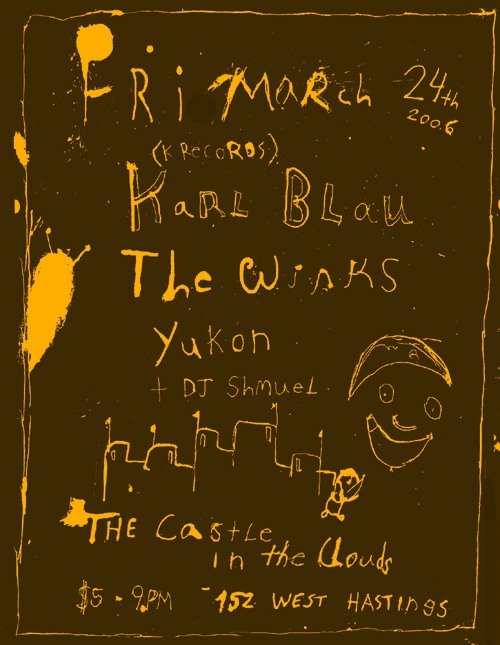
The Winks play March 24th!

It is long past time that I actually made it out to another Winks show and this looks like the one. Wishing them well on their Canadian tour. The email from their mailing list follows the gig poster:
Hi there,

Its 5:30am and we're about to leave for tour. When we get back there's going to be quite a happening at our space, The Castle in The Clouds, Friday March 24th.

There will be music by Karl Blau(K Records), la Winks,Yukon & DJ Shmuel.

Karl Blau is really neat and from a strange and distant land. Check him out: http://www.myspace.com/karlblau

Attached is a poster but what it won't tell you is that Richard Beddoes & Marek Bula will be hanging art work from the walls.

And how to find this show you might ask. Well the address is 152 West Hastings. That's a little ways down the block(south side) from Cambie and Hastings. Look for friendly people behind a brown gate.

Doors are @ 9pm and cover is five dollars.

Sincerely,
Todd, Tyr & Tim.

Monday, March 13, 2006

Nice Note from Ray Carney

Allan,

Thanks VERY MUCH for the able reporting on the Love Streams print. You are doing to it what I did to Shadows. (Well, not quite, since my Shadows project took four or five years and about a hundred viewings, but you have the same spirit.)

Thanks also for clarifying the "Ray Carney is right/wrong" statement. People take what I say out of context and then accuse me of the mistake. Just to clarify another thing about Husbands that has been misunderstood by misreading my writing: UCLA created TWO master prints. Two. Not one. One print is almost complete. It lacks one or two minutes of footage. But that's pretty close to complete. The other lacks approximately 11 minutes of footage, including most of the Leola Harlow and some of the vomiting scene. Rowlands asked for the creation of the second print because she found the Harlow and vomiting stuff "in bad taste." That's what I wrote. I think it's disgraceful of course to tell someone to cut her husband's work because SHE finds it tacky. But that's a fact. The cut print was in fact the one shown at the UCLA premiere screening of the film where Rowlands was present. And it was the one used for later video releases. And used for later print creation. But there is a long print that exists and that was part of the UCLA project. I hope that clarifies my point. What I wrote was not wrong and should not be in dispute. I was writing about the way an instiution like UCLA honors Rowlands's wishes, and how wrong I think that is, and how much it tells us about the priorities of film preservation. I never said that the long print was not obtainable at all. It is. But it is darn rare and almost never seen. The short print, the Rowlands approved print, is the one generally screened, at UCLA and elsewhere.

You may add this to your blog or post it as you see appropriate.

All best wishes and thanks for your sleuthing.

Ray Carney

www.Cassavetes.com

Ray Carney, Prof. of Film and American Studies
Author: Cassavetes on Cassavetes (Farrar, Straus and
Giroux/Faber and Faber); Shadows (British Film
Institute/University of California Press); John
Cassavetes: The Adventure of Insecurity; The Films of
Mike Leigh (Cambridge University Press); The Films of
Frank Capra (Wesleyan University Press); Speaking the
Language of Desire: The Films of Carl Dreyer
(Cambridge University Press); The Films of John
Cassavetes: Pragmatism, Modernism, and the Movies
(Cambridge University Press), and other works.

Sunday, March 12, 2006

Pancakes and Noise and Blim, Oh My: a photo document


Above: your humble flipper, complete with Nihilist Spasm Band T-shirt (it seemed apt).


Above: I was able to take a photograph of some of the noise being produced.

The artist known as Coelacanth, unless, in the manner of Pharoah Sanders, the misspelling elsewhere mentioned (Ceolacanth) is intentional (a Corporate Executive Officer previously thought to be extinct, or such), in which case, Ceolacanth. Great (Canadian minimalist garage punk blues duo) Deja Voodoo couplet, from the song "Coelacanth:" "They used to think/ I was extinct/ But then one day/ Somebody finked," with Muddy-Waters-esque "da DAH da dah" punctuation between phrases.


Volunteer Yuko hard at work. A vegetarian, she sacrificed her comforts for the event and turned many a sausage, even (yuck!) getting some on her finger. Alina is not pictured, our other pancake volunteer. Hi, Alina. The musician who has a recording bearing your name, if you forgot, is Arvo Part... (Correction: Dan of G42 informs me that Alina's name is spelled Alena, which blows the Arvo Part reference. Sigh).


Mark likes syrup!

Though in fact I was only another mere volunteer, it seems that thanks are in order, so I will provide some: thanks to Yuriko of Blim for her part in the event and to... Noel, was it? for extension cords and to everyone whose name I forgot, or am simply neglecting to mention. Thanks to Emma (sp?) for the beer and for organizational duties. Thanks to Dan for the grills, organizational duties, and for getting everyone to applaud me for my role as (free) pancake huckster. Thanks to me for flipping. Artists at the event are listed below, and should also consider themselves thanked! A fine day of pancakes and noise.

Now to wash the batter off the Nihilist Spasm Band shirt...