Thanks to Steve Newton, I know exactly the last time I saw Iron Maiden. It was 36 years ago, in 1983, on the Piece of Mind tour; I would have been 15, and thus well on the way to rejecting metal altogether out of a tribal allegiance to punk, but I liked the show, as I recall. I went with a high school friend, Greg, and it was one of the first-ever rock concerts I went to without an adult (Greg and I also caught Van Halen, the Kinks, and Judas Priest, all also at the Coliseum). I only have a vague impression of seeing Fastway, and thinking it cool that I was seeing Motorhead's guitarist (I had Iron Fist at home, at that point); a vague impression of seeing Saxon - of the singer's blond hair blowing in the stage breeze; and a vague impression of a gigantic Eddie stomping about onstage (still have no idea how, exactly, they do that). About the only specific I recall about the Maiden set was Bruce Dickinson introducing "To Tame a Land" by talking about how Frank Herbert wouldn't let them call it "Dune" because he didn't think much of heavy metal music, which drew boos from the crowd; having read and enjoyed Dune, I thought that was a strange gesture, to write a song based on a novel then invite the crowd to boo the author! ...other than that, I loved the show...
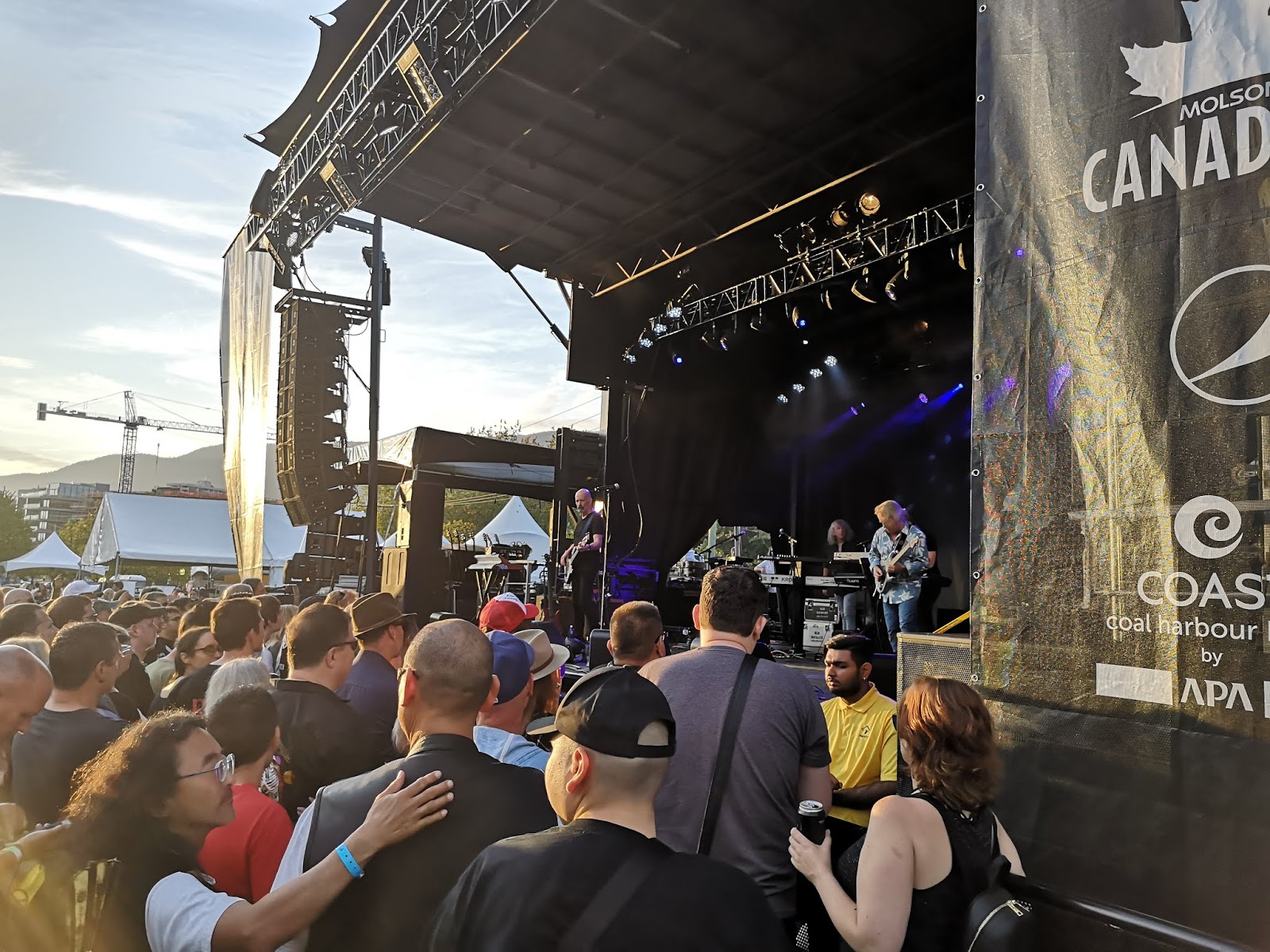
Anyhow, here's welcoming Iron Maiden back to Vancouver. Somewhat to my surprise, I'm going... it feels kind of nice to tie off the circle, to revisit one of those formative bands - especially one month after seeing the BOC. It'll be fun, I'm sure. First stadium show I've seen in a few years....
Tuesday, September 03, 2019


Monday, September 02, 2019
Rodney DeCroo: Didn't Hurt at the Vancouver Fringe Festival
I saw a preview screening of Rodney DeCroo's Didn't Hurt at Havana last February. I thought it was remarkable. A piece of spoken, autobiographical storytelling, it offered harrowing insights into DeCroo's childhood, the backstory to much of his PTSD, and the other impacts the abuse he underwent had on his later life. DeCroo sometimes assumed the voice and demeanor of the child he was in some of his recollections, often doing something closer to acting than "spoken word;" but mostly it seemed like a piece of autobiographical writing that was being performed. The only parallel I could think of was Bukowski's Ham on Rye, but while Bukowski's stories had a sort of self-romanticizing edge to them - the sort of stories a drunk might tell at a bar to convince you to buy him a drink - Rodney's purposes seemed more moral, more ambitious, more healthy than that.
I don't want to say much more about the subject matter of the performance - which was considerably richer than I'm letting on - but I highly recommend catching it during its upcoming Vancouver run, opening September 5th at the Cultch. DeCroo has been touring North America with the show; we discussed how it has evolved as a result, below. There's going to be other local press which might give more insight into the content of the piece, if that's what you want; I personally was glad to see it knowing only of Rodney through his songs and a couple of past interviews (here and here; I had actually considered titling that "Of Poetry, Pain, Shit and Survival," but left out the shit out of fear that my editors would snip it anyhow; I'd rather cut my own writing up than have it cut for me). I hope my questions, and Rodney's answers, will speak for themselves, and that you'll accept my urging: if you like storytelling or theatre or theatrical storytelling; if you appreciate people laying themselves bare in their art; or if you simply are a Rodney DeCroo fan, Didn't Hurt is a must see. Facebook page here....

AM: Curious - since the Havana preview, you have gotten, I am sure, a lot of feedback. Have you changed anything as a result? If so, why?
RD: Surprisingly, the script has remained mostly intact since the preview. Well, the structure- the overall arc of the story- has stayed the same. But there has been a tightening process. I've cut a fair number of lines. [Director] TJ Dawe encouraged me to do that. Mostly because I'm locked into a 75 minute time slot. The more you do a show and settle into it it sometimes takes longer to perform. So you need to cut more. I looked for places where I unnecessarily repeated myself and got rid of them. And I cut lines that weren't crucial to the central needs of the story. I think, like in a poem or a song, compression is a good thing. It makes the piece more potent. The more focused I am, the fewer words I use to make a point then the greater the impact of the content. If I don't tighten, then it becomes more diffuse, weaker. But the story itself hasn't changed much.
My performances however are much different from the preview performance. It takes time, it takes a lot of shows, to drop into the text. The words are in my body now. I'm not searching for them. They're tied to my breath and my impulse life. The text is moving me around now, I'm not trying to control it. I'm constantly surprised onstage by new discoveries, but I don't try to repeat them (well, when I'm on my game I don't) I just let the text do its work. So there are nuances and subtleties that emerge from the story (hopefully) that weren't there before. Also, the show has become more buoyant the last few times I performed it. Because I'm embodying several traumatic experiences it made the show quite heavy seeming- literally- like I was traversing a swamp. I could feel it in the room. It was an emotionally humid presence that saturated the theater. Which was okay, it was true to the content we were exploring as performer and audience, but that has lightened. It's still there but it's much less. It's like we're on dry land now. But our destination is the same. The impact of the story hasn't changed. But it feels like the way we get there isn't quite as heavy. I'm noticing more laughter in the bits that are humorous and new places where people laugh, they seem to enjoy the excitement and enthusiasm of the young Rodney more when I play myself as a child, etc. And this has also lessened the toll the show has on me. Man, these things are hard to explain, but they're there, they're real.
How has touring a theatrical piece been different from touring as a musician? How have audiences been different? Did you also do any music on the road? How many dates was it?
When I tour musically it's usually me and a few other musicians driving a van around Canada. We're in a different town and different club every night. We often don't crash until after three A.M. and we get up anywhere between eight A.M. and noon depending on how many hours it takes to drive to the next gig. The drives vary from three to ten hours. When we get to the venue we load all our gear in and sound check, set up merchandise tables, eat, find where we're staying which can range from not bad to awful hotels to couches in somebody's trailer, etc. This is what we do every day and every night with slight variations for two or three weeks, sometimes longer. So it's exhausting mentally, physically and emotionally. And because we're always rushing we eat fast food or hit diners. And a lot of musicians drink hard to take the edge off but that only takes a bigger toll ultimately. It's a horrible way to live, but we get to play every night and when we're playing well and the shows are good the other stuff is bearable. Oh did I also mention we don't make much money?
In comparison the Fringe tour I just completed was a breeze. I was out for nearly four months which is a long time, but each festival was twelve to fourteen days. So I could create some order and patterns. I didn't really make money doing this either, but my needs were mostly met. And I got to sleep normal hours in the same bed for a couple weeks at a time. The hard part was being billeted; I was always staying in someone's house. That's a grind after awhile, but still much easier than a band tour. I was also able to buy groceries and cook so I wasn't eating crap nearly as much as I would on the road. And I could get to a gym to exercise. In Toronto I was able to take Brazilian Jiu Jitsu classes and spar several times because my old coach lives there. So I was less stressed, eating better and staying healthy, well, road healthy. I find it difficult to nearly impossible to adhere to any strict regimens while touring. The stress is too much and I often cave and eat bad food or stay up too late. Also, I only had to take care of me. I didn't have to search for band mates or argue with them about what time we're leaving, etc. Though if I'm honest I'm usually the one that caused problems because my PTSD acts up big time when I'm under so much stress. And then I feel ten times worse for being a head case. So the Fringe tour was much easier than a music tour.
At first its easy to say theatre audiences and music audiences are a lot different. But I think it's the venues that create the differences. When I play a concert in a theatre it's similar to performing a play. Everyone is focused on the show. That allows the musicians to connect with the audience and get something back from them and they usually play their best. When people come to the theatre they expect to listen. They've come for the show. And they've usually paid a lot more for a ticket too. But if you're a musician at my level, you're playing in mostly in bars and clubs with the odd theatre or festival gig. So people are loud, they often talk over you, they're drunk, they're trying to get laid, they got a lot of other things they're thinking about. They're not there for the show. I've been doing it for awhile so I do have fans that come out to hear me. And there are always people who come for the music or people you win over. But bar gigs aren't easy. And the bars themselves often treat you shitty. They don't care about the music, they want to sell drinks, the band is an after thought. But I will say I prefer playing to theatre audiences because it's almost always a much better experience. I mean, the audience gives themselves entirely over to the show. They don't interrupt you. No one talks, no one comes in late or leaves- though there are exceptions. You can dig into the work, really hold the space and connect with the audience which is an intoxicating experience, it's fucking addictive. It's kind of like a ritual in theatre. There's a spell that gets created, there's magic. But concerts under the right circumstances can be the same. And I've had incredible nights performing in bars. You never know. But I prefer theatre.
Yes, I did do some music gigs on the road, but only in Calgary where I played three for some reason. I played one show at the Ironwood Stage and Grill which I love. I've had some incredible shows there over the years. Pat Macintyre, the owner, has created a venue where it's all about the music and the musicians. They do everything right from the easiness of the load in, to the way the staff treat you, the great sound guys, the quality of the sound, the great stage, the wonderful free meals they provide, etc. I love playing there. It was a slow night because it was a last minute gig but we still had an audience and I got to play with a guitarist named Joe McCaffery. That was great. I've wanted to play with Joe since he came into the studio while Lorrie and I recorded Old Tenement Man and he played on my song "The Barrel had a Dark Eye." And I got to hear Lorrie Matheson perform a set of his songs which I loved. The second gig was at the Blues Can. It was a different vibe altogether. The sound man was a lazy prick who hates his job and shits on musicians. I nearly got into it with him. There was a bigger audience but also a lot of people were there just to drink and hang out with friends, so they talked over the show. It sucked. I also played a feature set at the Ship n' Anchor Saturday afternoon jam. The sound man was okay and the management treated us fine, but I couldn't get into it. The other featured band that played before us was way too loud and were pretty shit. It was fronted by a young woman who clearly thought she's on the fast track to corporate rock stardom. Fuck me, I'd rather punch myself in the groin repeatedly than deal with that crap. But as always I did my best to disappear into the songs. I gave myself over to them as much as I could, listened to Joe and played my best. And when you do that, assuming your songs aren't total garbage, there are always people who are drawn in, who listen and care. Those are the people I play for at gigs. The thing is, my songs are always about the lyrics, the poetry. When I have a full band it's easier to get through those kind of gigs because you're louder and there's more going on onstage to break through to them. But when I'm playing either alone or with one other musician in that kind of environment it's tough because people aren't there for you. Though I've had incredible gigs in those settings too where the room goes silent and magic happens. I will say that if Joe and I had played onstage in a theatre both our performances and the audiences would've been much much better. Give me a theatre audience over a bar gig any time.
Has your relationship to the piece changed after having performed it? When I saw it at Havana, there were some really raw moments, as I recall, where you had to pause to gather yourself (maybe some of those were cintrolled/ acted, but it did not seem that way) . Does performing it several times make it easier or harder for you? Did you learn anything from the experience?
I've performed the show forty times now. I know it much better than I did than when I previewed it. On the most basic level I know my lines now. And I've made a ton of discoveries. I've been living with it for four months. The only way this really works is time. You have to perform a show a lot of times to get it. You can't hurry that process, there are no short cuts. In that preview there were moments I had to gather myself. I was stressed because I barely knew my lines and I felt lost sometimes. I wasn't sure where I was in the story. That kind of stuff happens in a preview no matter how many times I've rehearsed. The adrenaline is going to hit me because it's my first time onstage with that material for an audience. So the stress caused the most traumatic moments to hit me harder than I expected. I had to grab the chair to pause and collect myself a few times. But I wasn't out of control. I just needed a moment to steady myself before I could continue. I'm familiar with the terrain now. It's like say skiing. I've been down this run many times. I know it inside and out. I can let go and enjoy myself. And even if there is a surprise I'm ready because my skills are sharp because I've been onstage night after night.
Yes, I've learned many things about the show. I don't like to talk about them too much though. I want to save it for the stage. When I talk about those things too much it takes away from the performances. I've also learned things about myself. I've always resisted the idea that I had a responsibility for the audience beyond doing the show to the best of my ability. I'm willing to be vulnerable onstage and to connect with audiences but I've avoided connecting with people offstage with the exception of my friends of course. But I noticed that people were getting triggered sometimes by the content of this show. And I could feel the tension that created in the theatre. So I decided to talk to the audiences before the show.
Now I tell them that I have Complex PTSD and I revisit deeply traumatic experiences in some of the stories and if they're triggered or deeply uncomfortable it's absolutely okay for them to leave. And I let them know that I'm not overwhelmed onstage. That even in the most intense moments I'm in control, I'm acting, I'm using technique. For lack of a better term I give them a trigger warning. I think having permission to leave makes it easier to stay. They don't feel trapped. But I really think it's making the connection with them before the show starts that allows them to trust me. They get a sense of me as opposed to a character. I think this helps immensely. I also stand by the door and say goodbye to each person. A lot of people hug me. Some people cry. I've come to love it. I look forward to it. I get to thank them and close the circle with them before they leave. I feel like I'm saying hey, I'm honored that you took this trip with me, that you allowed me into your life for this last hour and let me tell you my story. Before I'd just go backstage and hide unless they're were friends I wanted to see. But I can't imagine doing that now. I feel I have a greater responsibility to the audience. TJ Dawe encouraged me to allow this to happen. He told me people would want to connect with me more because of the nature of this piece. He was right and I'm glad I listened to him. Also, I've always been way too worried about the number of tickets sold, the finances etc. Which makes sense because if you don't worry about those things you can't finance tours. But TJ encouraged me to focus on the experience of being with an audience as I perform the piece. Of really immersing myself as deeply as I could into the text, into the stories and bringing that across to the audiences. He kept telling me success was creating a great show, creating moments of intense vulnerability and truth, of connecting deeply with the audience, that it wasn't measured in ticket sales. Eventually I heard him and put my focus there. And because of that I'm feeling the incredible magic and privilege of what I'm allowed to do. There are very few things like it.
Can you take us through some of the best, most useful, most interesting or complimentary feedback/ reviews you got... And the worst?
Aw man, I don't know. I'm kind of tired of talking about reviews. I'm grateful for the good ones. They help me sell the show. But honestly I can't say I've learned anything from them this time around. I've learned way more talking to audience members and hearing their impressions. And of course, the feedback from other artists is often helpful. But TJ Dawe had the biggest impact on the piece during and after our rehearsals. After that it was what I've discovered while mostly being onstage. TJ cautioned me against paying to much attention to reviews. He said don't let the reviewers get in your head, don't let them direct the show. We've gone through a process, we've created something that we're taking out into the world. Don't start changing it because of what critics say. And he's absolutely right.
Though I'd be lying if I didn't say a good review doesn't make me feel something. They make me feel good. And bad reviews hurt. They can really hurt. And not all critics are equal. Colin Thomas here in Vancouver wrote a nice recommendation last week for my show on his blog based mostly on the number of good reviews I've received, he hasn't seen the show. But he also cautioned against trusting critics if you don't know their work. Some critics don't know shit about the art form. They really don't. There's a part time reviewer for the CBC in Winnipeg. He said some pretty ignorant things about the show. I think they hire him during the Fringe because they don't have enough critics to cover the shows. His review pissed me off because he wrote nothing about my show. It was all about him. He couldn't handle the content. If it's not a Shakespeare mash-up or a comedy he trashes it. And he knows nothing about the craft of acting. Why would I want to give his opinions any credence? They mean nothing to me, but the fact that he hurt my houses through his ineptitude did bother me. Alex Dallas - she's a tremendous artist, a real pro- gave me some great feedback after seeing my show in Orlando. She recommended that I make more of an effort to connect with audiences before and after the show. I didn't quite take her advice right away, for reasons I mentioned earlier. But then I saw Stephanie Morin-Robert greeting her audience before her show and saying goodbye to them at the end. Watching her do this really struck me and reminded me of what Alex had said. So I changed things up. But I try not to give critics too much ability to impact what I do onstage. I do learn things from the good ones but that's for future reference. I don't alter my shows for them. I will say that with the exception of the CBC reviewer in Winnipeg I got universally positive reviews. NOW Magazine picked Didn't Hurt as an Outstanding New Play at the Toronto Fringe. I enjoyed that a lot. I did get a lot of emails and Facebook messages from people who saw the show. They were beautiful. One woman sent me a heartfelt poem she'd written about her own experiences with trauma based on a line from the play. Others sent me long messages telling me that the show moved them deeply. Those messages make me feel like wow, I'm touching other people. They can relate to my innermost feelings and memories. That's powerful stuff. I'm not alone. That's the stuff I take with me.
Where do you go from here with the material? Any thought of filming it, adapting it for a book , touring it elsewhere, or...?
I've had no thoughts of filming it. I mean, we're going to videotape a performance but that's more for archival purposes. And I've no desire to adapt it for a book. That doesn't appeal to me. Probably because I don't think I could do a good job and I'm lazy. A book would be too much work! I've had some informal discussions about taking it to Scotland. I'd love to do that. Moniack Mhor - a writers' centre in the Highlands- gave me a poet-in-residency gig last March. It was one of the best experiences I've ever had. I loved just walking through the forests and roads in the hills working on lines in my head. I walked for hours. I've never felt so at ease and at home in my life. And the people at the centre were wonderful. I miss it all the time. So I hope maybe I can go back and do the show over there. Also I might do the play at Lip Fest in Lago, Nigeria in October. But I haven't received a formal offer from them so who knows. If it happens I'll be thrilled.
Didn't Hurt opens September 5th, at the Vancouver East Cultural Centre, at 1895 Venables, and runs through to September 15th. To buy tickets, go here. For more information on Didn't Hurt - written and performed by Rodney DeCroo and directed by TJ Dawe - see the Facebook event page here...
Didn't Hurt opens September 5th, at the Vancouver East Cultural Centre, at 1895 Venables, and runs through to September 15th. To buy tickets, go here. For more information on Didn't Hurt - written and performed by Rodney DeCroo and directed by TJ Dawe - see the Facebook event page here...
Monday, August 26, 2019
NO FUN on Drugs at the Princeton!
I have very likely seen NO FUN on drugs, but I have never seen NO FUN on Drugs, not even straight. Tonight I will amend that (though I am not sure if I will see NO FUN on Drugs on drugs; I believe, in fact, the drugs are optional). There is, in fact, video footage of a complete, vintage Railway-era NO FUN on Drugs show, which may get played in part as part of the proceedings!
In other drug news, the pot dispensary down the street from me got raided. They were trying for a different angle: to buy, you had to sign a document saying you were a Rastafarian, so they could argue from a religious freedoms perspective. Good luck with that, folks! (A friend who shops there quipped, "I wonder if the RCMP will have my name now," but all that they're going to have on their records is that he's a Rastafarian, so...).
First, they came for the Rastaf... never mind, it's not funny. Is Hobo any good?


Sunday, August 25, 2019
Report from Ambleside, with photos by Sharon Steele: Raise Your Can of Beer on High!

Buck Dharma of Blue Öyster Cult by Sharon Steele, Aug. 18 2019, not to be reused withut permission
Somewhere during Honeymoon Suite’s closing set last Friday at Rock
Ambleside, it hit me, as I looked about the audience: these are the people I went to high school with. The jocks with C’s
in English. The guys more interested in cars than books, and the girls they
fought over, sometimes quite literally. The stoners with the Led Zeppelin and
AC/DC t-shirts who smoked up in the park down the street from the school and
once threw rocks at the punk rock weirdo as he passed with the Exploited on his
shitty Radio Shack tape deck (that being me, of course). They had
lost some hair, expanded in the gut and/ or the ass, and probably had an
average of three kids each now (and mortgages, and kidney stones, and type 2
diabetes, all the other accoutrements of middle age); but they were still
recognizable as my people, whether I
liked it or not.

(All photos not credited to Sharon Steele by Allan MacInnis)
I saw no one whom I actually knew – well, I mean, JJ from Scrape was at the festival, and at
some point, notorious autograph-hound Gerald “Rattlehead” Yoshida (as well as
Billy Hopeless, Graham Peat, ARGH!, and Sharon Steele), but none of them were
from the class of 1986 at Maple Ridge Secondary. Regardless, the High School
Reunion vibe was so strong I briefly even wondered if the guitarist from
Honeymoon Suite, Derry Grehan, was an old classmate of mine. (He wasn’t).


Buck Dharma of the Blue Öyster Cult by Sharon Steele, Aug. 18 2019, not to be reused withut permission
As they sang along
joyously to “Stay in the Line,” it was impossible not to feel fond of this
audience, and weirdly at home, weirdly safe. No one was going to mosh into me
and stomp my foot. No one was going to crowd surf and accidentally boot me in
the head. None of the scenesters whose presence I have come to dread at punk
rock gigs were here – the ones who, if they see me, latch on and jabber
endlessly, their booze-laden spittle spackling my cheek as they lean in to be
heard. It was… a comfortable vibe. About
the only discomfort you could expect was for a beach ball to bounce off your
head, as you stood in front of the stage: there were several of them being
batted about by the crowd.

Crowd shot by Sharon Steele, Aug. 18 2019, not to be reused withut permission
When the biggest stressor you face is a rogue beach ball,
you know you’re somewhere strikingly relaxing and pleasant. The
bring-your-own-lawnchair policy made people responsible for their own little
bit of turf, as long as they set up in a designated zone, which people did,
quite civilly: no territorial squabbles were witnessed, and you were allowed to
stash your chair overnight if you wanted to. There were beanbag tossing games (“that’s
called cornhole,” my wife advised me). There was easy access to the beach and
seawall out back, where the people who hadn’t paid to get in were having their
own mini-Ambleside experience on the park benches. It had been a
straightforward commute in, on the 257 bus (with the park a short walk from
Park Royal Mall), and for drivers, there were a number of parking options
(expensive if close, but free if you put some work into it and didn’t mind a
short walk). The food trucks were reasonably priced and great (I focused on the
perogie guy and the family-run Thai truck, with a small sampling of my wife’s
poutine and caramel corn). There was even a White Spot pop-up shop, complete
with tables and menus (no milkshakes, though). The liquor – sold at two locations
on opposite sides of the camp - was a bit expensive, with two drinks and a tip
running perilously close to $20; but there were also booths set up giving you
free sample sips of Granville Island IPAs, or Social Lite coolers, which mixed
vodka with flavoured, unsweetened sparkling water (the Grapefruit, the Pineapple/Mango,
and the Strawberry were all very pleasant; I don’t really recommend the Lemon
Cucumber Mint, unless you really like the taste of cukes, which dominates). The
sample-dispensers – youthful and pretty - stamped your hand so that you couldn’t
come back that day, but the stamps washed off easily enough once you got back
home.
With all that booze, you’d figure (especially if you’re a
veteran of rock concerts in Vancouver) that there would be at least one person
during the weekend who got problematically sauced and had to be escorted out,
but if that happened, I sure didn’t see it.


(Allan MacInnis)
Even the bathrooms were well-set up – there was a men’s
urinal tent, ringed on the inside with a trough, so that guys in the audience
didn’t have to compete for the port-o-potties, and if you really don’t dig the
port-o-potty experience, there was an actual public washroom attached to the
restaurant on the beach out back. No lineups to pee were in evidence. I came
away with the impression that Rock Ambleside is one of the best-organized, most
creature-comfort-conscience rock festivals out there. They know the audience
well, and know that when you’re our age, comfort counts…


Honeymoon Suite by Sharon Steele, Aug. 18 2019, not to be reused withut permission
And to return to that first evening: Honeymoon Suite was
great. I was prepared to savage them – jotting notes as they took the stage that
the singer Johnnie Dee looked like (sorry) a constipated Robyn Hitchcock, and
remembering my punk rock snob loathing for them in their heyday – but the band knew
their audience, and made them very happy with a seemingly endless string of
hits, all but one of which I’d thought were by other bands. “Burning in Love”
was Honeymoon Suite? “Feel It Again?” “Wave Babies?” I had written them off, previously,
as a one hit wonder, only recalling “New Girl Now,” and rolling my eyes in
skeptical anticipation of how badly they would suck. I was utterly chastened by
how engaged and engaging they were. Of the acts at Ambleside, they had aged the
least visibly, the least poorly, with Dee quipping at one point that the band
doesn’t like change, and had stayed the same for 30 years. They proved decisively
that a good performance by a band you have never cared about is way better than
a mediocre performance by a band you once had some regard for.


Crowd shots by Sharon Steele, not to be reused without permission
Which brings us, sadly, to the Headpins. To their credit,
their new members tried hard, with vocalist Katrina Lawrence zestily working
the audience between songs and guitarist Tony Dellacroce doing a showy solo
setpiece that reminded one of no less than Van Halen’s “Eruption.” It’s not
their fault that they aren’t Darby Mills (who left the band for the last time,
we presume, in 2016) and Brian MacLeod (who died in 1992).

(Allan MacInnis)
But though the new members tried gamely, the whole thing still came across as a sort of, I dunno, alternative to golf for bassist Ab Bryant and drummer
Bernie Aubin. Granted, they’re original
members – their tenure in the band dating back at least to their massive CanCon
hit, 1982’s Turn It Loud. But is
seeing the bassist and drummer for the Headpins really the same thing as seeing
the Headpins?


(Allan MacInnis)
It was occasionally entertaining - it would be hard to mess up a song as good as "People," the first evidence at Ambleside of the enduring appeal of boogie rock, more on which later - but overall unconvincing. On the one hand, Ab Bryant should be commended for braving two
bass solos during the band’s set – because there aren’t enough bass solos in
the world - but on the other hand, someone take a note to him that bass solos,
like drum solos, really need to justify their existence (the funkier one during the up-tempo “People” was pretty good, in fact, but that first one,
earlier on… sheesh. Maybe he took the second because he realized that the first
was lacking?).

(Allan MacInnis)
Other bands at Ambleside have been touched by the death of
members, especially Streetheart – who offered an enthusiastic performance, ending on a jammy cover of “Under My
Thumb,” but whose new lead singer, Paul McNair (of Ambleside vets Harlequin),
did not ever make you forget that Kenny Shields had died in the run up to the
first Rock Ambleside, back in 2017. In fact, he offered plenty of gratitude and
respect to Shields between songs, talking about how Streetheart had taken two
years off out of respect for Shields. There was a sense of nice-guy humility to
McNair and an unforced quality to his smile.
Streetheart brought to mind a moment during Midnight Oil’s
Malkin Bowl appearance of a few years ago, when eagles flew over the crowd, to
the delight of everyone in attendance, including Peter Garrett, who pointed at
them in wonder. Streetheart drew a literal flying V of Canada geese, by
contrast, and no one pointed at them at all: which seemed somewhat appropriate.
The geese seemed a practical metaphor for the band – unremarked upon, taken for
granted, but deeply and touchingly Canadian.

(Allan MacInnis)
Quiet Riot, meantime - whose singer, Kevin DuBrow, passed in
2007, to be replaced (eventually) by American Idol contestant James Durbin –
had nothing of Streetheart’s charm. Warming up the crowd for the Blue Öyster
Cult, they were all obnoxious showmanship and, aside from Slade covers, some of
the tritest cockrock-influenced hair metal imaginable. It was impossible to
fairly review their performance when the songs were as lame and by-the-book as
“Don’t Wanna Let You Go.”
Durbin – who looked more like he was acting in a Hollywood movie about being the lead singer of a metal band than actually fronting one – did have some inspired stage patter, however. At one point, he performed an experiment to gauge the demographics of the crowd. He began by asking the audience, “Is there anyone here who was born in the 1950’s?” A few people cheered, and Durbin replied, “Wow, that’s a lot more than we usually get. Thank you for not being offended. Is there anyone here born in the 1960’s?” He took it up to the present day, with the biggest cheers seeming to come from the 1970’s and 1980’s, though I suspect some people might have been celebrating these decades – let’s have a big cheer for the eighties! - more than actually having been born in them.

I had expected to enjoy Quiet Riot, since I like Slade, and
I have nothing against “Bang Your Head,” their big original number… but no. I
had expected to loathe Honeymoon Suite, since that was my official punk rock
stance back in my teens, but no, that didn’t work out the way I’d thought,
either. I had been interested in seeing the Headpins (since I like “Breaking
Down,” which they didn’t play, and credit "People," as mentioned); but was disappointed, not even realizing that Mills was no
longer with them until the day of the show. It was all getting a bit
disorienting, but thankfully, there were several artists who delivered exactly
what they promised, three of them inhabiting different variations of the blues:
Pat Travers, Sass Jordan, and David Wilcox.

The most interesting question about Travers set was, would
he or wouldn’t he omit “Boom Boom (Out Go the Lights),” a song about beating up
the girl who has dumped you. Originally recorded by Chicago bluesman LittleWalter in the 1950s, it is the song that got Travers the most radio play, and he himself has said on
Facebook that its “title will probably be on my tomb stone.” But politically,
it has aged poorly, and you could imagine some Me Too-era audiences getting
upset over its inclusion (even ones who would have no objection to snortin’
whiskey and drinkin’ cocaine, the subject of another of his hits). That didn’t stop my demographic from singing along gamely, when he introduced
it as “a little party song,” instructing the audience, in one of the weekend’s
many call-and-response routines, “I’ll sing ‘boom boom,’ and you sing, ‘out go
the lights!’”

Failed opportunities for introspection aside, none of that
really matters, I suppose. The point of Travers’ set – opening the festival’s
second day - was his wild-ass blues guitar, and his trio – I believe also
including David Pastorius, nephew of Jaco – did exactly what they were supposed
to do, jamming out with Travers, giving him the platform to have fun. He even
had new songs for us, including an instrumental that I think he described as
“Racing the Storm,” which was apt, since the first two days of the festival
featured fairly heavy cloud cover, threatening to burst into rain at any
moment.


(Sass Jordan by Allan MacInnis)
After Travers, Dean Hill of Rock 101 – one of a rotating
cast of deejays who took on emcee duties - introduced Jordan as “the voice of
Canadian blues rock that cannot be ignored,” and having seen her live, it’s easy
to see why. Her radio hits, like “MakeYou a Believer,” wouldn’t necessarily lead you to expect a band as muscular and rockin’ as
Jordan fronted, but her guitarist could have been in a metal band, and her
drummer’s face went through an impressive range of tough guy snarls and scowls
as he hit his kit, almost like he was trying to beat it up. Jordan was in fine voice and danced and smiled cheerfully,
telling the audience she loved us; it seemed totally sincere and engaging, like
she genuinely enjoyed what she was doing.

(Obligatory, if mirror-imaged, Ambleside selfie)
Similarly, the dependability of the blues was amply
evidenced on day three by David Wilcox, whom I had ignored all my life up to
Ambleside, to my loss. I don’t particularly care for “Layin’ Pipe,” his biggest
single, but it turns out to be atypical of his music. In fact, most of his
other songs are far more rooted in tradition:
funny, upbeat blues boogie numbers like “The Grind,” “Bad Apple,”
“Riverboat Fantasy,” “Do the Bearcat,” “Hypnotizin’ Boogie,” and others, all of which he expanded on live. His solos were so tuneful that
the absence of a rhythm guitarist wasn’t even felt. And when it wasn’t merely
funny – “when I say jump I want you to jump and not come down until the music
starts again. Ready?” - even Wilcox’s stage patter showed just how deep the
roots of his music go: at one point, he instructed his drummer “to shake us and
break us and hang us on the wall,” riffing on a classic Charley Patton tune. There were no other bands at Ambleside who moved me to buy a CD, but Wilcox did (my wife and I have been listening to it this morning, one week after show, and it's just as fun as he was live).

Not everyone’s music, of course, can have the easy appeal of
blues boogie. It became clear quite early on that Canadian progsters Saga were
not playing to me, or even to the vast majority of people at Ambleside – since
the crowd in front of the stage was much, much smaller than the vast horde who
filled the space for Tom Cochrane, who followed. But that's not a bad thing, and the majority can take a
flyer: Saga was playing to a small coterie of rabid fans who had not had a
chance to see them in Vancouver since they opened for Rush at the Coliseum,
perhaps on March 29th, 1980. (This was the subject of some
conversation between the band and the audience, with vocalist Michael Sadler –
who looked a bit like a kinky math teacher - flat out asking everybody when
Saga had last played here, then shrugging, after a hundred different answers got shouted at the stage: “it doesn’t matter, we’re here now!”).
After their hour long set, a hundred-or-so Saga devotees lined up to buy CDs (a
double live greatest hits package, also on vinyl), t-shirts – I’m not sure any
band short of the Blue Öyster Cult sold as many – and get their albums signed.
It seems at least possible that a few new friendships were formed that way,
since – as a bespectacled dude in a Saga shirt at the bus stop afterwards
informed me – none of the Saga fans who gathered had had any idea, before the
show, that there were so many other Saga fans in Vancouver!
Saga, with added Rattlehead bonus in bottom left, by Allan MacInnis. I should ask for his autograph!
All of which is fine and well – happy for them, and Saga do
what they do just fine – evidence here - but I don’t care for prog rock, generally, even in its poppier manifestations ("not my thing," as David M. put it in his sendoff to Neal Peart awhile back).
They would have been a great opening act for Rush, really, but I don’t listen
to Rush, either.

Crowd shot by Sharon Steele, not to be reused without permission
One thing I had in common with some folks in the Saga crowd, however: I
had no great desire to stick around for Tom Cochrane. I liked that he was
playing his earlier material – his t-shirts promised a setlist that included
“White Hot,” “Lunatic Fringe,”
and other songs from the Red Rider years, which I enjoy much, much more than
the sort of Springsteen/ Mellencamp-influenced “Canadiana” of his later years. It
was nice that he included the early songs, and nice, too, that he acknowledged
that it had all started, for him, in Vancouver. But I felt a single drop of
rain on my face, as the band concluded their opening tune, “The Boy Inside the
Man,” and decided it was a good time to beat the rush for the bus. Gerald
Yoshida was at the stop, and two Saga guys now in matching t-shirts. Yoshida
hadn’t gotten his Blue Öyster Cult stuff signed at that point (since they were
playing in Saskatoon that second night; they didn’t arrive at Ambleside until
about 4pm on day three, no doubt power-napping on the plane). But we chatted a bit. The Saga-shirt guys sat together. Maybe they'd just met that day?


(Allan MacInnis)
Day Three began with another surprise: the Romantics were
great. I had been skeptical, expecting a washed up 80’s band milking a couple
hits, but it turns out that a) they have lots of fun originals that I had never heard before; b) that they
amp things up a bit for their live show, making even their hits (“Talking in
Your Sleep” and “What I Like About You” ) sound like real rock songs; c) and that they have plenty in common with
other, more critically-lauded power pop bands like the Flamin’ Groovies. Songs
like “Stone Pony” and “Tomboy” make me curious about their second album, 1980’s
National Breakout, which I don’t
recall coming across in record stores very often; alas, they didn’t have copies
at the merch booth.


(Allan MacInnis)
Then Quiet Riot took the stage, just in time for my wife
and I to take dinner on the beach (where Graham Peat also took refuge, quipping
to me later that he could still “feel the noize,” so to speak, pulsing from the
distant stage); then the crowd gathered for the Blue Öyster Cult. Billy
Hopeless had photos with founding members Eric Bloom (whom he had interviewed)
and guitarist Buck Dharma. Yoshida had an appealingly improbable story of how he got his
stuff signed, involving a search for a bathroom - yeah right - followed by a chance encounter with Buck and Eric, and a skeptical tour manager who tried to ward
him off (“that’s one of those eBayers!”/ “no, man, I’m a fan!”). He got his
Stalk-Forrest Group album scribbled on, though, so I’m jealous. Cartoonist
ARGH! (of DOA colouring book and NO FUN cassette-cover fame) had stories about
having seen the band before, at a legendary 1974 show at the Coliseum where the
BÖC, by all accounts, blew T-Rex off the stage (that’s where the Vancouver cuts
for On Your Feet or On Your Knees
were recorded, by the by, though no one, it seems, can figure out which songs
they were on that album. Billy Hopeless asked Eric Bloom, and even he didn’t
know. )

In honesty, great as they are, the Blue Öyster Cult have never seemed to be about
showmanship. They look, for the most part, like pretty average guys, with
absolutely none of the hollow theatrical flashiness that Quiet Riot had personified. It’s hard to imagine anyone equally enjoying their set and Quiet Riot’s, or to conceive a pairing more antithetical. While occasionally the band does do flashy stuff - check the video for Some Other Enchanted Evening, or maybe find footage of the vintage "Godzilla" prop - the main appeal, I think, for fans of this band is the songwriting and the musicianship, both of which are amazing,
but at times almost understated, with layers you may not even notice for years. It takes a really deep vein of richness to make it possible for a song like "(Don't Fear) The Reaper" to keep its freshness after so many years, when songs with a similar classic rock stature, like Led Zeppelin's "Stairway to Heaven," Pink Floyd's "Comfortably Numb," or the Eagles' "Hotel California" can make a person of taste run screaming to turn off the radio (none of them are bad songs, just massively over-exposed - something I've never felt about the BOC).

Blue Öyster Cult by Sharon Steele, Aug. 18 2019, not to be reused withut permission
Their set began with a couple of numbers off two of their
less successful (but still Columbia-era) albums, “Dr. Music” (off Mirrors) and “The Golden Age of Leather”
(off Spectres). Comparable to
“Transmaniacon MC” in lyrics, that latter tune involves a bike gang on the way
to some figurative Valhalla, and starts with a singalong that invites audience
members to raise their “can of beer on high,” and acknowledge that “our best
years have passed us by.” For any band at Ambleside – especially a band whose founding
members are in their 70’s, performing to an audience mostly in their 50’s –
that’s a brave and funny lyric to invite audiences to sing along to; but our
cans went up no less.


Blue Öyster Cult by Sharon Steele, Aug. 18 2019, not to be reused withut permission
It disappointed me a little that the whoops and cheers got
much more vocal when the band broke out their big 80’s hit, “Burning For You.” (Ditto, of course, for "The Reaper," at the end of the main set). It’s a fine, fun song, but jeez, my fellow audience members, a) "Burnin' for You" is small potatoes compared to "ME262," and b) it’s too obvious to cheer just the hits! I liked the
guy who, by contrast, whooped loudly when the band played “Harvest Moon,” off
their neglected, highly entertaining 1998 album – their first studio album
after being dumped by Columbia - Heaven
Forbid.

Oh, who am I fooling: I am the guy who whooped loudly when the band played “Harvest Moon.”
At this point, 47 years into their history, if you don’t
count the Soft White Underbelly or the Stalk Forrest Group - the BÖC – “on tour
forever,” as their t-shirts proclaim – have the must-plays on their setlist
down to an art. They pretty much always touch on certain songs: “ETI,” “Tattoo
Vampire,” “(Don’t Fear) The Reaper,” “Cities on Flame,” and “Godzilla” (I had
been curious to see f they still toured with a giant, moving, smoke-emitting
Godzilla head, which they’d had with them at the Coliseum when I last saw them,
back in 1982. They do not, or at least didn’t pack it on the flight from
Saskatoon). The question was, which songs they would touch on from the rest of
their lengthy catalogue, which they seem to change up from time to time.
Besides “Harvest Moon,” the variables at Ambleside were “ME262” and “Career of
Evil” (featuring that delightful unrhymed couplet, “I’ll spend your ransom
money/ but still, I’ll keep your sheep”), and their UFO-themed “The Vigil” (that's a link to a live clip I shot; it's arguably the best song on Mirrors, only getting competition on
that album from Allen Lanier’s “In Thee”). It would have been nice for Tyranny and Mutation, Cultosaurus Erectus,
Imaginos, and Curse of the Hidden
Mirror to be represented – all fine and fascinating albums, which, truth be
known, I prefer to Spectres and Mirrors (which got two or three songs each!) – but hell, I felt lucky to be
seeing them at all.

The high point of their show was “Then Came the Last Days of
May,” Buck Dharma’s tale of a drug deal gone bad, based on something that
happened to schoolmates of his. The slowest song off their 1972 debut, there are fairly representative live clips on Youtube, even if they aren't from Ambleside. The song has
emerged as the real high point of their set, since it opens up into a ten-minute-or-more-long
platform for astonishingly deft guitar solos, not just from Dharma but also
Richie Castellano. A musician in his own right – you can read about his history
and other projects on his official site -
Casetellano fills in for the late Allen Lanier’s role and occasionally trades
places with Eric Bloom, playing the more robust second guitar parts and
occasionally taking leads. Castellano’s solo during “Then Came the Last Days of
May” was every bit as memorable and intense as Dharma’s, maybe in part because
we weren’t expecting it.


(Richie Castellano solo, by Allan MacInnis)

Allen Lanier and Buck Dharma, Vancouver 1982, by bev davies. I was there!
Back in 1982, as I recall it, when I caught the band at the Coliseum with Aldo Nova opening, it was Eric Bloom who took
most of the vocals and seemed the leader of the band; at Ambleside, the
majority of lead vocals seemed to be Dharma’s, and when Bloom did take a song –
“Cities on Flame,” for instance, which closed the show – he sang well, but seemed maybe a bit less
robust than he had in the 1980’s. Any 74 year old who flies from Saskatoon to
Vancouver to play a rock concert has the right to be a bit pooped - I mean, hell, I'm 51, and it's a chore to make the basement to change the laundry over - but you
have to wonder if he (or Dharma) have contemplated retirement, after decades of
pretty much ceaseless touring. (On Tour Forever, their current t-shirt reads, with a note that it's their 47th year).

Fans can only hope that – with a new album in the works, a
new label on board, and plans for a host of reissues and live albums – the Blue
Öyster Cult decides to keep touring at least until their 50th
anniversary (three years from now!), and that Vancouver audiences will get a
chance to see them again.
If it happens to be at Ambleside, I won’t complain!

For information about the Rock Ambleside festival 2020, or about past shows, see their official site!
Sunday, August 18, 2019
Tonight! NO FUN on Drugs

The return of NO FUN on Drugs, with footage of a vintage NO FUN on Drugs show at the Railway, happens TONIGHT at the Heritage Grill in New West; David M. will be occupying the FRONT ROOM for this show!
Next week, it moves to the Princeton...
Wednesday, August 14, 2019
Of Zippy Pinhead, the Blue Oyster Cult, and Hank von Hell
So Zippy Pinhead's wake is this weekend! I have no idea how public it is - I am expecting it is at least semi-private, since I haven't seen mention of it anywhere, but I didn't really know Zippy, no one has invited me, and, um, the Blue Oyster Cult is in town. It will be my first time seeing them since 1982! My respects to Zippy and his friends and family, but, y'know, I already paid my respects at the Three O'Clock Train thing, anyway...
I have, sadly, nothing more to say about the BOC at Ambleside - except that this is a vital, important, and vastly creative band, and if you don't know their first three albums (or their last two), you should do yourself a favour and catch up. Start with Secret Treaties. Apparently Billy Hopeless has an interview with Eric Bloom in Absolute Underground...
Another show I won't be writing about in any sort of serious way is Hank From Hell, AKA Hank von Helvete, the singer from Turbonegro, who is bringing his solo tour to the Rickshaw on the 20th. I am not sure why, exactly, but before I listened to it, I was under the impression his solo album, Egomania, was simply not very good. Certain reviewers described it as 80's hair metal, and in fact that's not entirely without accuracy; except Turbonegro always had a glammy, showy, deliberately cheesy, almost tongue-in cheek metal streak in them, even at their peak (I'm talking "Age of Pamparius" here, you know? There's arena rock all over that, which doesn't mean it's not delightful.) I've heard the album five or six times through, end to end, and it's really charming; Hank may have stopped drugging and drinking, but he clearly hasn't lost his sense of playfulness or his love of rock. And what the hell, I was listening to arena rock before I even knew what punk rock was. Egomania takes me back to my teen years, when I was seeing Maiden and Priest and Sabbath (with RJD) and Van Halen and so forth at the Pacific Coliseum. I am actually really excited about the Rickshaw show.... check out Hank's videos for "Bum to Bum" and "Fake It" here.
That's about it. I may be kinda sidelined as a writer again for awhile. Whatever.

Tuesday, August 13, 2019
Vice Squad now on Blu

There are a ton of things I still love about Vice Squad - not least of which is Wings Hauser's reading of the theme song, "Neon Slime" - but I must say, the film's long being unavailable on DVD or Blu has maybe done it a disservice, because I had built it up in my mind as a grimy, violent grindhouse masterpiece, and have been slavering for the day it would be made available again (I last had the chance to buy it at the Virgin Megastore, which tells you how long it's been). It's still fun (and grimy and violent): there's plenty of eye-opening sleaze, some great set pieces, the old guy who wants to suck Princess' toes is pretty charming, and the wallpaper in Ramrod's apartment is damned impressive. Plus no one can fault Wings Hauser for a lack of commitment as an actor, because he just chews this movie to bits and then uses the splinters to pick his teeth, grinning - it is some of the finest overacting ever to grace the screen - but you know, I enjoyed this a lot more, like, 14 or so years ago, when I saw it as a late night screening at Cinemuerte (or back in the days when my buddies and I, as teenagers, would watch it on VHS). For all its virtues, there are also some corny and clunky bits, and more than one winceworthy line of cliche'd dialogue. If you've been counting down the days for it to get this nice new Blu release through Shout! Factory, you had best lower your expectations a little, so that you're not disappointed. If you've never seen it before, though, and like sleazy 80's grindhouse fare set in the dark end of Hollywood, rush to grab it today...
The blu looks great, by the way. Watched it this very night, the night of its release. Tons of extras - including a contemporary peek at its locations - and reversible art with the original poster. Glad it's out, in any case!
Ida Lupino noir double bill tonight!

Ida Lupino is not just one of my favourite noir leading ladies - up there with Stanwyck and Graeme - but she is, it is often said, the only female director of film noir during its classic period. She apparently helped direct Nick Ray's 1951 classic, On Dangerous Ground - which she acts in; she also directed and in some cases co-wrote seven films on her own, two of which, The Bigamist and The Hitch-Hiker, run tonight in a double bill at the Cinematheque. (The former film she also acts in). I haven't seen everything she's done (and I'd at least like to see Outrage, which deals with the issue of rape, at a time when Hollywood seldom touched such things; sadly, it is not screening as part of the Cinematheque's series.)

However, I've seen both the films the Cinematheque is screening, and they're both remarkable. The Hitch-Hiker is a very male affair, with two friends in a car preyed upon by, yep, a hitchhiker! The story apparently was inspired by that of American spree killer Billy Cook, whose onscreen analogue is played by the great William Talman. He's pretty deranged, as I recall - the film is sweaty and gritty and tense and testosterone-driven.

Having seen both films only once, I must confess, however, to a slight preference for The Bigamist - actually playing first tonight, at 6:30; it paints a surprisingly believable portrait of a man guilty of a rather hard-to-comprehend crime (no, he's not a Mormon). I remember that this one surprised me and left me thinking, when I saw it. Sorry to report that I can't say what it left me thinking, but I had expected a by-the-book issue movie, and as I recall, it was anything but.

Lupino, of course, acted in one of the most important horror films in my history - the second movie I couldn't watch (after The Wizard of Oz!) because its images were too upsetting to my young self, The Food of the Gods. It's an only intermittently effective low budget giant animal attack flick, with special effects that range from risible (the wasps and the giant chickens, the latter of which is at least hilarious to watch) to pretty effective, like those goddamned giant maggots that attack Ida, prompting me to ask my parents if we could leave the drive-in where we were watching it. Which I had begged them to take me to, note, having seen the image for Food of the Gods on the cover of an issue of Famous Monsters; I at least had enjoyed The Land That Time Forgot, which my father probably got a kick out of, too, since it was a WWII movie (with dinosaurs) - in a way, the perfect film for us to bond on. (My Mom, a woman of taste, was more impressed that Ida Lupino was in the second film).

Food of the Gods, sadly, is marred by real cruelty to the rats used in the film. Director Bert I. Gordon was obviously operating on a very low budget, so when the films giant rats are shot, blown up, drowned, or otherwise killed, what you're seeing on screen is the real deaths of these animals, which suffering Gordon milks as much drama from as he can. That's not on Lupino, tho' it's sad that her later career involved such shlock. (She only acted in one more film after this). The best thing about that movie by far is that it was filmed on Bowen Island!

So if you go to the movies tonight, and have been on Bowen, you'll know that maybe you stood on some of the same ground that Ida Lupino stood on. And rest assured, though they're not filmed on Bowen, both of tonight's films are miles better than The Food of the Gods... (as are most films, actually, but...).
More on tonight's screenings here.

Subscribe to:
Posts (Atom)