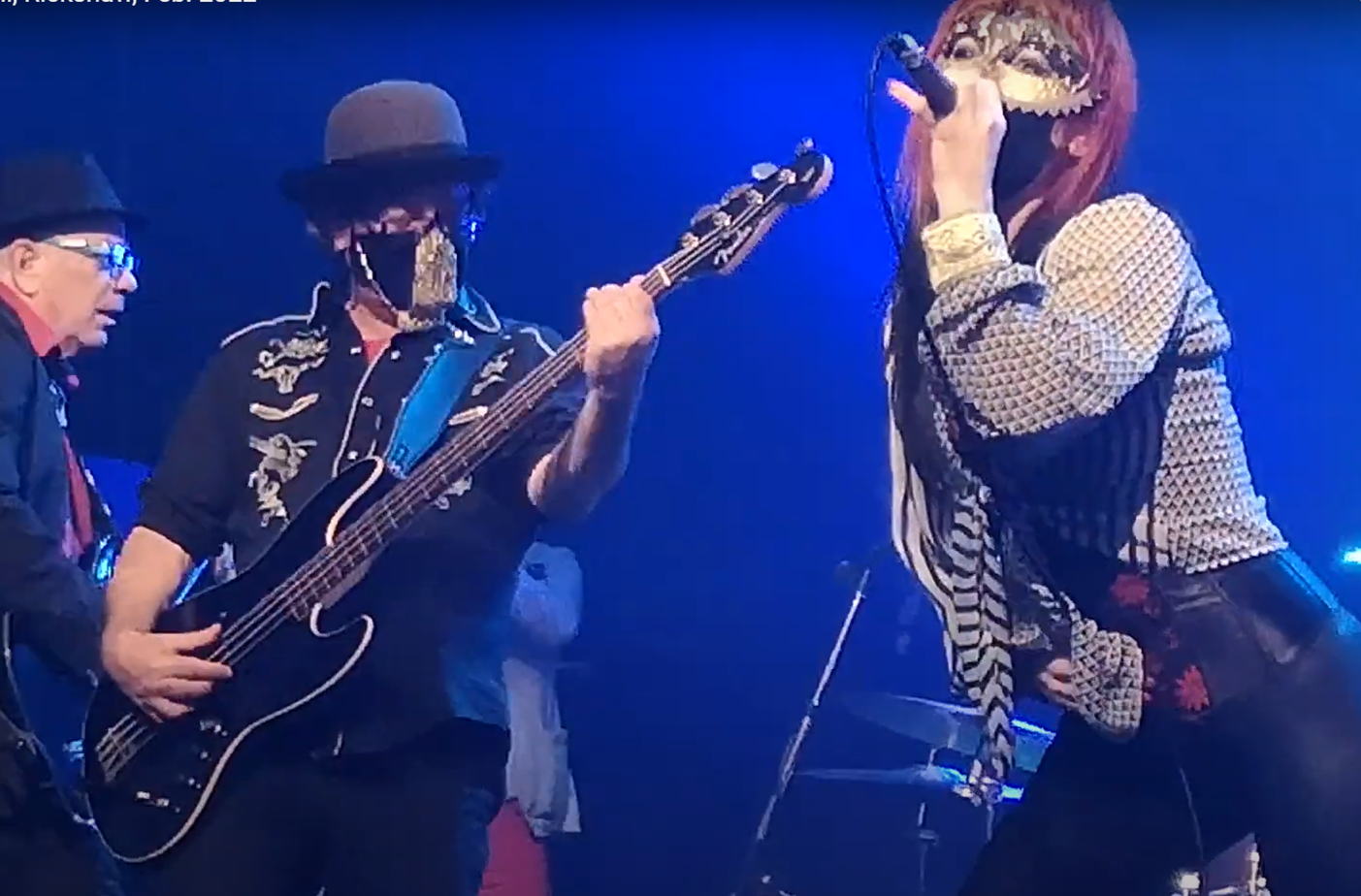
Ford Pier by Bob Hanham, not to be reused without permission
It has been a long journey, for me, to Ford Pier fandom.
In some ways, it began circa 2007 with a friend (Judith Scott of Sister DJ's Radio Band) playing me Ford's song "Great Western," an upbeat, catchy, funny tune of love among bingo players, which came out on his first solo album, Meconium, back in 1995. (Meconium is defined here). Ford and I discussed the song and the album in my last major interview with him. "Great Western" is brilliant, charming, witty, maybe a bit cute (not usually an adjective I would attach to Ford's songwriting) and a fine piece of pop storytelling. It was the first "Who is that?" moment I had with the man's music, but when Judith told me, I was, like, "That's Ford Pier?" Because what I had heard of his music by that point had left a different impression on me as to what Ford Pier was; "Great Western" was just so much more all-there-for-the-taking, so much more user-friendly, so much more darn extroverted, than most of Ford's music I had heard up to that point...
...Which actually was quite a bit, given that he was someone I wasn't paying any particular attention to at that time. I had seen Ford a few times, live, opening for Nomeansno in Ontario, when I travelled east to see them play gigs in Waterloo, Hamilton, and Toronto. I may have seen him take the stage with the Show Business Giants by then, too. And years prior to that, I may even have seen the lineup of DOA he was in, at a gig at the SFU pub (Brian Goble was in the band at that point, but Dave Gregg was not).
"Great Western" aside, none of those experiences sank the hook very deep. I think I even sat out most of Ford's Hamilton set - no doubt very similar to the one he'd done in Waterloo - so my friends and I could peer from a car at a couple of lipstick lesbians making out in public, leaning up against the outer wall of the bar, and spy guilitily on Rob Wright having a covert pre-show cigarette in the parking lot, which moments I actually remember more clearly than the actual Nomeansno set that night (they did "The Tower," and Rob got a bit hoarse; that's all I recall of the show). But I was at the Toronto show at the Horseshoe the next night, when Ford leapt onstage to sing the Show Business Giants' "Sugartown" with Nomeansno - featuring, of course, SBG Maestro Tom Holliston - as his backing band. It was a fun & memorable moment - but not so exciting that I wasn't still surprised when Judith turned me on to "Great Western."
There have been various moments since. The first whole concert where I really connected with what Ford was doing was a 2011 show opening for Mike Watt at the Media Club, one of two times I caught the Ford Pier Vengeance Trio, which I may have described at the time as "power prog" and "the Canadian punk-rock answer to Rush," whilst characterizing Ford as "Pete Townshend on a trampoline." It was a stellar set, another how-have-I-neglected-this-guy moment. I presenttly grabbed Huzzah!, their album, and fell in love with one song on it above all others - a brooding middle-aged dirge called "Lions And Tigers And Bears," about the use of predator parts in Chinese medicine - a song with a gnomic topic, perhaps, but perfectly accessible lyrics: the whole thing could be an inward grumble from a character out of a Raymond Carver short story about frustrated masculinity, is right there for the taking in a way that, say, "Newton and the Counterfeiters," off the same album, is not (at least for me).
Perfectly accessible lyrics are also not a feature of "Ponce De Leon Vs. The Risible Shuck Of Authenticity," a dense, wordplay-studded, ironically catchy poke (I think) at the way music is marketed, which begins with a most memorable image ("happy days are here again/ I'm bleeding out my ass," which, I tellya, resonated with me lyrically from the gitgo, for personal reasons best left unexplained). If I had admired particular songs off Meconium and Huzzah!, Gormful in Maya, the 2020 full length (and still the most recent Ford Pier studio album, a few reissues, reworkings and isolated songs aside, more on which below) that boasted that tune as its opener, is the first full Ford Pier album I have fallen in love with - mostly for that song, mind you, but also "Make It Look Like An Accident" and "I Can't See You" and other songs discussed below, in a new email interview with Ford Pier (playing Central City Taphouse on May 6th). I have listened to the album many times, and felt rewarded by doing so. It's brilliant, rich, and at times surprisingly emotive. It's a great Ford Pier album for a noob to start with, and still in print in vinyl, if that's a format you covet.

So May 6th, 2022, will mark another first for me, in regards my 15-year+ history of slowly evolving Ford Pier fandom: having caught Ford doing opening sets for everyone from Bob Mould to Eugene Chadbourne, from Art Bergmann to Daniel Johnston, having seen him take stage with DOA (and not just at SFU) and Nomeansno and others, it will be the first time I go to a concert to actually see Ford Pier headline a show.
How about that?
I am in italics, below (including a very long opening question, with many sub-questions, which are presented intact even though Ford does not answer all of them).
All photos by Bob Hanham!
Allan: Can
you break down as many of the puns and witticisms as possible in "Ponce de
Leon vs. the Risible Shuck of Authenticity," and/ or explain:
a) Is
it particularly the Fountain of Youth aspect of Ponce de Leon's explorations
that you are referring to, or just the exploratory aspect of his career? Is he
someone you know a bunch about or have meaningful connection to?
b) I
feel like I have read a sentence about something being a "risible
shuck" before but when I Google the phrase I get a bunch of articles about
you. Is there a literary source for those images?
c)
Where did the turn of phrase "out the cloaca/ into the sewer" come
from? Can you recall the inspiration for that? Do you try to come up with
unusual images like this, or do they come to you unbidden?
d)
Were you actually bleeding out your ass at the time that this song was written?
There were other lyrics on the album, which I did not make a note of, that made
me wonder if you were having medical woes at the time of making this.
e) I
cannot tell if your cynicism here, in talking about creativity and music,
extends to yourself - if it is self-deprecating? (You did name your first album
after the first feces of a small mammal).
f)
there is some suggestion in my mind that this song was written in reaction to
or in review of some other rock song - something wicked wobbling to you, but
it's lame, and the message fails to move you. Is there a particular band or
style of music or so forth that inspired or informed this? (Do tell me if so,
but feel free to omit the name of the artist if that makes it more comfortable:
g) Can
you talk about writing the line "down with the settling/ up with the growing?"
There's some fun language stuff happening there.
h) I
actually don't know my tonics versus spirits, but the definition of tonic as an
adjective is something that is "invigorating" or condusive to a
feeling of well-being. So this song, for example, would have a tonic
effect on me. What is wrong with that? I don't get this line.
i) Are
there any lyrics in this song that are just meaningless, clever wordplay, or
does every line in this have meaning to you? (Sometimes confronted with a song
- I mention Brian Eno and Phil Manzanera's "Miss Shapiro" below
- the imagery is so goofy that it doesn't seem to MERIT unpacking. But I kinda
feel about this song like probably all of this DOES have meaning, even if I
don't entirely understand it/ can't fit it all in my head at once).
j)
What is the background inspiration for the mom and pop pop up?
k) Re:
my misheard lyric ("I never bent any spoons"/ "I never been
Dennes Boon":
i) do
you have a minutemen story? Did you ever get to see or interact with Dennes
Boon? (I might have asked this for the Straight thing but I don't recall
your answer, if so... any Mike Watt stories?).
ii) If
you were going to cover a minutemen song live, what song would you pick and
why? Has their approach to songwriting ever informed your approach to
songwriting?
iii)
Explain that Let Them Eat Jellybeans in-joke? I don't actually have the album,
but I've re-listened to "Isotope Soap," and it doesn't seem to have
anything about spoons or Uri Geller in it that I can see. Is there some other
Geza X spoon thing I should know?
iv)
Are there any other lyrics in this song you get asked about?
Ford: It’s
not altogether unlikely that somebody somewhere has strung the words “risible
shuck” together before, but it’s not a deliberate quote. The song is titled in
the way that some songs of mine are, with a phrase which obliquely references
the song’s subject matter, but not its lyric. This works better usually with
songs that deal more with generalities than specifics, as in this case,
settling into middle age, suspended between a panicky yen to remain open to
fresh perspectives and new things, and the skepticism which is the shadow of
wisdom.
Ponce
de Leon (Spanish explorer who sought the Fountain Of Youth) Vs. (pitted
against) the Risible (mirth-provoking) Shuck (boondoggle, scam - but also husk
or discarded outer layer) of Authenticity (in this case, the fetishization of
provenance over content.)
The
song begins by invoking the Tin-Pan Alley standard “Happy Days Are Here Again”
and immediately throws cold water on the association with a vulgar image of
digestive malady of an undignified nature which might be experienced by one of
advancing years. The ensuing lines proceed as a list of trifling
dissatisfactions with novel takes on various fixtures of everyday life, using
language which continues to hint at digestion and the alimentary tract,
suggesting transformation from a vital state to a corrupt one. Rhythmic
punctuation and a vocal melody which nods in the direction of Dvorak’s New
World symphony conclude the song’s first verse with paired anaphoristic
antitheses, subverting the contrast between the two things, as cloaca (also the
word for the evacuation canal of a bird or a reptile) and sewer are literally
the same, and restating the theme of flushing the old away to make room for the
new.
I
could go on like this but I won’t. I can defend pretty well every line in this
song, which I can’t always do. Obviously, I didn’t write it this way, and
generally speaking, I don’t think a checklist of this-means-that encourages a
richer appreciation of any creative work. I used to get together with some
friends and read James Joyce and we’d run into this problem sometimes. We’d get
caught up picking out all the little references and arcane jokes and be so
consumed with our Easter egg hunt that we’d not be taking in what they cohered
to signify. What’s important about all these things is that they support and
give shape to a surface which contains the work’s meaning. Remove that skin and
the meaning can escape, leaving you with this pointless bricolage of allusions.
It’s
also part of the mechanical process of writing this kind of song that you’ll
just use the appropriate materials to make your way to the next statement and
they aren’t intended to mean anything on their own, but they move things along
mellifluously and taken as a part of the whole, they signify. Say the alliterative
jumble of Mom & Pop, Pop-up, and Op as in “black ops” or “grow-op,” or the
earlier mashup of Macbeth, The MC5, and different cuts of meat, or even the
quote from the Geza X bio on the Jellybeans lyric sheet: they’re not conceived
to make a direct comment within the song’s argument, but they extend that
argument’s context. What do they have in common? I can’t answer that. That’s
the listener’s job.
All photos still by Bob Hanham, not to be reused without permission
Cloaca is also a term for the genital tract of insects and reptiles. It's a one-hole-fits-all kind of deal with them, apparently. So in fact your answer did enhance my reading of it - from the sewer to the sewer is not how I had been interpreting it, rather more like someone masturbating into a toilet. But I get it now! Thanks. So, uh, how important is it to you to understand the lyrics of a song? As a listener, do
you prefer songs:
a)
that are completely meaningless but filled with fun wordplay (Brian Eno and
Phil Manzanera's "Miss Shapiro?")
b)
That are deliberately ambiguous? (REM, say) and don't necessarily mean anything
except what you put on'em?
c)
That are not ambiguous, but so personal that you don't really have a hope of
understanding them as they were written short of talking to the
songwriter?
d)
That are dense and witty, but completely unpackable if you try
e)
That are beat-you-over-the-head didactic and inescapable in their
interpretation, as with a lot of punk?
Where
do you feel you fit on that gradient?
For
me, the most exciting thing in experiencing any art is to have some interior
part of myself renewed or bestirred. To have something that I’ve always known
or felt but gotten used to or forgotten made fresh again. I think that’s the
value in those sorts of personal songs, the confessional mode or whatnot, they
have probity insomuch as they refer to the experience of the listener, not to
the extent they expose or elevate their subject. I’m less interested in
understanding a song (or a painting or a symphony or a sculpture) than being
made to feel something by it, and there are many ways of achieving this end.
Many more than these five examples, even, I would say, and they all have their
points. There’s no one way which makes a better song, but one way to guarantee
a lesser song is to have it rely on its lyrical content for its meaning. I’m
not a big fan of uncoupling lyrics from their musical setting, because if they’re
any good at all they’ll be diminished by so doing. With very few exceptions,
effective lyrics are lousy page poetry. A song that functions perfectly as a
song features both text and music that leave something out from their
respective spheres to make room for the other to have its own contribution
felt.
I will
also state here what I’ve said elsewhere before, that lyrics are like pitching
in fantasy baseball: bad does you more harm than good helps you out.
I
have actually had someone observe of your music that it is obscure enough
sometimes that they don't "trust" it, don't trust the motivations
behind it. I think we were talking about crypto-fascism in art, but I recall
mostly only that observation; this is someone whose own songwriting tends to the
c) d) e) end of the spectrum, above, who I think mistrusts stuff that contains
elements of a) and b). In any event, this comment was the IMMEDIATE
CONTEXT that I heard "The Time It Takes" in. What is that song about?
To whom do you look like a liar? What is the "this" that there
is no shame in, and that may have no pride? (Again, this seems quite
self-deprecating to me, but I may be reading it wrong).
Well,
I don’t know what specifically your friend was responding to about which songs
that made them not trust those songs, or what is meant in this instance by
“motivation.” Certainly, some of the narrators in some songs of mine are people
who for whatever reason hold biases which make their accounts untrustworthy or
unreliable. In literature they call this an Unreliable Narrator, so good ear,
Allan’s Friend!
As for
motivations, I think there are a lot of reasons to write a song (and many ones
that are perfectly valid are very slight) but most of them come down to
expressing something in a way that reaches past simply saying so, maybe by
encouraging the sentiment to germinate in the imagination of the listener,
rather than issuing instructions. The Leading A Horse To Water approach.
“The
Time It Takes” is about how isolating it can be to be proven right about something. When the world comes around
to your way of thinking and starts recycling or elects the band they used to
make fun of you for liking to the Rock’n’Roll Hall Of Fame, it’s not as though
they all line up to apologize or to ask your advice going forward. Ultimately,
what you get out of being right is being right, which on its own is sometimes
not very useful.
"Make It Look Like an Accident" - captured live by me here, the last time I saw Ford live, a month prior to the first COVID lockdown - is, like some of Jeffrey Lewis'
stuff, a song that makes one worry about the emotional state of the songwriter.
I assume that the title is a reference to suicide, not murder. It doesn't
actually hide what you're singing about, but it does raise the question of how
autobiographical it is, where it was written from... it's a pretty dark, moving
song. It also has, to a non-musician, what sound like unusual chords - what are
they? They make me think of Andy Partridge creating chords he's never heard
before, to demonstrate his synesthesia in the This is Pop documentary.
First
let me say that I don’t think Andy Partridge has synaesthesia. People who do
are overpowered by the smell of cumin when you pinch their arm, or their teeth
start chattering when they hear the words “joint cost accounting.” Stuff like
that. There are stories about Alexander Scriabin falling off his chair in
epileptic transports while composing because the music he was imagining brought
on visions of coloured lights beating down that were as vivid to him as his
physical surroundings. What Andy Partridge talks about, which he might know if
he ever talked to anybody who wasn’t asking him questions about Andy Partridge,
is your basic evocative association. Pretty standard issue in the creative
toolkit, let alone the one given out to guys who wrote the best pop albums of
the 1980’s. I personally have always had fancies of ordinal linguistic
personification and I don’t think I have… SYNAESTHESIA.
As for
“Accident,” I feel as though I don’t know very much about the narrator of that
song. He doesn’t reveal much of himself, does he? What he does do, it seems to
me, is imagine that acknowledgment is the same as taking responsibility, and
that having admitted certain things to
himself, he doesn’t have to do anything more about them. I don’t know what
happens to him next. That was a rare song that I actually wrote while playing a
guitar, where I started playing those chords (don’t know what they are) and
they brought forth that guy’s voice. Then when I needed somewhere for it to go,
I stuck in the useful parts of an older song I didn’t like anymore.
"I Can't See You" is also a really evocative phrase. There's a lot of failed perception about these days. What was the context of writing this song. Was there a particular failure of human perception/ context for misperception that you were thinking of?
Well,
before I answer that I need to ask you what you think it’s about.
Do
you have another song from Gormful that you plan to play, that you might unpack?
You’ve
got me doing more unpacking than I ordinarily do here. I don’t think the way to
best appreciate these things is to unpack them. If they worked best when
unpacked, I wouldn’t have packed them. We’ve already talked about this a
little. The Wasteland isn’t just a catalogue of annotated references, and it’s
true that if you get rid of the body of a car you can get a better look at all
the things inside which are doing all the real work, but it’s not as attractive
and it endangers the passengers.
I need
to be clear here: it’s never my intention to be deliberately obscure or occult.
I’m not protecting any secret keys to advanced readings of my corpus. Most of
the little filigrees we’ve touched on are just sort of there, and they lend the
song integrity, but they are not where the song lives and shouldn’t command too
much attention.
Fair enough. It gives me something to ask about. But... on another note, how has COVID been for you? Have you musically kept busy, or are you having to practice hard to get back to it, or...? My friend David M., who just played Central City the other night, was saying that he chatted with you at Red Cat during the lockdown about how neither of you had interest in playing shows for awhile there. Is this your first gig back?
Yeah,
having to practice. I did a show a couple of months ago in Powell River which
was really more of a way of paying to go up and visit friends, but that’s been
it since the show with Chadbourne and Hamm in February of ’20. I don’t usually
play an instrument for the enjoyment of so doing, and like I say, I almost
never write on an instrument, so I haven’t done a lot of playing for the past
couple of years. Like, hardly any. And I’m not one of those irritating people
whose facility remains blithely undiminished by periods of neglect. It’s good
to set some milestones and deadlines so as to not make it easy on oneself.
This
period has not been unmusical, though. I’ve done a lot of listening and started
paying more attention to some stuff I always meant to. There have also been
releases. Gormful came out, of course, that was the biggie. But there was also
the single and accompanying video “Good At Owning” for which I was reading a
list of mixing instructions over the phone to the engineer as I was being
wheeled into the OR for a hernia operation last January, and there was also The12th Letter, which is an album length collection of demos of songs dedicated to
all the bands I’ve been in before. That was released digitally last September
with donations for download being passed on to Girls Rock Camp Vancouver. Most
recently, I finally got around to putting up on Bandcamp album number 2.5 from
2000, Besides, which was long unavailable. So even as I’ve been playing and
writing less than ever, there’s been something going on consistently. I’m ready
to put my nose to the grindstone again.
Speaking of David M., do you have a favourite NO FUN/ David M./ Paul L eahy
story or song or tape or...? Did you ever see them open for someone
particularly cool, or were you not here when they were most active? (I saw
them open for Robyn Hitchcock but I would have loved to see them open for
Tupelo Chain Sex).
I used
to go and see the Christmas and Valentines Day shows when I could. One or two
other times. I may be wrong, but I think they were less active than they might
have been previously by the time I moved here. I will say that Snivel is just
about as good an album as has ever come out of Vancouver (okay, The Lower
Mainland,) which is all the more impressive for how well it holds up over its
not-inconsiderable length. I suspect you may be unaware that Eric Napier from
The Vengeance Trio was in the band Pleasure Suit with Paul, along with Marc
L’esperance, who has production credits on many records by myself, Veda Hille,
Show Business Giants (on whom I think No Fun was an important early influence), NoMeansNo, and dozens of others.
Ford and Chi, by Bob
Do you have a story about Mr. Chi Pig? How well did you know him?
Our
relationship went through a number of different stages, as relationships do,
but we were very close for a long time and I’ll always think of my friendship
with him as being one of the most significant relationships I’ll ever have.
Just the other night, I was going down a YouTube rabbit hole of early live
concert footage of Midnight Oil, who were a band we shared a love for, and and
every so often Peter Garrett would go into one of his crazy crashing helicopter
dances and I wished Ken were there watching it with me. I could hear the cackle
at the other end of the couch. There were things that would make us laugh and
laugh that nobody else seemed to find funny. There’s a snippet from a Suburban
Lawns song that some lunkhead gets up and yells into a mic while the Circle
Jerks are going into “Beverly Hills” in the first Decline Of Western
Civilization movie which I quote in “Bug Out Kit” on Gormful In Maya as a hello
to Ken. I’m glad he heard that before he died (he snickered obligingly,) and
I’m glad I was with him when he went.
Are there other songs you will be playing in Surrey that we should talk about?
(David often breaks out covers in contexts like these, where you will be
playing maybe to people who do not know your music well - do you have any
crowd-pleasers planned? Will you sing "Great Western" or other more
crowd-pleaserly tunes?
I
don’t know what I’m going to do. Two sets, forty five minutes each. The way I’ve
been practicing lately is going down to the jamspace and making myself up two
ten song sets of randomly selected material and ploughing through them and
taking note of what sounds like it’s going to need more attention before it can
be played in front of people without embarrassment. I’ve got a couple hundred
songs and I never play the same set twice, so it’ll depend how I feel and how
the room feels. One of my rules, not that anybody cares, is that all releases
be represented. Covers? Yeah, that happens. I’ve been wanting to play “ALover’s Question” by Clyde McPhatter for a long time. Maybe I’ll do that.
Ford Pier with Strength of Materials by Bob Hanham
What are your next shows? Anything in the works, album-wise?
There
are a couple of newer songs; there’s always any number of them on the go and they
get finished as quickly as they allow themselves to be. I don’t plan my records
as far ahead as I used to, so I’m not quite sure what the next record will be
like, but I’d like it to be another solo one like Gormful. That means finishing
up a few more songs in that mode. I know where to look for them. They can be
coaxed out. If I feel I need to run through them in public to see what works
and what doesn’t I might try and book myself something, but I’m really not in a
hurry. There are one or two things on the horizon. I’d like to release the
third Strength Of Materials 7” this year as well, and maybe perform if there’s
some time we’ll all be in town at once! I also recorded some vocals and organ
for a record Larry Boothroyd from Victims Family and the Guantanamo School Of
Medicine did called Remote Communion. It’s a collaboration with friends and
associates of his from the four corners of the globe. Many familiar names. None
of us knew who we were being matched up with, we just sent our additions to the
basic track and Larry mixed them all together. I just heard the final product
and it sounds great, but I’m not sure when it’s expected to see the light of
day. Finally, I’ve been playing some guitar for some songs that Hamm and Bruce
Wilson and Terry Russell have cooked up. I haven’t had the privilege of doing
creative things with those men since Tankhog, so this is a special pleasure.
And it’s getting me thinking about the guitar again, which, as mentioned, is
welcome!
I am curious: how many copies of Gormful in Maya did you get pressed? Where did
you get it pressed? (How much did it cost?) You often put out albums on vinyl -
but not all of your catalogue comes out that way.... but I often wish other
artists did this. Is vinyl becoming more of a pain in the ass that it is
worth?
Vinyl
manufacture often seems like a tithe you have to submit to the perception of
your product’s legitimacy. Like if it’s a mere download, stream, or (ew) CD,
it’s not something to be taken seriously, but if you wait in line for a year to
roll off a couple hundred on LP, then it demonstrates belief in your work and
that work’s validity. I am not a format partisan. I will tell you this: if you
are driving around Europe by yourself in a Peugeot from gig to gig, it is a
much happier experience carrying a box of 200 CD’s up three flights of stairs
than a box of 200 LP’s. I had them made here at Clampdown. Billy Bones: good
people.
Car Free Day in front of Red Cat, 2019, I think? By Bob Hanham
I
have noticed vinyl of an album of yours I do not know is on the shelf at Red
Cat - Organ Farming, I think is the title. I have not listened to it, save for the one song on bandcamp. What is
it? Where did this vinyl come from?
Organ
Farming is an EP which is part one of two along with the Adventurism CD, which
was recorded at the same time just before I left Toronto to move back to Vancouver
in 2006. Mostly just me with the drummers Don Kerr and Ryan Granville-Martin.
In a lot of ways, taken as a unit, those two records are my favourite. Almost
everything on them was written during my daily three-hour shift at a car wash I
worked at on Dundas West across from Parkway Avenue. Great job. You could just
stand there and chew over ideas and occasionally polish a rear view mirror.
When I told my record company at the time that I wanted to release a six-song
12” vinyl record with a download voucher, they thought I was off my rocker and
suggested I ask whether Saved By Vinyl in Calgary might be interested in
handling that project, which is what wound up happening. You should do yourself
a favour and listen to that EP! You might recognize a lot of it.
Organ Farming cover art by Greg Smith
Thanks to Ford Pier for indulging my questions and explaining himself more than he is wont to, and to Bob Hanham for the great photos. See Ford Pier at Central City Taphouse on Friday, May 6th, starting around 8pm, a short walk indeed from Surrey Central Station. Minors OK, no cover, good food - gonna try the fish and chips this time! (Oh, and the sticky date pudding thing is to die for - I had a nibble of Erika's the other night when we went to see David M. and it was definitely the best of three desserts I have tried there so far, and also our server's recommendation).