Friday, September 24, 2021

Kier-la Janisse interview: Woodlands Dark and Days Bewitched, folk horror, and All the Haunts Be Ours


I am not sure when I first encountered Kier-la Janisse, but I know where it was: between movies at Cinemuerte, a horror film festival that she curated several years in a row at the Cinematheque in Vancouver.  I was living in Japan between 1999 and 2002 for the first few festivals, and am particularly bummed to have missed the one where Udo Kier was a guest of honour - photos here! - but I loved pretty much everything I saw at Cinemuerte: Lady Terminator, Class of 1984, Vice Squad, Miike's One Missed Call...  IMy first film at Cinemuerte, I think, was Tobe Hooper's The Toolbox Murders, circa 2004, complete with a revolting sausage-eating contest (Videomatica's BJ Summers was a contestant), emceed by Edwin "do you like headcheese" Neal, from whom I bought a Texas Chainsaw Massacre promo pic which he inscribed with those very words... I still remember the gag-inducing smell of what seemed like uncooked sausage, as BJ, a Korean guy (who ultimately won), and maybe one other person power-fed themselves sausage after sausage and Neal cracked revolting jokes. It was a very entertaining night, and also the night where I first chatted with both BJ and Cinema Sewer's Robin Bougie, in a sort of "film afterparty" booth at the Templeton... Either that was the year or the next when I first approached Kier-la to congratulate her on putting on such a delightful festival, and she thanked me and grumbled something about how expensive it was to do and how attendance wasn't what she hoped...

That was something she echoed when I did a similar thing in regard to the Big Smash festival of music-themed films, circa 2006, which was very poorly attended, considering how great the films were, with documentaries on Roky Erickson, Nina Simone, and Albert Ayler, and fictional features like the ridiculous Aussie film Stunt Rock, Peter Watkins' Privilege, and Phantom of the Paradise, with Paul Williams in attendance. Wreckless Eric was on hand, as well, to introduce his pick for the festival, Godard's Sympathy for the Devil and to play a gig at the Railway Club, which I saw and much enjoyed. I was stunned that one person could be the driving force behind so many great theatrical experiences, and apparently doing it in a sort of self-started, personally-driven DIY fashion; she wasn't a paid programmer, didn't have a cinema of her own, but was putting these festivals together out of love for film, especially its less "respectable" elements, and a desire to share it with others. 

I wrote at some length about the Big Smash films, early in the history of this blog, but the key piece of writing I did regarding any of Kier-la's programming back then was a piece on Zev Asher's film Casuistry: The Art of Killing a Cat, which ran in the final issue of Terminal City newspaper - remember them? (It was also my first time being edited by Fiona Morrow, who now works with Montecristo Magazine, whom I still write for from time to time). I would later try my hand at curating a short program of films, including one of Zev's, for Noise Night! at the Vancity Theatre, which also featured a short live performance by Asher - who did a major interview with me while in town, which can be found here (RIP). Kier-la was truly an inspiration: it hadn't occurred to me that cultural events like Cinemuerte or Big Smash could come about just because one person with a passion DECIDED TO MAKE THEM HAPPEN. I tried, with some success, to make a few things happen myself, following her lead, a little. 

But there is no equivalency to be had here: Kier-la is a next level phenomenon, and her history after she left Vancouver is impressive  indeed - programming at the Alamo Drafthouse, running the Blue Sunshine microcinema in Montreal, writing a book (House of Psychotic Women: An Autobiographical Topography of Female Neurosis in Horror and Exploitation Film), founding the Miskatonic Institute of Horror Studies and the Spectacular Optical publishing imprint, and now working with one of the most exciting cult-and-horror DVD/ blu-ray labels out there, Severin Films, who are releasing a massive box set of folk horror films, including one (Clearcut) that I have great love for (more to come on that; I had some involvement in a couple of extras, but it remains to be seen which will make the final disc, and which will be held back for a possible future stand-alone).. 


Kier-la has also made her first feature film, Woodlands Dark and Days Bewitched, which is coming out as part of that set (and as a stand-alone disc), and playing the VIFF this October (Rio screening October 8th). She answered several email-interview questions about both the box set and the documentary. I've seen it, and it's great - see my previous post on this very blog for more in the way of review - and it will leave you with a long list of movies that you simply must watch, some of the most exciting of which are in fact on said box set. Woodlands Dark and Days Bewitched is like your own private seminar in folk horror, looping in experts from around the world to talk about vastly different films, united by a common theme...


Allan: I have not seen a documentary on any genre of film to do a depth analysis quite like this - but I don’t watch that many documentaries about film. Are there inspirational films for you, favourite documentaries about film that you took a lead from?

Kier-la: The only documentaries I referred my editors to were Johan Grimonprez’ Double Take and another called Bunker 77, the latter mostly for aesthetic reasons in terms of the super 8 and sun flares etc. But Double Take was a big influence in how I wanted the film to ‘feel’. Obviously Los Angeles Plays Itself is a touchstone in that it’s a very comprehensive movie doc, but I think other than that my film is very different. The main thing I got from other film docs was the resolution to not fill it with famous people who have nothing meaningful to say. I didn’t care if the interviewees were scholars that people hadn’t heard of, it was more important to me to have researchers allowed to share their own research in their own words, to get direct credit for their ideas. I also didn’t want it to just feel like a list of films. So I avoided the structure a lot of film docs take which is purely chronological.

Did the short "documentaries" you prepared, I think to run between films while you were with the Alamo Drafthouse, provide a meaningful way of cutting your teeth as a filmmaker...? I think
I Was a Teenage Quincy Punk was yours, and I remember seeing something you put together on Krautrock that played between films at the Big Smash festival in Vancouver. It kind of surprised me to see Woodlands Dark and Days Bewitched described as your first film - but if I remember my impression at the time, you didn't seem to have that much invested in those short films...


I think of those more as things I edited. I didn’t shoot or create new footage for those, they were all compiled from existing footage and kind of slapped together. The Bubblegum one [Bubblegum Music is the Naked Truth, based on a book by Kim Cooper and David Smay, 2005] was definitely the most accomplished, but still they were sort of me making-do with whatever I had in my collection. I see this film as completely different because even though I’m using a lot of film clips, I had to create it from scratch, collaborate with others, there is a much stronger vision behind it. That said, those bibliodocs (as my friend Hope Peterson calls them) were certainly a training ground for how to structure footage to tell a story.

It seems that with a lot of genres of film, especially horror film, there is a single determining factor for whether the film belongs. A werewolf movie pretty much has to have some kind of werewolf, for example. But folk horror isn’t like that – there’s more than one factor that has to be in place. Do you have a final list of factors/ criteria? Do you agree with Adam Scovell that it’s not a “genre” but a “mode?” 

 I don’t know that horror is as easy to determine or define as you say. Horror fans argue about it endlessly, whether this film or that film is ‘horror’. So the slippery definition of folk horror is much the same, I just allowed people to interpret it how they saw it, and tried to support their arguments for why something did or didn’t fit. There was a longer intro that had people giving stricter definitions of what folk horror is and I took it out. It appears as an extra on the blu-ray. Ultimately it felt presumptuous and even a bit condescending. And as several interviewees mention, a lot of these films were made without any attempt to fit into a genre with each other and are very different - even the films in the Unholy Trinity [Witchfinder General, The Blood on Satan's Claw, and The Wicker Man] are all quite different from each other. Ultimately people decide what it means to them.


Have both the documentary and the folk horror box set been tied together from the outset, and completely your baby and synched up to enter the world the same year in a really impressive feat with few parallels that I can think of… or did one project get underway first, and influence the other?

The documentary definitely came first, and as it was nearing its end, like in summer 2020, David Gregory started looking into rights on all the films mentioned that didn’t have US distribution with the idea of releasing some to tie in to the doc. Over time this became a box set, inspired no doubt by the success of our Andy Milligan and Al Adamson box sets, but even then we were thinking five films. That eventually became 20 films, a book, a couple CDs, and a ton of custom merch. But I have overseen it all, I chose the designer and art-directed it, I curated the films from a wish list, edited the book, worked with the composer of the spoken word album that comes in the set to get the music how I wanted it, chosen all the merch we would make, etc. of course there is a whole team of people at Severin facilitating all of this but they let me take the lead on it creatively. 
 

The section on Paganism seems notably shorter than other sections of the film. Why? Do you have any personal history with neoPaganism or neoPagans, or the occult in general?

Originally all the sections were meant to be that length, it’s just that the others got longer! And there are already so many documentaries about paganism/ witchcraft/ occultism that really that topic is better served elsewhere. So it was an important bridge between other ideas in the doc, but to make something really comprehensive would have required much more research and screen time. One thing we lost from that section though that I didn’t realize til the film was done, was we originally had a little section on Alex and Maxine Sanders, that somehow got cut and I didn’t notice, and so I do wish there was at least a picture of them onscreen. So, an oversight there. I don’t have much of a personal connection with paganism other than buying a lot of witch books as a teenager and trying to make charms and do spells etc. and there are some superstitions I hang onto from that time. I do read oracle cards most mornings. But I tend to use them more as behavioural guides than as anything with divine or psychic properties.


The mossy woods stuff at the start of Woodlands – it looks like it could be Super 8 stuff shot in BC; is it? Is it found footage, or was it shot for the film? It reminds me of the forest stuff in Dog Star Man… were portions of the film made in BC?

Some of this was filmed in BC, on Pender Island, by a local photographer named Rachel Lenkowski, one of my oldest friends. We had some super 8 shot in the UK by Neil Edwards, but he got the forest on a rather pleasant day and it wasn’t quite ‘dark’ enough, haha. So Rachel and I went out one days and she shot more B roll, on video, and then our animator Ashley Thorpe added some fox to it to try to make it match the grain and stutter of the super 8 we already had, so that it was less obvious when we cut between them.
   

[Pop up animation by Ashley Thorpe]

You do something kind of slippery with the narration. You don’t speak at all in the first section, then introduce yourself as an interview subject in the second chapter, then later use the “interviews” with yourself (as with others), overlapped by images in the film. You end up the de-facto narrator, but it’s a pretty gradual, even relucatant, introduction. What was the idea there?


This was purely practical. I didn’t want to be in the film, and I hate that I’m in it. I saw one review that mentioned how I “slyly snuck myself into the film” to seem as important as the other people being interviewed, and that stung because it wasn’t the case at all. But often there would be transitional things I needed or there was something I wanted mentioned that no one else had brought up, and because these people are scholars and critics, not actors, they’re not going to just say lines I’ve scripted for them. Often I’d try to get someone to say something but they’d give a much more complex response than I needed for a transition and so it was easier to say it myself. The chapters were edited as they appear in the film, so by the time we got to editing the international section we were in full COVID mode and it wasn’t safe to film people, including myself, so I recorded a bunch of audio that we tried to pretend was interview footage covered with imagery. So if that feels clunky at all, I blame COVID. 
 

There are, inevitably, going to be people asking, “Why didn’t you include this film?” I’m going to try not to do that so much, but I’m wondering about the absence of Larry Fessenden’s Wendigo, the Netflix film Apostle [above], and the Southern Gothic cannibal movie We Are What We Are. Are they just films that fell through the cracks, or was there a reason for excluding them? Were any films excluded for particularly interesting reasons?

There are dozens of films not in it. Nothing was really left out because I didn’t want it there, as much as we just couldn’t fit everything in, or maybe they didn’t illustrate the ideas being discussed as well as other films. Because remember, I didn’t want a list. The only way we could get the film to a reasonable length was to stick to the big ideas and use clips to support them. The Apostle is in there briefly, however. There were a couple films like The Blair Witch Project and The Hallow that I kept making notes to myself not to forget them... and then I forgot them.


 I was confused by the inclusion of Hour of the Wolf. It’s certainly closer to horror than most of Bergman's films, but The Virgin Spring seems to tick more boxes for folk horror… was The Virgin Spring just too obvious, because of the connection to Craven, or were there other factors in not mentioning it?

Hour of the Wolf was there because Kat Ellinger and a couple other people mentioned it in interviews. In some cases we cut out the bits of them talking about the films and just had the visuals onscreen, in order to tighten up the film. This happened with Clearcut (which Jesse Wente mentioned), Lake of the Dead (which Jonathan Rigby mentioned) , but again we didn’t want the film to be a list of movies so if all they said was “this film would count as folk horror” then we tended to cut them saying that and just show the film. Hour of the Wolf fit better in the context of what Kat was saying (about magic landscapes etc) than The Virgin Spring did. The Virgin Spring is an adaptation of a folk tale but its presentation is less focused on the strange and uncanny. There’s also a much different discussion of that film’s relationship to the original folk tale than the film allowed for here, as the tale’s moral and sympathies originally lay with the male sons who are denied their birthright. The celebration of the daughter is, if I remember correctly, a 19th century addition to the tale.  


Were there any films you really wanted to include in the box set that were really, really challenging to get the rights to, or track down prints of? Were there any that had to be left out? Any “ones that got away?”

All the Brazilian films. Currently locked away in the abandoned Cinemateca Brasiliera, possibly succumbing to flood or fire due to the current government’s neglect of their cultural history. It’s a really infuriating situation there. I really wanted Noites de Iemanja and As Filhas de Fogo but no dice. Also [Filipino filmmaker] Mike de Leon’s Itim aka Rites of May. We came close on that, and de Leon was about to restore it and then decided he didn’t want to with no explanation, but I still hope he changes his mind so that film can get a re-release somehow.


Movies about “devil worshippers” like The Devil’s Rain or Race with the Devil are presumably not included because they’re not folk horror – but what makes them not folk horror? Are there other films that you left out of the discussion, because they weren’t “folk horror” enough?

As Robert Eggers says in the Lovecraft section, he was wary of complex occult systems, especially those espoused by educated wealthy people, being discussed as folk horror because they are removed from the ‘folk’. There are a few films that always get discussed in terms of folk horror that fit into this realm, like Eye of the Devil, but overall I adopted this cautiousness and so I didn’t include devil worshipping films unless an interviewee brought them up. That said, in many of these 70s films the Satanism is not especially complex haha and it is definitely a vernacular manifestation of those beliefs, so again it comes down to space.


This question is in honour of Robin Bougie: Is Zebedy Colt’s pornographic film The Devil Inside Her [viewable online, but emphatically NSFW!] a kind of folk horror? [It’s about a rural Puritan farmer whose family is possessed by the Devil, who tricks them one-by-one into incest with each other. There’s also a jealous-sister subplot involving a witch’s curse, and a spectacular, demented witches' sabbath orgy at the end, including Annie Sprinkle, who says she found the film a bit scary to make.] It’s a very DIRTY, sinful, deliberately transgressive movie; the filmmaker was gay/ bisexual and very interested in attacking “straight” sexual mores… It’s maybe the only porno that I grant full respect as genuinely interesting cinema. Are there other pornographic folk horror films? Are there folk horror films that are “sexier” than others?


I haven’t seen The Devil Inside Her so I can’t comment, although yes, it sounds like it would fit. One gay porn film that was recommended to me by a Evan Purchell (of Ask Any Buddy) right as I was finishing the doc, so it didn’t make it in, was Falconhead. Which is a bit folk horror and a bit California gothic. I think sexy is a bit subjective so yes, I’m sure, but each viewer would determine that themselves.

Re: cults in America – has anyone yet made a horror film about snake handling? There’s a great one to be made.
They Shall Take Up Serpents could be the title. I love that you used the photo from the cover of Denis Covington’s Salvation on Sand Mountain [below] in your montage on “weird Christians.” But I don’t think I’ve ever seen snake handling represented in a non-documentary film… 


There are narrative films set in the world of snake handling, I watched one I was considering for the doc but ultimately it wasn’t horror, it was a pretty straight indie drama. There are a few pics from that Sand Mountain book in the doc.

Re: First Nations folk horror - I loved Jesse Wente’s observation that “it’s all an Indian burial ground.” High point in the film, for me – the slap-you-upside the head revelation that going to change how I view that trope in horror films, and chillingly relevant to recent events. Did he bring that to the film, or were you searching for “Indian burial ground” horror films before he says that?

I specifically approached Jesse because I wanted someone to talk about the Indian Burial Ground trope. But what he says is my favourite part of the film too, and many people have expressed that to me. And how eerie given the timing of the film’s release with all the new discoveries of Indigenous remains at former residential schools. Not that these things are new, these are things we know, but it gives his words extra weight when it is in the press again simultaneously. I mean that is true horror right there.

I love that there is a clip of
Clearcut in the film and that you have included that film in the All the Haunts Be Ours box set – as you know, I’ve been keenly advocating for its re-entry in the world. What’s your history with that film? What was the process of getting it included?    


I had not heard of the film til Jesse Wente mentioned it! But once I saw it, it was a film I advocated for including, but I did not deal with the acquisitions for that, that would be my boss David Gregory, who found the materials in Poland and Ryszard Bugajski’s stepson oversaw the transfer at a lab there. 

What were the more exciting revelations for you from making the film? (That is, new perspectives on folk horror that emerged from your research or interviews…?).

Everything that wasn’t Anglo-centric, haha. I went in with a very British perspective, and even the American folk horror examples I was originally considering were all New England based and thus very connected to the early British migration. But the US is so big that that section became very much about migratory patterns and contact between different cultures that lead to regional specificity, and then I was led to Australia and Brazil and Mexico because of colonial exploits there, and then it became obvious that there were two main types of folk horror - folk horror where the horror is the thing in the woods, the thing you use folk customs to guard against, and folk horror where the folk themselves, and their ‘backwards’ beliefs are the ‘horror’. I don’t know if this would hold up to exacting scrutiny, but my impression was that the latter was much more associated with white, western settler cultures. This was something I asked Dejan Ognjanovic to address in the film and he did so pretty beautifully and succinctly I think.


Major coup in connecting-the-dots between New England Puritans, the Jonestown Massacre, and Children of the Corn – when and where did that insight come to you? (Was it something you were cognizant of before interviewing, say, Bernice M. Murphy? (re: The Rural Gothic in American Popular Culture).

.Jonestown and Children of the Corn was something I spotted and asked people to comment on specifically, but Kevin Kolsh brought up the parallel of the poisoning of the coffee pot, and Bernice Murphy made the connection to the Puritans - that was not something I knew. Actually, with her book Rural Gothic, I found myself nodding at her ideas all the way through because she was able to expand upon and articulate vague ideas I had that I couldn’t quite put together, and between that book and another book called Albion’s Seed they were both helpful in structuring the American section.

Had you read all the books by people who you interviewed? Is there one you would recommend as the next step after this film? (Do *you* have a book on the topic underway?)

I had read books or academic essays by all the scholars/historians interviewed, yes, where applicable (some have not written books but been outspoken in championing certain films etc). Adam Scovell’s Folk Horror: Hours Dreadful and Things Strange is a good place to start, Bernice Murphy’s Rural Gothic (she hadn’t thought of many of these films as folk horror but realized a lot of overlap once I asked her), and Kinitra Brooks’ Searching for Sycorax has a great essay about the Conjure Woman in folk horror - I wanted her to be in the film and have this theme be more prominent, but COVID intervened and she was very busy so it wasn’t possible. I also wanted a section on Gullah Geechee folk horror (I really wanted to make a case for Daughters of the Dust being in there) but again COVID pretty much halted the interview process. Because there are so many great studies of folk horror already I don’t have plans to write a book, but I did edit a small book (150 pgs or so) that will come in the folk horror set, which is a mix of new essays and reprints of some older writings including poems (getting rights to reprint a Leslie Marmon Silko poem was a coup imo) and narrative fiction. Dawn Keetley who did an essay in this book also has a book of her own on folk horror coming out, I believe. Yi-Fu Tuan’s book Landscapes of Fear is good for looking at a lot of the landscape issues from a non white perspective, Michelle Reheja’s Reservation Reelism has a couple chapters relating to Indigenous folk horror - and she’s who recommended Kali Simmons for the film, who I think has become a bit of a scholarly rock star over the summer with a lot of participation in books, panels, classes, films, etc, speaking about Indigenous horror. Renee Bergland’s The National Uncanny was also an important guide for studies in the depiction of Indigenous ghosts in settler mythology etc. Howard David Ingham and Andy Paciorek who are in the film both have several books about folk horror and adjacent topics, covering everything from cults to corpse-roads!


Any collaborators on either the film or the box set who are particularly close to you, or who you have interesting behind-the-scenes connections with? How did you get Guy Maddin involved?

Howard David Ingham and Neil Edwards both helped in multiple ways so they were important collaborators. Neil shot interviews for the film but also shot all the super 8, and he paid for the film and processing as a contribution to the doc! Howard’s mom was a spiritualist medium and he grew up in that environment of what he calls “a nice cup of tea and a seance,” so I got him to write the interpretive booklet for the oracle card deck that comes with the folk horror super-bundle. My editors Winnie and Ben did so much amazing work that I think if I ever make another film without them it’ll be obvious that they are responsible for the film’s success more than I am. (Note to self: never make another film!)
Guy was involved from early on, I knew I needed some aesthetic pizazz that exceeded what I was capable of creating myself so I asked if he would consider making some animated collages for the film. We’ve only met a few times, very briefly each time, but I have managed to rope him into doing favours for me many times which I am so grateful for. He has helped me more than our tenuous acquaintance warrants. But we do have a mutual good friend in Caelum Vatnsdal, the author of the Canadian horror book They Came From Within, who has been in Guy’s films, wrote a book about him, and who I went out with briefly as a teenager after stalking him at Movie Village in Winnipeg. So I think Caelum may have been how I first got in touch with Guy. And of course my boss David Gregory, the greatest enabler of all!

See Woodlands Dark and Days Bewitched streaming online between October 1st and 11th, or at the Rio Theatre on October 8th, as part of the Vancouver International Film festival. Pre-order the Severin folk horror box set, All the Haunts Be Ours, starting December 7th, here. Thanks, Kier-la! 

Thursday, September 23, 2021

Two VIFF picks (Alan Zweig's Records and Kier-la Janisse's Woodlands Dark and Days Bewitched), plus Clearcut (!) and a book (Jesse Wente's Unreconciled)

So with surgery less than a week away, a dayjob to do, and things I have to do to prep (like get a COVID test and an ECG), I'm slammed for time to write. I am working on two magazine articles pre-surgery, one of which I am doing the interview for tomorrow, if all goes to plan (with a band who are on a lot of people's lips this year, really THE band to interview right now, at whose party I am a very late arrival; it's all very exciting and the transcribing/ writing will likely be pretty intense). The tendency is to want to have everything done, even though, in all likelihood, after I get back from the hospital, I will have a few weeks of writing time at my disposal - because I sure won't be talking much while my tongue heals up, and probably won't mind having something to do on sick leave (I'd been saving it up in case of COVID, but this seems a good time to spend some of it). 

Anyhow, I've got an interview with Toronto filmmaker Alan Zweig that I may or may not be able to transcribe in time. It's apropos of his documentary Records, trailer here, which is playing at the VIFF. I didn't tell him this, but I found his first film on record collecting, Vinyl - which you can see in full on Youtube - too depressing, even self-hating, when I tried to watch it 20 years ago, and didn't even make it through; I first watched it to completion last week, as part of my research. 

Records - which Zweig describes as being about "acceptance," where Vinyl is about "failure" - is quite a bit easier to watch, while still being very recognizable as Zweig's work, even paying "homage" to the earlier film, using a few of its conceits; for instance, a lot of his first-person narration in both films is shot with him filming into mirrors, and - he tells me - in preparing Records, he actually went shopping for a mirror that would compliment the one he'd used previously. There is a framing device used in the second film that resonates beautifully off the first one, too, tying both films together brilliantly, but he shies from spoiling it in our conversation, so I won't either. I'm not sure if the change of tone is just a matter of personal life experiences (a lot has happened for Zweig since his first film, including several films in between, and the birth of his daughter, who teases her Dad at one delightful juncture of the film about the attendance his films sometimes gets at screenings), or if there are larger cultural changes at hand that somehow - after all the insanity of the last two decades, from 9/11 to the wars in the Middle East to a huge uptick in school shootings and the resurgence of fascism in the United States to, of course, this fucking pandemic - have made us all a bit gentler and more grateful for things that give us comfort...? 

In any event, people who are afraid of watching Zweig poke into someone's stories of testicle cancer and connect their record collecting to their emasculation (probably the peak of discomfort in the first film) can rest assured, compared to Vinyl, Records is a much gentler, more forgiving experience, all around. And there are a few local heroes who pop up, including Voluntary in Nature/ Native North America man Kevin James Howes and former Vancouverite Reg Harkema (above, with his partner Cindy; Reg's first feature, A Girl is a Girl, was filmed in part at Neptoon Records, and I have a big ol' interview with Reg about Monkey Warfare - which also features vinyl - here). There are also a few big-name collectors like Jello Biafra - taking you through his Heino collection - and Steve Albini (whom I didn't recognize, in fact - he doesn't much look like he did on the inner sleeve of Big Black records, and I don't watch poker tourneys or follow his bands since the days of Two Nuns and a Pack Mule, so I had no idea it was him). 

Really enjoyable film, all told. You might spy Zweig in town, too - he's flying out for VIFF and will no doubt be seen at a few record stores. Sadly, I doubt I'll be able to meet the man; I'll be home trying not to talk. 

Not coming to town, but with even a stronger local connection, Kier-la Janisse has what has been described as her first feature film, Woodlands Dark and Days Bewitched, playing at the VIFF, though I do ask her about that, because I had thought she cut her teeth as a filmmaker back in 2005, making short documentaries that functioned as between-feature filler at the Big Smash festival in Vancouver (and presumably between films at the Alamo Drafthouse). She didn't seem to credit these at the time - said, when I asked her in the Cinematheque lobby about them, that they were just things she'd slapped together; but I remember totally enjoying one on the history of Krautrock, and being bummed when it got turned off so that the next film could play, whatever that was (something cool, no doubt, but weirdly, it's the Krautrock doc I remember). 

In any event - from curating Cinemuerte and Big Smash to writing House of Psychotic Women and publishing books like Satanic Panic through the Spectacular Optical imprint -  Kier-la has done plenty with the intervening years; I don't know the half of it, really, since much of it has not happened in Vancouver (like the microcinema she ran in Montreal, Blue Sunshine). But even though she will not be personally present for the VIFF screening, her film, Fantasia Fest award-winning documentary Woodlands Dark and Days Bewitched, stands as a TRIUMPHANT full return to Vancouver. It's an authoritative history of folk horror, beginning with the "big three" British folk horror films (Witchfinder General, The Blood On Satan's Claw, and The Wicker Man), digging deep into other British antecedents like Night of the Demon, and then expanding its reach beyond England into discussing folk horror in America (including some brilliant feats, like connecting the dots between Puritans fleeing persecution to Jonestown and then to Children of the Corn) and the rest of the world. All sorts of experts - from author Jonathan Rigby to two female editors of Diabolique magazine, Samm Deighan and Kat Ellinger, to filmmakers like Piers Haggard (The Blood on Satan's Claw) and the team of Kevin Kölsch and Dennis Widmyer (who directed the not-folk-horror film, Starry Eyes, and the very-much folk-horror Pet Sematary remake) - weigh in, and all sorts of angles are explored. Folk horror seems to be going through a very interesting Renaissance right now, with recent films like Apostle, The Ritual, and Midsommar building on the past classics in very exciting ways (and truth is, I prefered watching any of those three films to The Blood on Satan's Claw or Witchfinder General, as important as they are). It's a perfectly timed film, and will no doubt prove as significant a step in conversation about folk horror as Carol J. Clover's Men, Women and Chainsaws was in the discussions around slasher films. 

If none of this resonates for you - if you haven't seen these last three films, or the big three British films mentioned above, or don't really know what folk horror is - you might find Woodlands Dark and Days Bewitched an interesting introduction to stuff you've seriously been missing out on; but if you do know these films or this subgenre, then Kier-la's documentary is something you simply cannot miss (and you'll end up with a list a mile long of other films you want to see - for me, topped by the Australian folk horror film The Dreaming, which I heard of for the first time in the doc, and which she situates in the political landscape of 1988 Australia, getting at the wider issues represented in the film). 

Kier-la Janisse interviews Chris Desjardins at the VIFF Centre, at a 2018 screening of Border Radio

There's lots else to be said about Kier-la, including the fact that some of the key films she talks about in her documentary will be appearing on the Severin Folk Horror box set, All The Haunts Be Ours, coming out later this year, which includes an amazing, under-appreciated Canadian film that I've been hoping would see a proper release for decades: Ryszard Bugajski's Clearcut (on Disc 9). This is big news for me - the release of that film alone, in a new 4K scan, is exciting - but I've been shy about announcing it as yet, because certain extras have yet to be added to the website's description of the set, which... well, I guess I'll write about that more later - it's a major moment, for me, in any case. By the way, Kier-la's documentary will also be one of the discs in the box, and will also get a stand alone release (Clearcut does not have one scheduled as yet.) Oh, and by the way - Kevin James Howes is involved in THIS project, too!). 

Now: Kier-la's film is going to screen on October 8th at the Rio, but I have a caveat for you: if you're set up for it, it might actually be better to watch this one streamed at home through the VIFF website, because the film is over three hours long, is idea-rich and full of interesting perspectives, some of which will slap you in the back of the head with considerable force. Take, for instance, the segment with Toronto First Nations film critic Jesse Wente, last seen by me in the superb documentary Reel Injun, about Hollywood portrayals of indigeneity. Wente digs into the horror trope of the "Indian burial ground." He takes issue with the homogeneity of the term, because there is no one uniform set of burial customs among First Nations, then talks about how it resonates of settler guilt, with Kier-la illustrating his point with clips from, say, The Amityville Horror or Pet Sematary, both of which deal with the possibility of being displaced from your home in the same way that our settler ancestors displaced the original peoples of this continent. I'm not sure I ever experienced The Amityville Horror as a film about colonial guilt before, and Wente's point was already making my antenna tingle wildly - making me wonder if the reading about settler guilt applied to Kubrick's The Shining isn't that wacky, after all - when. smiling affably, he drops his bombshell: that, despite its inaccuracy, he kind of likes the trope of the Indian burial ground, and has a warning for people who are afraid of the concept: "I've got news for you, it's all an Indian burial ground." 

When a moment like that hits, it's good to be able to press pause and process it a bit, to let the chills run down your spine (made more poignant and harrowing given the ongoing count of children buried on residential school grounds, with over 6,000 bodies located last I read, but I doubt, when Wente was interviewed, that the first 215 graves had even been found). You need processing time, especially since the film has other moments of revelation, other exciting insights. You may also want to be able to play the film again, or revisit key scenes, which will be hard to do at the Rio ("could you rewind to 32:50? There was something I want to hear again.") The ideas are spaced out enough, using ample film clips, archival interviews, newsreel clips,  and what look to be Dog Star Man-esque 8mm shots of the BC woods, as well as quirky, artful interludes involving papercut animations by Guy Maddin, that you can breathe between these ideas - which is great, because for a film this far-reaching (even touching on a Waltons episode!), your brain would overload, otherwise... but personally, I watched the film in short segments over the course of three days, and am a bit intimidated by the idea of taking it in in one sitting.


Still, I've booked tickets for the screening on the 8th, and may attend, if I feel well enough (but if you see me there, don't expect a lot of conversation from me!). No idea what seeing a three hour film taking in an entire subgenre (or, as one interview subject argues, "mode") of horror cinema will be like, theatrically; it's not an experience for which I have any parallels (Kier-la mentions in correspondence that the also-lengthy Los Angeles Plays Itself was an inspiration, but to my embarrassment, I still haven't caught that film). Suffice to say that Janisse's film is essential viewing for horror fans. I have an interview with her pending - she actually just emailed me her answers now, which is somewhat stunning, because I just sent her my long, rather involved list of questions yesterday - what kind of powerhouse IS she, anyhow? - but it's going to have to wait a day. 

A final note, speaking of Jesse Wente: people who enjoyed his contributions to Reel Injun and who are gobsmacked by his mic-drop in Woodlands Dark and Days Bewitched should also take note that he has a new book, just on the shelves this week - a memoir called Unreconciled: Family, Truth, and Indigenous Resistance. I was immediately taken with him when watching Reel Injun - he's smart, funny, and political, but still seems like a genuinely nice person, which is a trait not all political activists are able to retain, it seems. (I also pestered him a bit on social media, in my flailing quest for allies to help get Clearcut brought back into the world, but, uh, nevermind, Jesse, we're good!). Got the book yesterday and began reading it. Opens with a heartbreaking story about his first experience of being mocked during a school baseball game. I'm very keen to get into it (and need some good reading material for my post-op period).  

More to come...! 

Sunday, September 19, 2021

Tongue stuff

So my job involves speaking. The school where I work has been very facilitating, here - I've been allowed to work from home, so as to keep me safe from COVID (for example) until I can get into surgery (scheduled for the end of September) - but there's no way around talking with students when you're an English tutor. And whatever-it-is growing on the side of my tongue - or growing "into" the side of my tongue, since it seems to be intruding from without, not extruding from within - is different from my last round of cancer: it hurts in similar ways, but it's bleeding more, and seems more sensitive, and is having more of an impact on my speech. It's maybe not as bad if I favour it and speak like a mush-mouthed lush, barely opening my jaw, but I have to speak clearly with students, you know?  

Friday last, I had eight students (plus a few breaks). Suffice to say, it hurt. It felt good at the time, in a way, to power through work, but here's a measure of how bad it is in my mouth right now: yesterday - without having been too talkative at all - I took half a slice of apple off Erika and popped it in my mouth to suck it for a second before biting off the edge with the peel. After I bit, I took the peel out of my mouth - not trying to prove anything, just removing something that would require effort to chew - and we could see that there was a patch of blood on the bits of apple still connecting to the peel, corresponding to the sores on the side of my tongue.

That's a bit scary. A bit distracting. Though weirdly, it doesn't taste like blood in my mouth - it tastes a little bitter and chemical, not coppery. 

I am thinking I might be wise not to save all my sick days for my recovery, but to use a couple for the run-up to surgery. Have cancelled my tickets for the Paul Pigat show. Had made plans to eat out tonight - Downlow chicken, which Erika and I both love - but I'm thinking I might be better going next door to the fish and chips place, because... ouch. 

Lot of writing to do this week, so forgive me if I don't blog about this much. I probably wrote in great detail about what this was like the first time I went through this in 2017 - the fear that I'll wake up tongueless, the oddly sore throat and stuffy nose and even mild earache that go along with the cancer and leave you wondering if it's spreading... I'm not quite as terrified as I was, because I had the living example that my terrors LAST time were hyperbolic: after my surgery I was (more-or-less) fine (for a few years, anyhow). But on the other hand, whatever's on the side of my mouth now, it feels a bit worse, I think, seems a bit bigger, "hotter," more tender.

I should go write work about taking a couple more days off.

Thursday, September 16, 2021

Fun, Fast and Greasy: Paul Pigat on Let's Go and on the Cousin Harley show at the Rickshaw, September 25th


All photos by Bob Hanham, not to be reused without permission

Even though Paul Pigat is a local fella, it was a Texan, the Reverend Horton Heat, that turned me on to him. Jim Heath – the Reverend – brought him up in a Straight interview I did, telling me how Paul was his favourite Vancouver guitarist; I hadn’t, at that point, heard Pigat play. A tour or two later, Jim would have Paul join him onstage at the Commodore for a show I sorely wish I’d been at, after an afternoon the two men spent eating sushi together and socializing, which Paul discussed in a subsequent interview, here...

While I missed my chance to see them onstage together, having now seen both men separately on a few occasions, it's obvious to me that musically, the two are deeply kindred spirits. And while not every track on Pigat’s new album – Cousin Harley’s Let’s Go – is in the same muscular hard rock-meets-rockabilly vein that Heath is known for mining, it contains some of the hardest-rocking music I’ve heard Pigat make – especially the title track, “Let’s Go,” which (I think) is as close as Cousin Harley have come on album to living up to their nickname, the Motörhead of rockabilly. (Live, they live up to it effortlessly, but their recordings have been a bit stronger on the country-swing/ rockabilly / roots music end of the spectrum than the Motörhead one, that I’ve noticed – and indeed, those genres are all present on Let’s Go, as well, but in a context overall toughened up by the rock tunes).

Pigat has a birthday show lined up for Cousin Harley at the Rickshaw on September 25th. With other gigs (like Heavy Trip, the night before) getting cancelled or postponed due to COVID), if you’re craving a little burst of live music while you can, you might want to seize the opportunity - this is going to be a hell of a show - also featuring local supergroup The Imperial, who I spoke to here - and there may not be that many in the near future!

Questions and answers with Paul Pigat – who kindly assented to an email interview - follow.


Allan: How have you weathered COVID? (How was your income as a musician affected? Did the government step up to bat?). Is the new album something you had in the works since before the pandemic?


Paul: Well, it’s been interesting to say the least. It’s the longest I've ever gone without working as a musician since I was 15, I think. I'm not one to sit around and enjoy the leisure of time off though – I've been building and restoring guitars throughout the pandemic. It’s something I've always done but to say I was adequate before would be an overstatement. I've really learned a lot (thanks to the tutelage of Warren Murfitt) and I'm building some really nice stuff now. I also finished up the Cousin Harley CD as well as an all-instrumental project called the Shut-Ins with Kevin Breit, Damian Graham and Tommy Babin. The Shut-Ins was all recorded remotely (LA to Ontario) and I mixed and mastered it myself. It was my first time doing all of it on my own. Exhausting but fun! The Cousin Harley CD was recorded just prior to the lockdowns so everything was there, we just had to mix it and send it off for mastering. Erik Neilson and Marc L'Esperance did a great job and I'm hopeful we will get a chance to tour it soon!

Financially, it was tough but I've always taught as a second source of income so I was still working. Unfortunately, I was about a hundred bucks a month over the allowed income, so I wasn't really able to get assistance on a regular basis. I think I was able to get two months. All in all I've done OK though. I've been poorer than this in the past!

I gather Jim Heath made some folks angry by not cancelling shows due to the pandemic, early on. At the time, I could sympathize a bit - you gotta work, and there were all sorts of ideas out there about levels of safety and so forth. I thought he was making a wrong call but also felt sad to see him getting pilloried online for it... Any contact with him? How is he doing?


I haven't spoken to Jim in awhile. I think there were a lot of folks that just needed to keep the wheels turning. It’s really hard to stop doing something that has been your only focus for decades like… well, I guess, like both of us. I went through SARS in China so when it jumped over to North America I knew it was time to ease off the gas. I think that experience made the decision pretty easy for me, but… I like Jim. He’s a ton of fun to hang out with. We don't talk politics or religion and that’s cool with me. And he’s one hell of a guitar player!


Cousin Harley, L-to-R: Paul Pigat, Jesse Cahill, Keith Picot. Photo by Bob Hanham, not to be reused without permission


I gather last year you had a mishap last year and suffered an injury... What happened, and are you fully recovered? Were you afraid it would impact your playing?


I fell off a ladder cleaning gutters. It just proves that I'm not much good at anything but playing guitar! I was pretty bruised up and had four broken ribs. When I finally got my wind back right after the fall, the first thing I did was wiggle my fingers and toes. They were working, so it certainly wasn't as bad as it could have been. I knew I had broken a few ribs right away but I still wish I went to the hospital that day! I could have used those painkillers!!

So many people helped me out when I got back to town with food, chairs to sleep in, CBD gummies to help me sleep. I even had some friends I've made touring over the years that all congregate on the Gretsch Pages (a Gretsch appreciation website) do a fundraiser for me. It was great and I can't thank them all enough. I'm pretty lucky on many fronts.

Glad to see you're back in action. What informed the decision to go in a harder-rocking direction for this album?


We've always dabbled in heavier sounds than the status quo rockabilly thing. I'm an old metalhead and you can't just give that up! Also, I don't like my music pure. I like to mix things. This is just what I was feeling when I started writing the disc.

I sometimes wonder if the niche of rockabilly keeps you from reaching the widest possible audience - if this album is, like, a calculated move to reach a larger spectrum of hard rock listeners, or if you just wanted to swing in the other direction after making a very rootsy album
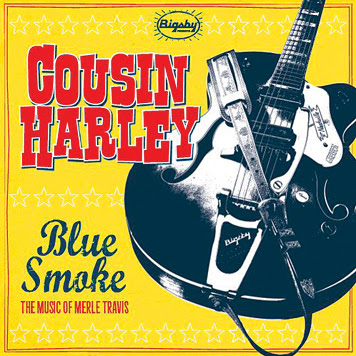
(Blue Smoke:The Music of Merle Travis) or...


I think that this has always been a bit of a barrier for us in a way. We are too rockabilly for the rock crowd and to rock for the rockabilly crowd. That’s why I never introduce us as a rockabilly band. It’s roadhouse music: it’s fun, its fast, and its greasy. Sometimes it’s sophisticated and sometimes it’s lowbrow. It’s all the music I like, so I put it all together. If people like it, that’s great! if they don't, well, I still have fun playing with the band.


Looking at the album, then… Do I detect a narrative arc in the lyrics? Someone shows up who brings trouble: "Right Back with the Blues" - then you roll with it - "Let's Go" even though you know it's a bad idea, have some fun ("El Swartho's Big Adventure"). Then you SUFFER THE CONSEQUENCES ("Rained like Hell") and have your baby thrown in jail or such ("She's My Baby...)" I haven't been able to completely devote my focus to it - how does the story end?


I think that next time I need to put song order together, I'm going to get you to do it! That would have been a great way to format the disc. [Editor’s note: actually, it kind of IS the track listing for the first few cuts of the album, so I’m not sure why Paul is getting hypothetical, here]. It would have been like an audio play then! I guess, as a whole, this is a bit darker a record for us, so I was tapping into that when writing the lyrics. Many of these tunes started out very differently – more trad hillbilly/ rockabilly stuff. That’s an easy way of writing for me, but I wanted to get away from that for this CD. We've done trad rockabilly, hillbilly and western swing CDs and I just wanted to do something different, with different lyrical content, new progressions and more challenging forms. I've said it many times but I get bored doing the same thing over and over. Some bands are great at it and it establishes their sound. I go the other way: the sound is the performers, not necessarily the material, so I get a lot of leeway with this group.

I guess if you want an ending to the story it’s “Gone Gone Gone.” That seems to be how most things end. Our disc It’s a Sin is similar in concept but not quite as cohesive as Let's Go.

The story seems to be straight out of vintage noir - maybe a classic killer-couple on the run flick like
Gun Crazy or They Live By Night? Are you a fan of that sort of film? Are there any movie influences in the lyrics?

It certainly has a bit of that vibe to it. I'd been listening to a lot of Big Lazy when I started writing the disc. If you aren't familiar with them check them out – an all instrumental band from NYC; it’s amazing what kind of imagery you get from a music without lyrics. Although this CD sounds nothing like them, I can't shake the feeling that their music was influencing my lyrics.

I used to read a lot or Raymond Chandler so I'm guessing there’s inspiration from that as well. I'm not the fella that writes about rainbows and unicorns. These are all stories of the trickier parts of life. Let’s be honest, we all make crazy decisions in our youth and have to deal with the consequences! Or is that just me??

Nope! ...So, "Who's That Lyin'" is one I haven't been able to figure out. What's going on in that song? Was it consciously a lyrical riff on "John the Revelator," where instead of revelation you get lies...? (It sure seems like a musical riff on that song.)


The beginnings of that tune had been bouncing around my head for quite a while before I decided to finish it for Cousin Harley. I originally started writing it with the intention of giving it to the Sojourners when I was working with them – it had more redemption in it then. I guess it’s like the little angel whispering in your ear, while all you've been listening to is the devil on your other shoulder. Only the lucky get redemption. There’s lots of other stories where they don't… I guess its up to the listener to decide which it is. And yeah! Its definitely a take off on “John the Revelator!” Son House is awesome!!!! (I was thinking of the Blind Willie Johnson version but the Son House is awesome too).


"Let's Go" has a real fun video. Was Keith [Picot, Cousin Harley bassist and sometimes filmmaker] involved in the making of that? That's my favourite song on the record - are there particular inspirations? Is it (correct me if I'm wrong) the hardest "rock" song you've done?


Its definitely one of the most "rock" songs we've done but not the only one. The main riff was something I used to use on a cover of “Built for Speed” years ago. I never like to cover something too close to the original and that riff really changed the tune and always reminds me of race cars. It’s such a fun riff that i thought it deserved a tune of its own. It’s a pretty saucy lyric with very thinly veiled innuendo that keeps things fun and on the edge of appropriateness The video was done by Adam PW Smith – I can't take a shred of credit for that. He offered to do it, came up with the concept, found all the footage and put it together. I was expecting something fun from him but the final product blew me away!

Curious when you write with the band - do you demo songs for them? Do you record all the instruments at that time? Do you play all of them? I wonder about the drums, because Jesse [Cahill] is really versatile and driving and really propels some of the songs - I noticed this on "Rained Like Hell" in particular. So did you come up with that drum beat and demo it yourself, playing all parts, or is it some plug-in, or...?


There were a few firsts for us on this disc. I wrote all the tunes at home and recorded guitar beds. I formatted and arranged them all before the guys even got a chance to hear them. This is also one of the few CDs we did to a click. It had to be done that way for them to play to the guitar bed tracks; it’s kind of ass-backwards as the drums and bass are usually the beds. I did the first Boxcar Campfire record this way and I find I can really hone down the tune before we get in the studio. That being said, playing to the click can be very sterile for me and everyone swings differently, so I went back and re-recorded all the guitar tracks to the band. So I guess they played to me and then I played to them.

I always wonder about things like the words "full frequency stereophonic sound" on the album cover - I am assuming that is a design element to give it a throwback feel, or, like, does it actually mean anything? (Are there a lot of CDs being recorded these days that are not "full frequency stereophonic?"


Rich Katynski did a great job on the cover. I gave him free reign to do what he wanted and if you look closely there’s a lot of references to the lyrics there. The "Full Frequency Stereophonic Sound" is kind of a nod to those early stereo recordings, so its purely design. That being said, when I mix a record, I like the stereo spred to be quite narrow. This one is a bit wider, so it’s as "stereophonic" as we've gotten to so far!

Aha. Okay. So... I might have asked before, but who are your favourite local guitarists?


Man, Vancouver is filthy with great guitar players!!! I couldn't possibly list them all but here’s some of my faves off the top of my head

Stephen Nikleva

Jimmy Roy

Paul Rigby

Gord Grdina

Scott Smith

David Sikula

Don Alder

…man I could go on and on.

Setting aside rockabilly, who are your personal guitar heroes in the world of metal and hard rock? Have you crossed paths with many of them? How have they had influence on you as a guitarist?


Metal and hard rock? Dave Murray and Adrian Smith. Angus and Malcolm Young. I've loved a lot of other players over the years (Vai, Van Halen, Malmsteen etc) but I don’t think i will ever tire of listening to these guys. I've never met any of them (RIP Malcolm) but man, I would love to get the chance one day!! Funny that I would choose double guitar bands. Maybe I need another guitar player to work with!!!!??


Cousin Harley by Bob Hanham, not to be reused without permission. The Rickshaw's page for the event is here - Cousin Harley, the Wheelgrinders, and The Imperial, September 25th. Thanks to Paul Pigat for fielding my questions!

Sunday, September 12, 2021

The cancer is back (or something equally bad): tongue surgery vs. COVID

Well, here we go again, folks. 

I've been having some pain when chewing - my tongue has felt sore, burnt, even like its been sliced open.

My tongue has been sliced open, of course. Sliced open. Go back to 2017, if you like - the early spring - and you can read on this very blog about my previous cancer surgery, which removed a strip of material along the left side of my tongue - a piece of tissue maybe around the size of my little finger (maybe a bit smaller) that was afflicted with squamous cell cancer. Like the recurrence, that involved visible, painful sores, though they looked different from the new ones and were in a slightly different place. My oncologist says that what he did in my mouth was "real ugly" during that surgery, that he was cutting into nerves and rebuilding them, so the fact that it has continued to hurt all these years has not been taken as a sign of anything - it was an expected side effect of a partial glossectomy. Of COURSE you never heal fully from something like that, and you learn to live with it; a little pain is a welcome trade for getting to have a tongue. 

And of course there are "shoulda coulda wouldas," now that he tells me I need another surgery. I mean, every time I went back there over the last four years to get checked out, and he looked and told me it was nothing - probably that might have led to my not being quite as worried about the alien in my mouth as I should have been this time, because I've been feeling wrong about the tongue, feeling like it's getting worse, for a couple of months now, and didn't actually rush to get it looked at, because, well, it wouldn't be the first time I was being paranoid about cancer coming back. You sometimes just don't know until it is too late that you weren't taking something seriously enough...

But eventually the pain got constant enough and bad enough that I went to see my GP; and my GP was worried enough by what he saw - the grey patches along the side in the photo below - that he sent me back to my oncologist, and... well, here we are. 

My oncologist is optimistic - we caught it early, he says. "We don't need to bother with a biopsy - it's either recurrent cancer or it's severe dysplasia, which leads to cancer, so either way, it's gotta come out. Why waste time on a biopsy?" 

He poked it with a tongue depressor, for the record, and it bled. It's that tender. 

And here's the thing: one of the reasons he's skipping the biopsy step (with my full assent) is that time is of the essence. There could be delays enough already, getting me into the hospital: I'm being told that COVID trumps cancer in terms of hospital beds. My cancer doesn't put anyone else at risk, but people with COVID could spread it to others, so they get priority. All of which is fair enough, but COVID numbers being on the rise again makes it very likely I will have delays getting into surgery. As my oncologist's assistant put it, "Well, if you know anyone who is unvaxxed, tell them to get vaxxed, because they are taking away your surgery time - COVID trumps cancer and everything else."

There is a whole universe of fear that opens up when you discover you have to have part of your tongue cut out, especially when they won't know exactly how MUCH to cut out. It's not made better by knowing that the key issue behind how much of my tongue I get to keep is tied to how long the wait is for a hospital bed. I mean, I know from long experience - my kidney stone ordeal, before that my mother's death, before that my reactive arthritis - how strained-to-breaking our medical system is. COVID creates an added layer of delay. 

...and here we are. Gives me a perspective to share with my vaccine-hesitant friends, I guess. The photo below is a bit gross, note. But see them grey patches...?


Wish me luck, folks - I might need it. 

Friday, September 10, 2021

Back to your caves!

Right, so... that was briefly an exciting window where we all got to taste going back to "normal" for a couple of weeks. If you are at all like me, you excitedly made some plans for things you hadn't done in awhile - like to go concerts... 

...Then the numbers shot up and it turns out living in fear of COVID is normal, again. I am crossing my fingers that Paul Pigat's birthday gig will go off as planned, on September 25th, because I really dig his new album (and am working on a blog interview about it, coming soon), and really want to go see SOMETHING at the Rickshaw again, even if it's at a mandated 50% capacity; I haven't been there since I saw Paul open for Coco Montoya in early March 2020, which I noted in my "What Were You Doing When the World Ended" post when the first COVID shutdown started.... but 15 days seems like a very long time indeed, and that's how long it is going to be before the show; a whole lot could happen in that window...

...and though I still notice things that excite me, like Bishops Green and the Spitfires being added to the DOA Hardcore 81 bill, I am highly skeptical that any of the other gigs I've been eager to attend (or actually got tickets for) will go off as planned. I mean, I was getting really, really excited about the Sparks show in March, having recently joined the legion of converted fans, but when I got to choose my rather crappy seats from the floorplan of the Vogue, it sure didn't *look* like they were being sold at 50% capacity. It *looked*, rather, like the whole venue was almost sold out. So what will MRG do? I've heard various dodgy things about their refund policies, and watched the Residents show they had booked into the Imperial get postponed, then postponed, then postponed, then cancelled, and I'm pretty sure I noticed a two-tier pricing scheme, the last time I contemplated going to that show, where you had to pay extra for an "insured" ticket if you wanted a refund. I sure don't recall doing  that when I paid for the Sparks tickets. I also didn't read the fine print, because, like, COVID was over, right? We were all vaccinated, right? The vaccines work, right? We can GO BACK TO NORMAL!

No. No, we can't. Meantime, society seems to be dividing itself between a small but very vocal minority of people protesting assholishly outside hospitals and an equally vocal majority blaming these so-called anti-vaxxers for ruining our plans to reopen. None of it really adds up, as I've mentioned on Facebook - if we're so sure these vaccines work as promised, and 80% of the province has received them, then our reopening SHOULD have gone as planned, too... it does not seem to have. And while some people have weighed in that it is all down to Delta, that doesn't really make sense to me, since BC had (supposedly) factored Delta in when it announced this reopening, and the PHO was sticking to its guns that, despite rising numbers, we were "on track." 

We are clearly not on track - at least, not to any station I'm hoping to arrive at - but things were set in motion, so just like last March, I am back at work, washing my hands often, hoping for roomy Skytrain cars. Unlike last March, I now wear a mask in public spaces (and try to make sure everyone else is, too). COVID fatigue is real. 

I guess I should go see a movie or two, as well, before the lockdowns return...

Friday, August 20, 2021

Another Crummy interview, plus Stab'Em in the Abdomen: apropos of Saturday's show

1. Bert Man/ Crummy

So what do you get for a punk rocker whose family's history extends back to those dark days in Chile - sometimes called "the other September 11th" - when a CIA-supported military coup supplanted the country's socialist Allende government and installed the torture-happy Pinochet regime? I'm talking about Bert Man, of course - my first Straight interview with whom is here, and my second here - and you get him Ariel Dorfman's How to Read Donald Duck, equally of course - a rather famous book in the history of cultural studies, in which Allende's cultural advisor Ariel Dorfman and Belgian leftist Armand Mattelart decode the capitalist propaganda in Disney comics. I mean, a) there's not much else I know about Chile, besides the film Death and the Maiden (based on a play by that same Dorfman, and touching on the same hisotry), and b) it helped that it just happened to be there on the shelf at Carson Books and Records on Main Street, where I was hanging out shortly before the last time I went to see Crummy play at LanaLou's

Anyhow, as the fates had it, it ended up being a strikingly fitting gift, because Bert was wearing a Condorito shirt - also a bird-themed cartoon character, but one that emerged from Chile. I had no idea about Condorito - it was my first exposure - but I snapped a pic of Bert in the shirt, holding the book - this one, actually: 


Commence interview.

So Bert, can you explain about Condorito?

Condorito is a cartoon condor very popular throughout Latin America. Kind of our Mickey Mouse but he is very much 'of the people.'  His house has a corrugated tin roof with tires on it to hold it down. His pants are patched.  He wears flip flops at all times, even when he is wearing a suit (court, funerals etc).  He works a different job in every story. He strikes a chord with people.

Shortly after that gig, Crummy undertook a tour of Japan, which I haven't heard much about. Any stories?

Japan was one of the best experiences in a life full of great experiences. We toured not in a van but hand bombing our stuff on the Japanese trains. We had a first class rail pass for the long hauls (295km/h!) but the local stuff was done on busy Japanese commuter trains. No mean feat I assure you. We were trapped for a couple of days in Kobe because of the hurricane. We took the opportunity to eat back to back luxurious three course Kobe beef meals.  We stayed in capsules, went to temples, visited Ochanomizu the Japanese guitar neighborhood. It was so good and we just got it under the wire before eveything went to shit. For that I shall be eternally grateful.

How is Goony doing these days? 

The Goon is doing great . I work with him so I see him a lot. He was instrumental in booking the Japan tour and has been helping me a lot in bringing Crummy together into a viable project. Gotta love the Goon.

Was Mr. Chi Pig a figure in your life? What's your history with SNFU? Any stories you want to share? 

We opened for SNFU once as the Strugglers. [Video here, I believe; Chris Walter was launching his SNFU band bio - which I helped proofread - and I'm pretty sure that Todd Serious was in the audience that night, which I think was my favourite-ever SNFU gig]. I met Chi in 90 or 91 when I was working as an attendant at the China Creek bowls. The young firebrand version. Very cool and approachable. He did 25 one footed nose 360s and blew my mind with his freestyle skateboard abilities. We were more aqcuaintances than 'to the bone' friends.

I gather you work in the restaurant biz, but either I've never known or I've completely forgotten what you do. What do you do? How is that? Do you feel camraderie with other foodie punks? (Willy Jak, say, who was playing bass at that SNFU show?) 

I did spend a lifetime working in the restaurant industry to the point where I grew totally sick of it. As far as camraderie with foodie punks, a lifetime of working with food has led me to loathe food and eating. As far as I can tell it is linked largely to the fact that me working in the food industry is a direct result of my being unable to sustain myself playing music. My 'failure' at music if you will. Still, I appreciate greatly that I have a fabulous job that allows me to live relatively well in a time of hardship.

How have you gotten by through COVID? How did it affect your job? Was there any bad weirdness (dealing with the maskless or visibly sick?). What wisdoms have you gained from this pandemic (or are you still the same person as before?). 

I kept working throughout the pandemic. My job involves dealing with at risk people with a series of challenges so there were many daily incidents haha. As far as wisdoms I've gained, sadly it was merely the realization that many of us are real selfish assholes. Some might say I fit that bill, fair enough. I'm certainly a flawed individual.

How have you used the pandemic as a musician - were you grateful for the time off to recalibrate and write and such, or were you really impatient to get back to it?

My playing improved 100% during the lockdown if not more. Many will claim that to be easy since I was so awful to begin with. Fair enough, they are not wrong, but over the last 6 or 7 years I have assembled a killer band. The next two songs we record are going to be the shit!

We talked about the apocalypse last time I interviewed you, apropos of the song "Apocalypse Blues" on Even If It Kills Me - do you feel like we're getting closer to it? 

It takes my breath away and makes my blood run cold. I fear I do not have the strength to withstand the terrors that are most assuredly coming.

Is "Andy Warhol" still in the set list? Are there any new songs, or new covers, we should talk about? 

"Andy Warhol" is certainly still in the set and we are killing it better than ever. We have a series of covers we cycle through. Most of them fall in the category of "Man it would be so cool to do this as a cover someday" - no "Mustang Sally" here. "Clones" by Alice Cooper, "Bonzo Goes to Bitburg," "Search and Destroy" by Iggy and the Stooges, "Hybrid Moments" by the Misfits. We do a pretty good version of "China Girl" but I guess that's a song that will be cancelled. Fair enough.  I totally understand. Plenty of other songs to cover.

That interview with Orchard actually stemmed from my being amused by his tales on Facebook of of pre-gig nerves and bathroom trips. Is that a regular phenomenon? I kinda wish I'd now asked every major musician about their bathroom habits before a show. Did LEMMY get pre-gig nerves and have to go to the can? (He sure didn't SEEM like he would).  

I am always very nervous before shows. I've been playing since I was 13 and still it happens before every show. 

It evaporates as soon as we start the first song but it is something i can't escape. It is probably a little worse since I became sober because I can't preoccupy myself with drinking and c-c-c-c-c-cocaine.


2. Ed Hurrell/ Stab'Em in the Abdomen

One of these men is not Ed Hurrell (Ed with Eugene Chadbourne, shortly before COVID hit)

My 2016 interview with Ed Hurrell about the history of Stab'Em in the Abdomen (and his then-tenure in Pill Squad, before he was sent to the gulag) delves deep into his past, so I mostly focused on the upcoming gig and the weird circumstances around it (coming out of a pandemic, maybe?). And while normally I go through people's answers and edit'em up and add punctuation - I put at least five commas into Bert's stuff, above - Ed's kinda made a creative statement about the way he's answered my questions, so who am I to tidy it? (It would take a helluva lot more than five commas). Besides, this way he gets to correct ME, since I (as you will see) get confused about the lineup for this gig and that of another band he is in). 

You will also notice that I doubled-dipped on a couple of the questions I'd asked Bert, but the ones I sent Ed were: 

1. What's the current lineup of Stab'Em?
 
2. What's your history with Terry? [I had heard that Terry Russell of Slow would be drumming for this show, but it seems like I was thinking of some other band that he and Ed are in, Rocket #9 - look'em up yerself!] Since leaving the country, coming back, and having all his possessions stolen... what are his current plans? (You're welcome to just forward that to him, if you like).

3. How has the pandemic treated you? How has the lack of live music affected you - did you get into doing other things, or...?

4. I know your pal ARGH! has drawn cartoons of Slow (and DOA and others) but did he ever do ones of Ogre or any of your other bands?

5. Any notable songs that are going to be on the setlist? I don't know my Stab'Em songs so well - are there any that you chose as being perfect for a (post-?) pandemic gig?

6. I am under the impression Eddy is NOT singing for this show, but he's been posting about it. Is he involved?

7. My interview with Orchard [see a couple posts ago] stemmed from my being amused by his posting on Facebook about pre-gig nerves and having to go to the toilet. I've asked Bert about this too - I'm totally curious how normal a phenomenon this is. I have missed out my chance - I could have asked every musician I interviewed about toilet needs before the show (did LEMMY get pre-gig nerves and hafta take a dump? Now we'll never know!).

8. Do you feel at all nervous about returning to public performance, with numbers on the climb? What do you predict will happen in the future? (Further lockdowns?).

Here are Ed's answers, verbatim (because this is PERFECT and says more about Ed than my tidied version would. It'd be like adjusting Hubert Selby's paragraphs in Last Exit, or adding uppercase letters to an e.e. cummings poem): 

Hey Al... here goes....1/  Line up...me(rhtthym giut.Vocals)   Eddy dutchman.(Bass vocals)..
).Shane davis (Tankhog).(Lead guit)...Johnathan Moogk..drums..///2//  RE: Terry...He's planning on moving away from Van..hates the high rents and shitty winters...I've known Terry since early Slow days...Played in Ogre with him...And Liquor kings..This Rocket #9 band, Is Liquor Kings with out Dutchman..All new Songs..garage rock type stuff..////3/..Pandemic wise...I've woodshedded with R #9 and Stab'em...Really miss playing gigs...It's what WE DO!! Gives one a sense of Purpose..reading books and drawing is fun but one forgets Who one is.. sorta..Imagine if you weren't allowed to write!!..."But it's WHO I AM!!"....//// 4/  RE: ARRRGH!..
An early Band ...Diseased (our 1st band which didn't go any where...other then that NO..////5//  RE: Pandemic..Weirdly almost all of our songs deal with some kind of DOOM!! I', thinking "Worried (About you)" is pretty good...Worried about the general state of affairs in the mean ol' world..6/....RE: EDDY D.  Dutchman is totally singing..(he's NOT in Rocket #9!!)...But he IS in stab'em...Hence the confusion pehaps..(PLUG!..Rocket #9 IS looking for an Opening slot with some one...If anybody needs a Kick ass opener...we're Availble!!)7/  WEllll....takin' a preShow whizz is pretty Par for the course...Don't wanna be doin' the Pee-Dance 1/2 way thru yer set..as for Bowel Movements..not a problem fer me..However eating Before a show IS a No-no for me..Nerves I guess..8/....NO not really...had both my VAXX soo..playin' safe..No Huggin' or that sort of thing..Distancing...The future?? Hmmmm...Probably be up and down..I'm ALWAYS suspicious of ANYTHING that Conveniently Aids the Power's  that be!!..OK..thats about ALL I got....ps...Just to clear things up...Rocket #9 is a Totally different project from Stab'em...Mike laviolette, Guitar extraordinaire...Me bass...Steve graf Other guit.(Riff monster)...Terry Russell Drumking!!..WE are looking for an opening slot as we have a 35 minute Rockin' set...And we're just starting..anybody need an opening act?? ....Thankx AL...

Got that? Anyone who wants an opening slot for a Rocket #9 gig - and what a great name for a band - should either write Ed at his Facebook page or go see him at the gig tomorrow night at LanaLou's, where the food is good, the beer is plentiful, and the masks are few! (Turns out to be an ill-timed gig for me, since I will be visiting a purposefully unvaxxed senior citizen in less than two weeks, and can't risk bringing anything with me...). 

Knock'em dead, Bert and Ed! 

(Photo by Bob Hanham, lifted off Ed's Facebook page).