Wednesday, September 13, 2023

The Invincible Czars Interview: Nosferatu comes to the Rio (and The Cabinet of Dr. Caligari, too!)


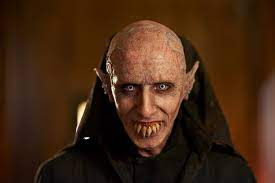
Nosferatu turned 100 last year. The silent German classic -- the first ever adaptation of Dracula, made without the authorization or involvement of the estate of the novel's author, Bram Stoker -- has spawned two remakes (Werner Herzog's 1979 adaptation featured Klaus Kinski in the role of the monster; Robert Eggers version of the story is set for release in 2024); it also was the source text for a meta-fictional narrative about the making of the film (2000's Shadow of the Vampire, which posits that the star, Max Schreck, played by Willem Dafoe, really was a vampire) as well as this year's The Last Voyage of the Demeter, which elaborates on one specific chunk of the story, involving the titular vampire's transit from Romania to England. The vampire makeup also inspired Petyr from What We Do In the Shadows and Reggie Nalder's "Mr. Barlow" from the Tobe Hooper version of Salem's Lot (among others, no doubt! ...but see below). Suffice it to say that the 1922 film is incredibly important to horror history. 


Shamefacedly I here confess that I have seen it to completion only a couple of times. Once, I believe, it was accompanied by a live score (possibly by Ear of Newt?); this was some 20 years ago. So this Saturday's screening at the Rio Theatre has a remedial quality to it for me, made even more exciting by the band that are accompanying it, Austin, Texas' The Invincible Czars, whose bandname itself sounds like it could be the title of a horror movie (perhaps, ala Andy Warhol's Dracula, with vampiric aristocrats being hunted by Bolshevik peasants? Maybe with a side-serving of Rasputin?). 

So who are these Czars? What can you learn from an interview with them that could not be better served by exploring their Nosferatu score (or their Cabinet of Dr. Caligari one) on bandcamp? I don't really know, but it didn't stop me from trying. 


Invincible Czars in their current manifestation (as will be seen at the Rio), L-to-R: Hampton Rattan - woodwinds, keyboards; Phil Davidson - violin, glockenspiel, keyboards; Louis Landry - drums, sound effects; Josh Robins - guitar, bass guitar, sound effects; Skunk Manhattan - keyboards, bass guitar

Czar Josh Robins indulged a few of my questions via email. I am in italics, he is not. 

Allan: So if I've got this right, you did your first live score, for Nosferatu, in Austin at the Alamo Drafthouse around 2003...? Tell me how that came together? (Does it correspond in any way with Kier-la Janisse's involvement there? She has a long history with Vancouver cinema, and some slight history with me - - I'm on the folk horror box set in the extras for Clearcut...). 

Josh: I do remember Kier-la from our early days at the original Drafthouse! Those details aren't quite right --- we were playing rock clubs and opening for weird music acts in Austin starting in 2003 but our first silent film soundtrack show for the Alamo wasn't until summer of 2006 for the film Aelita, Queen of Mars. The Alamo had been doing this for years with other bands and the trend had waned. We were part of a second wave of bands doing it and we seem to have been the only ones to keep doing it and certainly the only ones touring nationally.

We did several other titles over the years and specifically avoided Nosferatu for a long time because virtually every arthouse cinema in the country has had a local band, DJ or orchestra perform with it for Halloween. We're not even the only ones in Austin. We didn't want to compete with that. But after years of touring with lesser-known silent films, we'd gotten so many requests to do Nosferatu (and Metropolis) that we finally did it in 2015. It was the 7th silent film in our list of 9 that we've done over the years. In order they are:

Aelita, Queen of Mars
Der Mude Tod (Destiny)
The Unknown
Martyrs of the Alamo
The Wind
Dr. Jekyll & Mr. Hyde
Nosferatu
Phantom of the Opera
The Cabinet of Dr. Caligari

Thanks for setting me straight. So 2022 was a big year for
Nosferatu. Any thoughts on the film or its influences? Were you keen to see The Last Voyage of the Demeter? Happy that Eggers is remaking Nosferatu (with Willem!!). Did you dig Shadow of the Vampire? If you have any thoughts on the film, its progeny, or its importance, do share... take this question where you will!

You got it - 2022 was a huge year for us and the film since it was the centennial. We're glad to see Robert Eggers re-remaking it after Werner Herzog did the same thing in the 70s and I suspect we'll wind up doing several tie-in shows when his version is released.

I'm not a film scholar so I can only speak to the picture's importance as a fan of silent and classic cinema. It certainly stands out as the first adaption of Dracula. I've heard that the filmmakers took some liberties than resulted in now-common aspects of vampire lore (perhaps the sun killing the vampire?).  I've watched a lot of silent films and Nosferatu has better pacing and acting than many from this early era of film - especially considering that much of it was lost and has been restored over the last 100 years. If nothing else, it's a great document of what filmmaking was like in the 1920s. So much of it seems very basic or even trite to us now, but people in 1922 didn't have the 101 years of cinema to inform their tastes that we do now. To them, this movie was probably terrifying!

The character Hutter doesn't get much love when I ask audiences which characters they like best. But the actor who played him did a fantastic job. He's great at looking scared, happy and he plays the doofus quite well. Max Schreck's make-up, costume and presence helped kicked off 100 years of seemingly unwavering interest in vampire mythology worldwide.

I did like Shadow of the Vampire! Been a long time!

What do you think of the Herzog version, and do you pay homage to the Popul Vuh for that score at any point? (I haven't noticed it yet but I'm only just listening to the score for the first time...).

I've never actually watched the entire Herzog version so I can't really speak to this other than to say that it had no influence on us. None of us even knew about it until after we'd created our first draft of our soundtrack.

On your website, you mention Secret Chiefs 3, Sleepytime Gorilla Museum, Zappa, Primus, Devo, and so forth as musical touchstones, but listening to the score for Nosferatu I also hear European/ Romanian folk, and maybe some of the "folkier" John Zorn projects - Bar Kokhba...? Was there a specific ethnic music you drew on for the score? Is this an aspect of what you do - the influence or traditional European musics - or was it score-specific...?

Here's the 2022 version of the music we released last year: https://spotify.link/26ilSO6J2Cb

We do love those bands and hope to one day say we've played with them all! We used Bela Bartok's versions of several Romanian folk dances in our first draft of Nosferatu but apparently Boosey and Hawkes claims to now own those melodies so we wrote similar-sounding original tunes for our 2022 version to avoid legal issues.

We do like Eastern Euro music but we're not scholars or even pseudo-experts in that regard either. We do seem to be good at creating our own brand of spooky textures. Fantomas' Delirum Cordia was a big influence on this score. I love Trevor Dunn's long bass notes on that album. Scary! The score for Children of the Corn was a big influence, too.

I would be remiss if I did not ask which period of Zappa you are drawn to.


My favorite era of Zappa is still The Mothers mid 60s period. Louis and Phil, though, like the Hot Rats era!

Ooh, Hot Rats, duly noted. So... Will what we hear at the Rio be exactly what we hear on the bandcamp? Have the players changed at all? Has the score been tweaked in any way? (Is there any room for improvisation in what you do?).

I don't think our 2022 version is available on Bandcamp. The version on our 2022 DVD and other streaming services would require a much bigger touring ensemble to pull off note-for-note. The 2022 version is on Spotify: https://spotify.link/26ilSO6J2Cb

We've been operating more like a collective for the last seven years and the line-up that was in place when we created the score isn't the same. That said, most of our initial draft that we performed from 2015 - 2019 was written by me and our violinist Phil Davidson. In 2021, we seriously re-vamped it with help from the membership at the time including keyboardist Skunk Manhattan, bassist Henry Vines, flutist Katie O'Neil and drummer Eoghan McCloskey.

(The 2021 revamp lineup)

Many of the sound effects came about accidentally but the sound we use for Count Orlok's powers of possession and the whispering were all in the original draft. The score is ever-evolving and lately we've taken to adding audience participation and even playing up the humor by making comments throughout the show.

We pretty much play our scores the same way each night. Timing is crucial for the show. There's a little wiggle room to improvise but most of our improvisation isn't planned -- it happens if we're a little slow or a little fast or someone makes a mistake and has to roll with it. We've gotten pretty good at making the unintentional sound intentional.

Is physical media available of the
Nosferatu score available? God help me... is there VINYL? A t-shirt? WILL THERE BE MERCH?

Yes, but we have trouble getting across the border with merchandise like DVDs and CDs because they require up-front taxes regardless of whether we sell anything. This year, we finally got smart and had t-shirts and posters printed in Canada.

You can download both our Nosferatu and Dr. Caligari videos with our soundtracks from our web site for whatever price you want!

Tell me about the
Caligari kickstarter?

Well - it raised $4500 more than we thought it would and allowed us to make DVDs and give our backers some special stuff - colored hoodies, metal pins, etc. etc. We are super grateful and couldn't have afforded to tour like we are without it. We need to figure out how to make this more Canada-friendly because we love playing there.

Caligari and Nosferatu are VERY different film experiences. Do you have a preference between them? How many times have you performed live to each film? Do you draw on different influences for each film? (Which was harder to score?).

Right now I like playing Caligari more because it's new!

Phil (violin) and I have performed Nosferatu well over 150 times over the years and though the music has evolved, it hasn't changed drastically in tone or style much.

We did an early draft of Caligari in 2019 in preparation for the centennial in 2020 but the shutdown foiled our plans. But, we did perform that version about 25 times in the writing process. And if course we watched it even more in the re-writes this year.


Our Caligari soundtrack is also the most collaborative thing we've ever done. Nosferatu began with me improvising ideas and sharing with others. Caligari began with group improvising and writing sessions between me, Henry Vines and Aaryn Russell. All our ideas got mixed together and it's hard to say who wrote what in many cases!

Yes, we do specifically use different influences for each film. For Caligari, we listened to Angelo Badalamenti, Bear McCreary and my favorite -- Bernard Herrmann.

We also used a tune I wrote called "Return of the Pink Elephants" for Dr Caligari's theme. Here's the original: https://spotify.link/1wmoJWSN2Cb

Any history with Vancouver we should note? (Have you played here before?).


This'll be our third time ever.

The first was in 2017 on what has come to be known as the Tour of Tumult on which Phil broke a vertebra and I endured a month of sitting in the van and performing with my ex-wife who was in the process of leaving me for our new bass player while we were on the tour. Haha! I can laugh about it now but it was awful at the time. Rachel at the Rio was very helpful, cool and professional at a time when I was struggling to keep it together. For that and other reasons the Rio is among our very favorite places we've ever played.

I didn't let that difficult initial visit ruin the experience. I'd always wanted to see Vancouver because I've loved so many bands from the region - particularly NoMeansNo and The Showbusiness Giants and that entire early 90s scene. (I know NMN were from Victoria but Vancouver seems to be the nearest big city, right? They stayed at my houses in Austin a few times in the 2000s.)

Actually Nomeansno [I capitalize it differently, but I do not know if there is a "right" way] kind of got claimed by Vancouver, at some point. So you're right, kinda! But coming back to
Nosferatu... who designed the poster that I see in the Rio lobby (and on your home page?) - is that a vintage design? Will you have prints of it for sale?

Our silent film art is all made by Leah Lovise, an artist in Austin! Nosferatu was the first one she did. That was in 2015. Then she did Jekyll & Hyde when we brought it back. That might be my favorite. I loved how she wrote our name on it and it became our logo. 

And yes, we'll have black and white screen prints for sale for Caligari and Nosferatu. We'll also have them in Toronto and Ottawa in October. Tour itinerary: https://invincibleczars.com/shows/

We couldn't get it together for the color prints this year --- for some reason, we just had a difficult time preparing to launch this year and had to drop some balls just to get the van moving.

What was the origin of the name "the Invincible Czars." (Have you ever scored silent Russian cinema? Why Czars?).

When the original lineup formed in late 2002, we intended to get more into the eastern Euro thing. Our bass player at the time, Tom Kimzey, suggested we be called The Czars but the name was taken. So we thought we could just add a descriptor to the front. We debated hundreds of words. Eventually we booked a first show and when the venue pressed me for a final band name I picked "Invincible " because it sounded ridiculous and tough. I figured we could change it later if we wanted but we never did.

Anything I've missed that you want to add...?


People ask us often if we've considered getting into modern-day film scoring. We absolutely have and would love to do it more often. In fact, until our tours started getting so big, I thought the silent films were just a step in the direction of contemporary film music. We love performing live but it'd be fun to score more new films or even games.


Thanks, Josh! To buy tickets (cheaper online than at the door!) or to get more information, see the Rio Theatre's website... And thanks to the Rio's Rachel Fox for setting this up!

Wednesday, September 06, 2023

John Cooper Clarke VS. Iggy Pop: a choice for September 15th

1. On Iggy Pop

I love me some Iggy. 

Baby duck favourite: an unpopular but very creative 1983 slab called Zombie Birdhouse. This was the first Iggy Pop album I ever read about or owned, and it started with Creem Magazine, believe it or not.

No, folks, I was not cool enough in 1983 to know what Creem was. But I was 15, and buying a few rock mags, sampling whatever made it out to the magazine stands of Maple Ridge, where I found a few issues of Creem, in there with the Hit Paraders and such (I read that, too). I was also buying a few porno mags, when I got up the nerve, and there was an issue of Creem that had what, to a 15 year old boy with a lust for rock, had some pretty sexy pictures in it (sorry, Ms. Jett); that may have incentivized my purchase of the mag further (so it was because of masturbation I first read about Sonic Youth and the Minutemen!).

Weirdly, the Iggy Pop interview I remember reading, dealing with Zombie Birdhouse, appears to have been in a different issue, one I don't remember owning, but which article I remember details from to this day, not having read it since that time, like that Iggy wrote the lyrics for Zombie Birdhouse on a typewriter -- his first time ever doing that. They're really weird lyrics, really artful, just the kind of thing a 15 year old obsessed with decoding song lyrics would get excited about, and I remember thinking about Iggy typing them out, how the technology might have informed the rhymes and such. Check out "Run Like a Villain":

Big dick is a thumbs-up guy
He shot a missile in the sky
It functioned just as advertised
Until the fire made him cry

Look into it later when the dust is clearing off the crater

Run like a villain, let the good times roll
Run like a villain to the sugar bowl
Run like a villain, 'cause you can't adjust
To a saccharine suburb in the mush

I've got some loving arms around me
Darker than the tombs of Egypt
Dumber than the crudest fiction
Buried in a melting coffin
Nights like this appeal to me!

Tracy got an Afghan, pedigreed
Prescription shades and designer jeans
A Sony Walkman on her head
All she wants is to be fed

Run, run, run, 'cause you're soft
Run, run, but don't get lost

The shining moon, the dead oak tree
Nights like this appeal to me
I've got some loving arms around me

Trying to steal a moment of pleasantry
In this zombie birdhouse

Run, run, run
Run like a villain, let the good times roll
Run like a villain to save your soul
It can't be done, I already know
So I run like a villain to the sugar bowl

'Cause who you are, nobody knows
Who you are, nobody knows
Rings on your fingers and bells on your toes

That's the opening song, and to a kid stuck in Maple Ridge (a "saccharine suburb in the mush" if there ever was one), it impressed the hell out of me, not that I understood half of it. And the album gets a fair bit weirder -- especially "Street Crazies," which is a somewhat unheralded masterpiece, artful and tribal and singular in his catalogue, if perhaps lacking on the level of basic human compassion (but he's celebrating the craziness, right? He's identifying with it!). I know people who hate that song, and I dunno, maybe they have a point -- it's certainly not the same raw, street-level Iggy that sticks it deep inside 'cause he's loose... tho' tangentally, I don't think Iggy will ever be able to top Colleen Rennison's delivery of that with GRRL Circus at the Rickshaw a couple years back. I've seen Iggy do it live with the Stooges, at that Seattle show with Watt on bass and both Ashetons, and I highly doubt that at any point he made anyone in the audience want to stick anything anywhere; that song DESERVES to be sung by a singer with a fair bit of libidinous impact, and as such, Rennison -- sweaty cleavage dripping -- took it to the next level, broke open the horny heart of the song in a way that Iggy simply cannot do (or maybe he's just not my type?). 

Anyhow, Zombie Birdhouse was the first Iggy solo album I ever owned and fell in love with, and became the de facto measuring stick by which all other Iggy albums I acquired, back then, were measured (Party is fun but it's not as strange or poetic as Zombie Birdhouse... Soldier has some powerful songs but it's much more vulgar and direct than Zombie Birdhouse... and so on, at least for awhile).   

Three other things happened around this time. I saw a clip, thanks to Much Music and City TV, of a show (I think) called Stereovision, with Iggy on tour in Toronto circa 1981, doing a magnificently weird, and again, highly lyrically ambitious tune called "Winter of My Discontent." It never appeared on album but I loved it from the opening of the performance, with Iggy quipping with an ironically hubristic sneer, "This is a song I co-wrote with William Shakespeare." Ha! It's an extremely nihilistic Iggy, a dark, menacing Iggy. The same show -- which I taped off TV onto VHS and watched many times -- had a stellar "Dum Dum Boys" and a clip of Iggy getting into a  verbal altercation with a chubby, curly-haired audience member, who was angrily telling Iggy to "fuck Bowie," which you can tell Iggy was kind of impressed by ("Fuck Bowie? You'd like to, wouldn't you?" he shoots back, but he's kind of chuckling to himself; the exchange is here, and ends with Iggy gobbing prodigiously on the fella). I was as unsettled -- on some level repelled, really -- by the footage as I was impressed (Iggy is wearing a black sweater at some points and you can see giant wads of audience gob hanging off it), but there was no doubt that when the band launched into "Rock 'n Roll Party," coming out of this exchange, that there was an elevated level of energy. I still didn't really understand what punk rock was, but this, surely, was a prime example. (The audio for what appears to be the whole concert is here). 

Then Grant Shankaruk of Collector's RPM gave me a cassette of an Iggy album I could not find anywhere (New Values, also a favourite, best known for "Five Foot One," but also notable for "Billy is a Runaway," one of his most entertaining deep cuts). And somewhere in there, Henry Rollins wrote a piece for Spin that proclaimed Fun House (and the Velvets' White Light/ White Heat) as his two favourite albums of all time (the whole thing is readable here, midway down the page).

Back then -- with the cool record shops an hour away by bus and most of the best records out of print -- I had heard no Stooges; not Fun House, not Raw Power, not the debut. Hadn't heard any Velvets, either. Rollins directly informed my seeking out the entire catalogue of both these bands, and man, was I grateful. I am still not a huge fan of Raw Power (and had an entertaining exchange on Facebook last week where none other than Art Bergmann and Billy Hopeless chastised me for voicing that opinion) but Fun House has gotta be the unchallenged contender for the greatest rock record of all time, no? Can we all agree on that? If I ever get to personally thank Henry Rollins for the impact he had on my life, it won't be for "My War" or "Hard" or "Liar" or his kickass cover of the Pink Fairies "Do It," though I love all of these things; it's gonna have to be for his Spin article, maybe the single most important thing I ever read in a rock magazine. Thanks, Henry! (BTW, if you haven't heard Henry Rollins talk about sharing a stage with Iggy, it's probably my single favourite spoken piece of his). 

Anyhow, I've been perusing Iggy Pop's setlists, mulling over whether to go see him at Rifflandia on the island on September 15th, and noting the songs I am excited about. There's plenty of stuff I saw him do with the Stooges in Seattle a few years ago (and a few I also saw when he opened for the Pretenders at the Coliseum on the Blah Blah Blah tour, a show that David M. was also at, as he talks about in Absolute Underground 113, by way of reviewing, from memory, a legendary Iggy show in Vancouver in the 1970s; it's a great read). 

But much as I love some of Iggy's standbys -- who doesn't get a thrill from "TV Eye?" -- the exciting songs are the ones that I have never seen live before, that I wouldn't EXPECT to see live, and probably will never get a chance to see live again, like "The Endless Sea," "I'm Sick of You," and "Mass Production." There's no saying for sure whether he'll still be performing these songs once he comes to Victoria for Rifflandia, but they're not songs he did at either show I saw before, tho' they've been standbys on the European leg of this tour. Truth is, I'd much prefer material off Zombie Birdhouse or a live "Rock 'n Roll Party," but jeez, the opportunity to see "I'm Sick of You," in particular, is pretty damn compelling.  

So after some waffling, I had finally decided, just this last week, that I was INDEED going to see Iggy Pop at Rifflandia, probably committing in the process to milling around Victoria overnight until I could catch the first ferry back to the mainland. I did similar things a couple of times in Tokyo, after a show by Joe Strummer, for example, walking around the streets, huddling with a notebook in a doorway, counting the cabs that passed, or looking for an all night cafe to slump in for a few hours (hard to find in Tokyo, so good luck on the island). I imagine Victoria would be much grottier, with Tokyo's passed-out drunk salarymen and dyed-hair teenagers replaced by addicts and aggressive panhandlers. It quite possibly could get ugly, and even in the best-case scenario, would be expensive, exhausting, labour-intensive, and a hell of a lot of work, if you don't drive and live three hours (and three modes of public transportation) away. Oh, and with the one day ticket ($155), ferry fare there and back, dinner and breakfast and whatever other incidental expenses I got dinged for, it would prolly cost me close to $300. But how many more chances am I going to get to see Iggy Pop, for godsake? The man's a living legend. 

That was when I realized that John Cooper Clarke is playing the Rickshaw that day. Oops! Sorry, Mr. Osterberg, it's Dr. Clarke for the win! I get to stay in Vancouver, save $250 dollars, go to my favourite venue, and sleep in my own bed! I've seen Iggy twice, but I've never seen John Cooper Clarke, and I just read 300 pages of his autobiography, so...

Yay!

2. On John Cooper Clarke

Understand: up until yesterday, I thought I was going to be interviewing Dr. John Cooper Clarke -- and not merely for my blog; I have a magazine that is interested, but the original plan was to first do something here that might meaningfully plug his Vancouver show, with the magazine (which would putatively pay me) being a sort of cherry-on-top to reward my efforts, to further incentivize his doing it (two articles out of one interview!).  But despite the best efforts of the promoters and publicists, that interview didn't end up happening, and doesn't look like it's going to. But if prepping for an interview that doesn't happen doesn't do my readers any good -- since they don't get to reap the fruits of my labours -- it actually can benefit me a great deal, especially if I'm already a fan of someone's, because it is impossible to do the work without coming to a deeper, richer appreciation of the artist in question. 

Take Ferron, for instance: knowing I planned to request an interview with her, this past folk fest -- but not knowing whether that would come to pass -- I sat down to the lyrics to "It Won't Take Long," one of her greatest songs, and really thought about them. They're a bit more writerly than your average song lyric, with the song considering a few different angles on the theme of compromise versus revolution, and it took sitting down with them as printed text to really appreciate how rich the words were. There are still plenty of things I could have asked her about -- like who the men in the desert wandering are; one thinks of the Magi, but the story she tells doesn't exactly seem scriptural, so what's going on there? But my sense of the song was greatly enriched by actually reading the words and thinking about them as poetry. It's not always easy to fully appreciate the meaning of lyrics when they're being sung to you, and (compared to my boyhood) I resort to lyric sheets a far bit less than I used to, but really sitting down and focusing on the words -- taking the time, treating them as poetry -- was highly rewarding. In the end, I didn't get to interview her, but I can live with that; I did get to see her live (and got her to sign my record!), and even if I didn't get her to answer the questions I had about her songs, I came, by virtue of doing my homework, to have a far deeper understanding of them, so it's still a win.  

Now, John Cooper Clarke defines himself as a poet, and the language he uses is very important --  potent, punchy, richly detailed, and very funny -- but he is associated mostly with music, especially the early Manchester scene (ie., the one depicted in 24 Hour Party People). Joy Division, the Buzzcocks, the Fall, and Tony Wilson -- the man played by Steve Coogan in that movie -- all appear in his memoir, and there are, in particular, some fun Mark E. Smith stories for Fall fans to chuckle at: he was "about eight years my junior," Clarke writes of Smith, "so I first new him as a schoolboy. His mother worked at the post office in Sedgley Park where all my artist mates cashed their giros," and Clarke dropped in "at least once a week to look through the music papers in case I'd been mentioned in dispatches." At that post office, "[e]very so often, Smithy would make an appearance in his school gaberdine, hitting his mum up for chip money" (from pp. 278-279 of the hardcover). This is fairly funny to imagine! Besides being associated with, opening for, and touring with these bands, Clarke appeared on The Old Grey Whistle Test, reading his grim, superb "Beasley Street," to backing accompaniment, which was a feature of his recorded output, as well -- Disguise in Love, Snap Crackle & Bop, and Zip Style Method, his three most famous albums, all have a backing band on most tracks. 

But here's a heads up: this is simply not what he does, live. There will be no band, no backing track. He doesn't even care for the experience of working with musicians in the studio much. From page 290-291 of his COVID-penned memoir, "I Wanna Be Yours": 

I discovered that the studio is an unnatural environment for a control freak like me. I don't like it. I like to be able to claim full responsibility and blame for anything you think about what I do. I don't want to have to credit some cunt on a guitar as having anything to do with it. It's borderline hostility: I like guitar players, but not in my studio. 

My poetry has its own kind of organic momentum: it speeds up, then slows down, then speeds up double, then slows down again, etc., etc,, etc.... What I do depends a lot on varied speed; I leave people with the impression that it's really fast, but it isn't always. That's the knack. Put me working with expert musicians and it's like nailing my foot to the floor. I listen to my stuff with music and it's like I've been grounded. There are moments when I come on like a broken arm, an injured gazelle, a bird in a gilded cage: and who breaks a butterfly on a wheel?

A bit later, he talks about the problems his having recorded with backing music caused for him, after his first album came out in 1978 (pp. 310-311): 

I got a lot of gigs on the strength of Disguise in Love. This created difficulties at first, because now I was now known through the medium of the album, on which I'd been accompanied by all these top of the range session guys from the Dougie James Soul Train plus various celebrity cameos. I was perceived to be the front man for this 'supergroup', and my appearance on The Old Grey Whistle Test only confirmed that belief...

For almost a year after the album came out, I was really swimming against the tide in that respect. I'd turn up at the venue without a band, and you can imagine they'd be both puzzled and annoyed, especially abroad. Every time I'd have to reveal that there was no band, there never was a band, I couldn't afford a band, I didn't need a band, and anyway, The Invisible Girls were purely a studio phenomenon. What I do is poetry. Just me, the PA, and the public. 

...not that his recorded output leaves you completely unprepared. Consider "Twat," which appears as a bonus cut on CD versions of Snap, Crackle & Bop. The words are offered on his website; I recommend reading along as you listen to it, but will reprint them here for your ease:   

TWAT

Like a Night Club in the morning, you’re the bitter end
Like a recently disinfected shit-house, you’re clean round the bend
You give me the horrors
Too bad to be true
All of my tomorrow’s
Are lousy coz of you
You put the Shat in Shatter
Put the Pain in Spain
Your germs are splattered about
Your face is just a stain

You’re certainly no raver, commonly known as a drag
Do us all a favour, here… wear this polythene bag

You’re like a dose of scabies
I’ve got you under my skin
You make life a fairy tale… Grimm!

People mention murder, the moment you arrive
I’d consider killing you if I thought you were alive
You’ve got this slippery quality
It makes me think of phlegm
And a dual personality
I hate both of them

Your bad breath, vamps disease, destruction, and decay
Please, please, please, please, take yourself away
Like a death a birthday party
You ruin all the fun
Like a sucked and spat our Smartie
you’re no use to anyone
Like the shadow of the guillotine
On a dead consumptive’s face
Speaking as an outsider
What do you think of the human race

You went to a progressive psychiatrist
He recommended suicide…
Before scratching your bad name off his list
And pointing the way outside

You hear laughter breaking through, it makes you want to fart
You’re heading for a breakdown
Better pull yourself apart

Your dirty name gets passed about when something goes amiss
Your attitudes are platitudes
Just make me wanna piss

What kind of creature bore you
Was is some kind of bat
They can’t find a good word for you
But I can…

TWAT

So that's the first point, for those going, or considering it: this is an evening of seated poetry you are going to see, not a "concert," per se. Another important thing to realize, which I didn't clue into before sitting down to his book, is that he's been doing this at least as long as Iggy Pop, and perhaps longer; at 74, he is only two years' Iggy's junior, and the first public performance of "[I Married a] Monster from Outer Space" took place circa 1966, if I recall correctly, at a Campaign for Nuclear Disarmament rally/ happening, and his first regular gigs -- at Bradley Manning's Embassy Club, a kind of cabaret -- correspond roughly with the year of my birth, 1968 (he talks in his book about auditioning for Manning, who was skeptical about the idea of hiring a poet, until Clarke likened his act to Stanley Holloway and "The Lion and Albert," part of the UK music hall monologist tradition; it's quite eye-opening to realize the connection). 

There is a bit more about John Cooper Clarke in my interview with the Minimalist Jug Band, immediately prior. And for those who want still more, there's a ton of other interesting stuff in Clarke's bio, including his years as a heroin addict (which he figures made him more productive, at least for a time, because he needed to be able to pay for drugs!), his relationship with Nico (which I haven't gotten to yet), and stories about growing up in Britain in the 1950s and 60s. There's also the story about he and Nico buying heroin off Chet Baker (!), though that doesn't come up when he talks about Chet in his Amoeba Records "What's in My Bag" clip.  

The book, I Wanna Be Yours, is a surprisingly sweet read, actually -- he remembers brand names and jingles and favourite products of childhood, talks about seeing Jerry Lee Lewis, Little Richard, and others, and paints quite an engaging portrait of himself as a young man. You'd think, hearing "Beasley Street," that he'd be full of complaint and derision, but he really isn't. Plus he makes a point of explaining that his fondness for drugs was informed by the cultural norms of his youth (where popping "pep pills" was commonplace) and by being treated for boyhood TB with opiates, long before any moral hysteria about drugs got underway. One wonders if the lack of shame and disapproval around these things helped him be so functional through his years as an addict -- if the scorn heaped upon drug users actually damages them more than the drug use? 

That was one of the questions I was thinking I might ask him, but -- ah well! 

Oh, by the way, he deals with his poem "I Wanna Be Yours" being covered (execrably, I think, but what do I know?) by the Arctic Monkeys here. 

Gig info here... See you there (unless you're actually going to Iggy; more power to you, if so!). 

Thursday, August 24, 2023

JFK End-of-Summer Blow Out! Plus a Minimalist Jug Band interview (also re John Cooper Clarke, John Otway)

Somewhere I have a photo of Bud Luxford and Jack "Fucking" Keating, sitting together at the Fairview, where we'd gathered to see the Wett Stilettos and the Furies, I think it was (or maybe it was Circus in Flames and the Graham Brown Band?)... but I promised Bud I wouldn't use it (didn't promise I wouldn't mention it!). 


It's fitting to see the two men together. For years, Luxford was Vancouver's Fuck Band impresario, the man who organized Budstock and put out two rather famous comps made up of celebrated Vancouver musicians, playing off-instrument and having fun. Want to hear Jimbo and the Lizard Kings -- Phil Smith's playful venture into Doors territory -- doing "Coming for You, Little Girl?" Big fan of Rude Norton (with Wimpy of the Subhumans on vocals and/or bass?). Want to hear the Dishrags in Supremes mode? Just curious what the hell the Sgt. Nick Penis band might be (different lineups included celebrated first-gen Vancouver punks like Randy Rampage, Dave Gregg, Brad Kent, Zippy Pinhead, Chuck Biscuits and/or Tony Bardach)...? Luxford's albums have the answer, a snapshot of a scene with too few bands, but with creativity to spare and bills to fill, spilling out over the edges of their more famous incarnations, trying things you wouldn't necessarily expect, often with a lot of humour, and sometimes with staying power (Ian Tiles still occasionally resurrects Buddy Selfish, though I gather he wasn't thrilled with some of the recorded evidence on the Luxford albums, and Los Popularos, whose first release, I believe, was on a Luxford record as Los Radicos Popularos, are the subject of a recent retrospective digital double album from Porterhouse).  

If you can't afford the original vinyl editions (pricey, out of print) you can actually find both volumes of the Luxford comps for download online (both from 1981, apparently, even volume two... beware dodgy ads, but the dls do work). If you're just curious, want to know more, there is a section of the Bloodied But Unbowed website devoted to Fuck Bands. You can also find my old interview with Jack Keating on the Straight website, explaining what Fuck Bands are and why he decided to revitalize the tradition; I don't know if Jack would agree that he's filling Bud's shoes here, but he's certainly curated some much-loved events over the years. And there is a new one you can go to on September 8th -- the first JFK gig since COVID swept through town! 

Jack in the wild, getting his NO FUN poster signed, maybe?

The press release for the upcoming event at LanaLou's is as follows:

End-of-Summer Rock ‘N’ Roll Blowout! Vancouver – 

JFK Productions and Northern Electric proudly announce the End-of-Summer Rock ‘N’ Roll Blowout!, featuring the return of JFK Friday, Sept. 8, 2023 at LanaLou’s (362 Powell St.). 

JFK, an all-star rock ‘n’ roll band, will be joined on stage by several guest vocalists, including Eddy Dutchman, Jimmy Roy, Dennis “The Reveller” Brock, Jen Hinton, Sinead X Sanders and more! The star-studded night also includes the World Debut of Jen Rocks with JFK and performances by the Furniture, Arsenic And Old Lace, the Minimalist Jug Band and Hula Hoopin’ with Shannon [no obvious links to that but I think literal hula hoops may be involved].

The show is in memory of Bob Mercer and Tom Harrison, two legendary figures in the Vancouver music scene and B.C. journalism. Bob died on Feb. 26, 2021 while Tom died on Dec. 27, 2022. Bob performed many times as a special guest vocalist with JFK, including the band’s World Debut show Friday, Sept. 15, 2012 at the Railway Club. He also performed at JFK’s last show Friday, Sept. 7, 2018 at the Railway. Tom, as a music writer for the Georgia Straight and The Province for 42 years (1975-2017), was a staunch supporter of the punk, rockabilly and alternative music scene, including JFK band members and virtually all the musicians performing at the End-of-Summer Rock ‘N’ Roll Blowout! 

It’s JFK’s first show in five years. (JFK’s May Day Rock ‘N’ Roll Blowout!, May 1, 2020 at the Railway was cancelled due to the COVID-19 pandemic). Featuring luminaries of the local alternative music scene, JFK salutes Vancouver’s punk rock and rockabilly past and the energy and excitement of rock ‘n’ roll from 1955 to 2023. JFK, a fuck band with no limits, consists of Vancouver all-stars: Joe Rotundo (the Modelos, Joe Rotundo & The Interstellar Riders, Bughouse 5, the Enablers); Michael Van Eyes (the Rocket Revellers, Stingin’ Hornets, Trespassers, the Mike Van Eyes Band); Gord “Gorehound” Smithers (the Deadcats, the Highsiders, 2-Bit Horse, SWANK, the New V-2’s, Bob Mercer & the Red Stars); Bobby Beaudine (Torpedo Lover, Eddy D & the Sex Bombs, Frank Frink Five, Buddy Selfish & His Saviors, Mud Bay Blues Band, Bob Mercer & the Red Stars), and Kevin Keating (JP5, Kreviss). 

A bevy of Vancouver all-stars will join JFK on LanaLou’s stage for the End-of-Summer Rock ‘N’ Roll Blowout! Eddy Dutchman (the Me Bats, Ace, Eddy D & and the Sex Bombs, the Liquor Kings); Jimmy Roy (the Rocket Revellers, Petunia & the Vipers, the Do-Rites, Kelly Haigh and the Murder Birds, Arsenic And Old Lace, Big Sandy and His Fly-Rite Boys); Dennis “The Reveller” Brock (the Rocket Revellers); Jen Hinton (Arsenic And Old Lace); Sinead X Sanders (The Sinead X Sanders Band, Arsenic And Old Lace) are among the special guest vocalists. The stellar night also features the Furniture (a hard rockin’ trio of Aramis Starfish, Johnny Wildkat and drummer Lana of LanaLou’s). Arsenic And Old Lace, who have taken the city by storm since their debut show last August 24th (2022) before a packed house at the Princeton Pub, are a harmony based roots/rockabilly band led by the dynamic duo of Jen Hinton and Sinead X Sanders. Jen and Sinead are joined by rockabilly legends Jimmy Roy and drummer Sandy Bone Smith and Joseph Lubinsky-Mast on stand up bass. The Minimalist Jug Band (a.k.a. Al Mader) brings his quirky take on the world to LanaLou’s after previously opening for Nick Cave (Toronto), Petunia (Eastern Canada and the Maritimes) and the Circus In Flames CD Release Party for “Outside America” at the Anza Club. And the always popular Hula Hoopin’ with Shannon is back for another encore performance at the JFK End-of-Summer Rock ‘N’ Roll Blowout! 

It’s going to be a night of knock your socks off rock ‘n’ roll. Doors at 8 p.m. and show at 8:30 p.m. 

“It’s going to be fun,” said Lana.

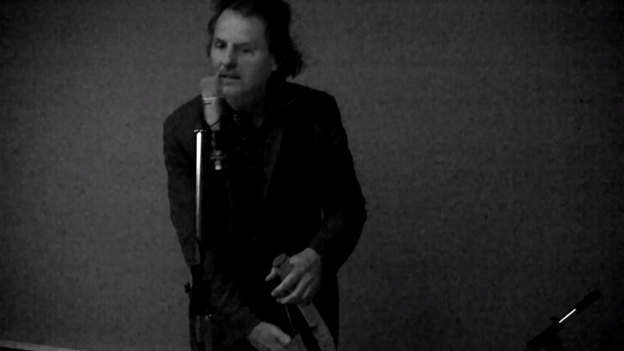
Apropos of this stellar night, Alienated in Vancouver has interviewed Al Mader, AKA the Minimalist Jug Band, about his history and songwriting. For consistency of illustration, all images have been lifted from this video clip, involving both Al and his oft-collaborator Petunia. Besides the Sept. 8th gig, you'll have a future opportunity to see Al on November 4th, when he opens for John Otway (returning to Vancouver for a full gig, after a brief blip in North Vancouver some months ago). You'll also probably be able to spot Al in the crowd for John Cooper Clarke... more on whom later... 

Since Al and I are both Al's, I have persisted with my tradition of italicizing my questions, and NOT italicizing his answers. 


Al: Could you walk us through the creation of the Minimalist Jug Band? I'm presuming it began with writing; were you performing it as slam poetry before you decided to self-accompany? Did anyone's suggestions or influence play a role? Where and when was your first gig as the Minimalist Jug Band?

Al: I first performed in Toronto at an "Elvis Monday" run by host William New and his band Groovy Religion. I returned and performed regularly -- accapella, initially, then pots and pans. Then a friend, Tom McConkey, wanted to form a jugband and gave me the washtub. That didn't happen for awhile, but I did end up busking with him regularly about six months later. By then I had incorporated it [ie., the washtub bass] into my act and started referring to it as the Minimalist Jug Band. 

Slam poetry didn't exist at that time. I stumbled across it in Vancouver years later. 

If I recall correctly, you've not only named John Cooper Clarke and John Otway as influences and inspirations. With both men coming to town (in September and November, respectively), could you walk us through:

a) How you got into their work? (My first exposure to either was through Urgh! A Music War [Clarke, Otway] but it seems like you might have had more opportunities to see them in Toronto?).

b) Any experiences of seeing them live (or interacting with them) that make for a good story?

c) A specific thing that you got from each man, either as writer or performer? (Can you pin down HOW they influenced you?). Alternately, just a favourite THING about them, as writer or performer? Favourite songs, favourite lines, favourite aspects of what they do live?

d) You SAW Mr. Clarke when he was last in town. How was that? What stands out as a high point?

First time seeing Otway was at the "Police Picnic," a festival outside of Toronto with the Specials, Iggy Pop, Killing Joke, etc. He came out singing "Green Green Grass of Home," a British folkie at a new wave/ punk concert. At first I was, "What the hell is this," then I caught on to his "mock rock" self-defecating sense of humour. [Note: I am typing this from Al's handwriting but yeah, it really does read self-defecating, not self-deprecating; he even put quotation marks around it to make sure I knew it was deliberate wordplay].


By the end of the set I was a fan and thought to myself that this was an approach I could see myself taking. I had only played drums and written a couple of songs, at that point. 

But Otway pushed the boundaries of what might be considered punk, as did John Cooper Clarke. I saw Otway many times in Toronto, opening for the Cure, and"the Two Johns" with John Cale at Yuk Yuks, doing his cartwheels while playing guitar and setting his hair on fire as a tribute to Michael Jackson's Pepsi Cola ad misadventure, tormenting his roadie with his careless microphone stands...

John Cooper Clarke's music (I always thought of him as a songwriter) was brought to my attention by a girlfriend who had just come back from Australia. "Beasley Street" made an immediate impression. Never saw him live or even heard of him performing in Canada until the show at the Biltmore, which I thought was great... sharp-witted, sharp dressed, satirical and sartorial splendor, his self-contained introverted style a complete contrast to John Otway's manic exuberance. I wonder if they've ever performed together? Clarke's "Official Guest List" always cracks me up and is a good example of how, like Otway, he embraces and mocks rock success and excess. Seeing Otway do cartwheels with his guitar, set his hair on fire, rip his shirt open, then unexpectedly play a riff or two on the violin was an eye opener.  

The thing I was most influenced by was their way of carving their own niche out of stubbornness. They let their personalities flourish without constraints or expectations.


Were there other performance poets that you had a kinship with or were influenced by? I am particular curious about US vs UK poets; I mostly know the Dial-a-Poet people, people associated with Giorno, but I don't see you having much in common with them... it seems kind of odd that the poets that I associate you with (Attila the Stockbroker might also be a kindred spirit, maybe?) all seem to be from the UK... but I don't know my slam poetry; maybe you have kindred spirits in that realm?

I've seen Jim Carroll, Patti Smith, and Lou Reed perform many times. I've always thought of them as songwriters first. I've listened and paid attention to song lyrics all my life; it is hard to say what comes from where... though I suspect that a lot of the songwriters I've admired were second- and third-generation Dylan fans. Saw John Giorno open for William Burroughs in Toronto at Gary Topp's club The Edge... 

When I first started showing up at the Elvis Mondays post-punk cabaret in Toronto, a few other performers who were also regulars were Meryn Cadell and Tony Blue, AKA Tony Burgess, author of Pontypool Changes Everything. Neal Arbic of A Neon Rome also did some solo performance art at that time. I mostly opened for bands and I went to see bands and movies on the nights I wasn't working or performing. Occasionally, I'd be asked to do poetry events -- shows with late poet/ writer "Jones" (full name Daniel Jones) and long time friend Susan Parker. 

Do you describe yourself as a songwriter or performer or poet, or... Is there a niche you fit in? Who do you like, poetry-wise? 

I've been allowed to hang around the periphery of a few scenes, but probably songwriter/ performance artist is most accurate (though "performance artist" always sounds like there is grant money involved). 

As for local poets... I have a lot of admiration and respect for Rodney DeCroo's projects; from the slam scene, RC Weslowski and Fernando Raguero are my go-to's.

Do you have a Hasil Adkins story? I think you kind of admire him; did you ever interact? Since I don't know where the gold is, do you have ANY fun stories of heroes/ inspirations/ influences that you got to interact with? (A Nick Cave story? [Al opened for him in Toronto]).

Re: Hasil Adkins, Chris Houston was going to be his manager at one point but I understand the guns blazing away in the trailer gave Chris second thoughts. Listened to Hasil a lot one tour east with Petunia, his stuff is great for psyching yourself up for a gig. 

Nick Cave was great and everyone treated me well but no crazy story.


Did Bud Luxford ever see you perform? Ever cross paths?

I don't think so.

Aha. So have you been involved in a Jack Fucking Keating event before? Do you have a history with Jack? Is there some special reason he involved you in this year's JFK event? Are you doing anything particular?

When I returned to Vancouver in 1991 [after Al's years in Toronto], whenever I went to hear music, I began to notice that if it was going to be a good night, there was always this guy in the crowd. Eventually I found out that was Jack, and he is still at all the best gigs. His JFK events are a lot of fun.

I gather you like to play the ponies. Tell me a bit about yourself and the horse races. Do you have a philosophy of betting? (I think Bukowski used to advocate for just betting one horse to win, no show-or-place nonsense, and I don't think he trucked with triactas or quinellas or such).

Bet however you want, as long as you know who you're cheering for. Don't bet too much. Have fun. 

What card games do you and Petunia play? Do you play cards for money, or...? Does one of you win more than the other?

French Whist, though the French probably call it something else. Texas Hold'em (poker) for cash, other games for glory. 

Besides the JFK gig in September and the Otway gig in November, do you have any other performances planned? (You seem less active than you used to be, wonder if COVID lessened your enthusiasm for performing...?).

Nothing planned. Phone's not ringing and I have other obligations, but still have enthusiasm. 

Re; "I'm a Lousy Lay," I was just curious, did you actually read much Jean Paul Sartre? What, specifically, and how did that work out for you? (I was more of a Nietzsche man myself but I'm always curious what writers influence people, philosophical or otherwise...).

Sartre's Being and Nothingness wasn't exactly a potboiler but when I was 20ish, the Age of Reason trilogy was one of my favourites. Simone  de Beauvoir's novels also did the trick. 

Anything else you would like to say about ANYTHING AT ALL?

Go see John Cooper Clarke.

Go see John Otway.

Go see the race horses. 

[And go see Al at this year's JFK event!]


Friday, August 18, 2023

Film Noir at the Cinematheque; Blue Velvet and After Hours (after hours!) at the Rio, plus Barry Gifford and David Lynch

1. Of Barry Gifford and David Lynch

I have not kept many film books. I have a section on Cassavetes, a book apiece by Robin Wood, Carol J. Clover and Jonathan Rosenbaum, a few autobiographies (Ernest Borgnine, William Friedkin, Alex Cox), a few tomes on Yakuza movies (two by Chris D.), Cox's spaghetti western book, and a book I keep meaning to read about the whole sorry Twilight Zone affair and subsequent trial (I refer to the John Landis segment of the film, during which a helicopter explosion killed actor Vic Morrow and two children cast in the film). Many books on film noir have come and gone, but at the moment, I have only one, the sole constant since the early 1990s: The Devil Thumbs a Ride. It's a series of highly descriptive "reviews" of classic films noir as seen by novelist/ poet/ Kerouac biographer Barry Gifford, who writes in a slightly hardboiled vein himself, but with a subtle ease and playfulness. Fans of, say, John Armstrong's Guilty of Everything would get a kick out of Gifford's film reviews; you figure that if John wrote capsule descriptions of his favourite noirs, they'd come out a bit like this (Gifford is less personally revealing when it comes to tales of debauchery, mischief, and excess, however; he prefers to put that stuff in his fiction).  

Now, my favourite piece of writing in this book, the one I refer back to the most, is Gifford's review of Blue Velvet (which screens Saturday, late at night, at the Rio Theatre). It's highly unflattering, even insulting, though it does pul its punches a little -- before delivering new ones. The stories you read about how Lynch and Gifford first collaborated -- like this good one -- do not ever mention this review playing a role; in fact, I'm the only person I've yet to see speculate about this publicly. But the review predates the collaboration, even presumably predates Gifford's writing the novel that Wild at Heart is based on; which raises interesting questions. Had Lynch read the review? Was he aware of it when he was hot-to-trot to adapt a Gifford novel? Did he read the Gifford novel BECAUSE of the review? Did he and Gifford ever talk about any of this and if so, how exactly did that go down?

For the following fantasy re-enactment, if you like, you can picture the conversation in the voices of Robert Blake and Robert Loggia from Lost Highway.

"I really want to adapt your novel as my next movie!"


"Did you read my review of the last one?"

(I really hope Barry Gifford isn't cringing somewhere, reading this, going "shh, shh, he hasn't read it, just... shhhh!" I cannot imagine that being the case, however).

For you inquiring minds out there, Gifford's unkinder remarks are amplified a bit by being taken out of context, but some of them include that Blue Velvet is  "one cut above a snuff film" and "a kind of academic porn," which observation he follows by remarking that "pornography, as such, simply bores me; as soon as I know what it is, I lose interest." But while that sort of sums up his personal reaction to the movie -- it's not for him -- he acknowledges that nonetheless Blue Velvet "seems important" and is "worth discussion," and writes -- like he is actually impressed -- that it is interesting "that I can never imagine things as depraved as those that occur here, and I've always thought that I could get pretty low in that department" (pp. 21-22). 

So it's a respectful review, also looking at the film through the lens of Bunuel and Hitchcock, finding it closer to the latter (the work of "a pure voyeur.") But its summation is equally quite harsh, maybe the second-rudest image I've encountered in a film review, after Roger Ebert comparing the rough cut of The Brown Bunny to his colonoscopy: Gifford's final three word sentence is, "Real phlegm noir." 

As it works with movie reviews, this was all written and presumably published at the time Blue Velvet came out, in 1986, when Gifford had a column in Mystery Scene magazine; the review's publication in book form dates to 1988. This takes us right up to the publication of Gifford's next book, and the release of Lynch's next movie. 

As best as one can determine -- this was early enough in Wild at Heart's history that the book was in manuscript form, still, but not so early that Lynch's adaptation is mentioned on the dustjacket or anything. Sometime in 1989, Wild at Heart was shown to David Lynch; the novel came out in April of 1990, while the movie came out in May. Things happened very fast -- again, this is told at greater length here. But I would love to know specifically where Lynch reading Gifford's review of Blue Velvet came into play, how he responded to it, and when Gifford found out that he had read it. These are questions I will probably never get to ask, but I would love to hear either man's versions of the conversation. 

Back to The Devil Thumbs a Ride, and film noir. Understand, if you are intrigued and contemplating seeking out this book, it's not hard to find, but you should realize that the vast majority of films in the book are from the 1940s and 1950s, and that generally, Gifford mostly just recaps the plot details, though in a delightfully terse way (Elmore Leonard, in the blurb at the top of the book, writes that "The essays are better than some of the films he writes about"). The Blue Velvet review is exceptional -- a contemporary movie, and a review that focuses more on Gifford's opinions than the things that happen in the film itself (which Gifford does mention and comment upon, but it takes a backseat to his rejection of the movie; it's by far the most "critical" capsule in the book). 

2. Film Noir at the Cinematheque

I am not sure who my reader for this piece is, since most of my actual friends and regular readers are likely schooled in film noir -- but in case you happen to be someone new to classic cinema, it's a term for a style of film, usually in the crime genre, that prevailed in post-WWII America, often featuring doomed or defeated protagonists facing an unjust society, navigating an unforgiving, dark urban landscape, sometimes attempting to get their own back or to impose some human justice on the world (which attempt usually fails; noir heroes tend to be tragic ones). The name comes out of the writings of French film critics who recognized the value and common elements of these films, but some of the most noted proponents of the form, people like Otto Preminger, Billy Wilder, Max Ophuls, Edgar G. Ulmer, Robert Siodmak and Fritz Lang, were actually filmmakers who had left Austria and Germany in the 1930s, emigrating to Hollywood, often to get away from what was brewing there politically (some of them were Jewish, too). So while the French do play an important role here in the critical regard these films are held in, there is a direct influence of German expressionism on the look of film noir that is more important. There's also a powerful, American modernist literary antecedent, an anchor in Hemingway (whose "The Killers" was made into a stellar noir with Burt Lancaster) and hardboiled crime and detective fiction (Chandler, Hammett, Jim Thompson, Charles Willeford, etc), some of whose books directly inform noir.  

You know all that, most likely. But whenever the Cinematheque's summer noir series comes around, if there's a film I don't know, I turn to Barry Gifford to see what he has to say about it. His reviews are seldom spoiler-free, but they're very entertaining, and often his having written about a film is argument enough for seeing it, and his writing an interesting point of reference for subsequent thought about the film. For instance, while having admitted that the plot of Out of the Past, screening tonight, is "wildly improbable," he writes that

some of the scenes are absolutely brilliant and don't fade: most notably the Mexican sequence with Greer wrapping Mitchum around her finger, seducing him like an elegant reptile, repulsive but fascinating, swallowing him whole. Mitchum is a decent enough big lug, his sleepy expression disguising his excitement until Greer gives him the big bite and takes him down for the count. She's a spiky little vixen, sharp nails, eyes, edges. She sets up the picture so well, presenting herself as the sweetest piece of pussy in the western world, when its obvious she's a super illusionist, doing more fucking with her mind than her body. A bad-news woman. No wonder Mitchum gets so disgusted, both with her and himself.

Sounds great, right? (Though is Greer really as bad news as Gifford makes out? I'd have to see the film again to decide). 

But in fact the stronger film on the double-bill tonight is Angel Face, a noir I have only seen once. Dave Kehr, on the Cinematheque website, is quoted as describing it as "One of the forgotten masterworks of film noir … A disturbingly cool, rational investigation of the terrors of sexuality." Sadly, Gifford doesn't treat it -- not even the kick-in-the-head last scene -- nor does he do another classic (though very weird) noir that I'm keen to see screened, The Big Clock (which oddly blends in elements of screwball comedy, and features husband-and-wife cast members Charles Laughton, of Island of Lost Souls/ Hunchback of Notre Dame/ Night of the Hunter fame, and Elsa Lanchester, best known now for The Bride of Frankenstein. She has giddy fun with her role, playing an eccentric painter). While the 80's remake of Out of the Past, Against All Odds, is probably not worth revisiting, The Big Clock was re-made into a pretty great 80s thriller co-starring Chris D. of the Flesh Eaters (!), and fans of that film who have not seen its inspiration will be quite delighted by it (and vice versa, people who are fans of The Big Clock should seek out the remake, because it is a superb piece of craft in its own right).  

Those are my two "picks" this year, of the noir series, though do note that if you haven't seen it, Stanley Kubrick's The Killing is an amazing film, featuring very memorable roles for Sterling Hayden, Timothy Carey, Elisha Cook Jr., and (maybe weirdest, in terms of overlap with more contemporary cinema) Joe Turkel, who was Eldon Tyrell in Blade Runner. A story of a racetrack heist gone wrong, it is structured around a multiple/ overlapping timeline that informs, say, Reservoir Dogs. And talk about grim psychology! Gifford: "It's basically cruelty heaped on top of cruelty; nobody can get it right so nobody gets anything." 

Anyhow, all my readers know those films, too, prolly, but I hope they enjoyed the Barry Gifford snippets. Seriously, you should buy The Devil Thumbs a Ride. It's a really fun read. 

3. After Hours

It's not noir, it's only noirish; and it has nothing to do with David Lynch or Barry Gifford, but note, a great dark comedy -- a masterpiece of urban castration anxiety -- screens tonight at 11:30 at the Rio Theatre, Martin Scorsese's 1980s film After Hours, featuring a rare star turn from Griffin Dunne (who we all love so much from An American Werewolf in London, but whom some people out there now associate with This is Us; whaddaya gonna do?). The film actually profoundly unsettled me the first time I saw it, telling a rather gleefully paranoid tale of a hapless schmo who just wants to get laid going through a punishing all-night ordeal in Soho; I was young and filled with sexual anxiety when I saw it first run, so the consequences for the main character's lusts touched a bit of a nerve; I remember being in quite a shaky state when I emerged from the cinema on Granville Street where I'd seen it first-run, which seemed even more bizarre to me in that the film is essentially a comedy.

And as some people may NOT know, there is a weird bit of backstory to the film, which again has been written about in a few places online, involving how the screenwriter rather artlessly plagiarized a radio performance by NPR's Joe Frank that I guess he figured no one else would have heard; the first half of After Hours is very clearly based on Frank's "Lies." This led to a lawsuit and a settlement in Frank's favour, the details of which are not public knowledge. See Andrew Hearst's blog about it (and hear Frank's original radio performance, to see for yourself) here. You can also read Joe Frank's own public reaction to the plagiarism, which also omits discussion of the settlement, focusing on the fact -- which Hearst mentions -- that a friend of his, Larry Block, plays the cab driver in After Hours... though this appears to have been a coincidence! Frank is somewhat coy in his comment, "What must the screenwriter have been thinking to place himself in such jeopardy?" given the jeopardy in question was Frank and his lawyers (I guess he got enough money out of it that he could look back with a smile; he seems somewhat good-humoured about the whole affair, really). Indeed, it is curious how little effort is made to cover up the traces of plagiarism, right down to the plaster-of-Paris bagel-and-creamcheese paperweights, an easy enough detail to switch, but a telltale giveaway to leave unchanged (a good topic for a "How Not to Plagiarize" writer's workshop, if such a thing were to exist; the vast majority of plagiarism I encounter as a writing tutor is actually quite badly done, given how easy it is to cover ones tracks... but then again, if something were effectively plagiarized, I probably wouldn't even notice it!). 

I believe the recent Criterion release neglects to delve into any of this, but it's unfortunate, because it is an interesting story and already public knowledge; why not talk about it? Suffice it to say, if I got a chance to pester David Lynch, it would be with questions about Barry Gifford's Blue Velvet review, and if I got a chance to pester Martin Scorsese, it would be about the moment he discovered that After Hours was based on plagiarized source material. I've seen a documentary where Scorsese talked about having a "hard time caring" about the film while he was making it; perhaps learning that it was based on a tainted source played a role in that -- maybe he knew before the shoot wrapped? Where in the production or post-production of the film was he when this horrifying detail screamed out of the sky? How derailing might that have been?

It doesn't matter, though, It's still a favourite film of mine, and perfect for a late-night screening (11:30 tonight at the Rio). Still the only place in a film where I've heard the Bad Brains' "Pay to Cum" (docs like American Hardcore don't count -- I mean a fictional feature). I wonder if there's a soundtrack album? (the Bad Brains and Peggy Lee on the same record would be quite the feat). 

(Note: yep, there is, but it's apparently a bad bootleg).